
TL;DR: Scalenut Vs Scrunch AI
- Best For AI Visibility Monitoring: Scrunch AI is better for deeper AI search visibility monitoring, prompt visibility, personas, citations, and competitor benchmarking.
- Best For Content Execution: Scalenut is stronger for turning insights into content creation, optimization, audits, keyword planning, and internal linking.
- Best For Citation And Competitor Analysis: Scrunch AI gives deeper citation and competitor intelligence. Scalenut is better if you want to act on those gaps with content.
- Best For AI Traffic Analytics: Scrunch AI is stronger for bot observability, crawl diagnostics, and agent experience. Scalenut is more useful when AI traffic insights need to support SEO and content decisions.
- Best For Value: Scalenut offers better value for teams that need SEO, GEO, and execution in one workflow. Scrunch AI offers better value for teams focused mainly on AI visibility intelligence and AXP.
- Best Overall Choice: Choose Scalenut for SEO, GEO, and content execution. Choose Scrunch AI for deeper AI search monitoring and agent experience capabilities.
AI visibility tools are becoming a regular part of the SEO stack, but choosing one that works best for your team may not be as easy as you think. Both Scalenut and Scrunch AI stands out among the best GEO tools in 2026.
At first glance, most platforms seem to promise the same thing: track your brand across AI search, show where competitors are appearing, and help you understand what generative engines are saying about you. But once you look closer, the difference usually comes down to depth, workflow, and what happens after the insights show up.
That is why this Scalenut vs Scrunch AI comparison is worth looking at.
I tested both platforms to understand which one would work better for my team, especially from the lens of AI visibility tracking, citation analysis, competitor benchmarking, AI traffic analytics, recommendations, pricing, and day-to-day usability. In this review, I’ll break down where each tool feels strong, where it feels limited, and which one makes more sense depending on your workflow.
What Is Scalenut?

Scalenut is an SEO + GEO platform that helps teams plan, create, optimize, audit, and monitor content for both search engines and AI search experiences. Its platform includes AI Visibility, Action Center, and content-focused apps designed to help brands improve how they show up across Google and in brand mentions on generative engines.
What Is Scrunch AI?
Scrunch AI GEO tool is an AI Customer Experience Platform that helps brands monitor how they appear across AI search platforms, analyze citations and visibility gaps, and optimize how AI agents understand their website. It also offers Agent Experience Platform, or AXP, which creates AI-friendly versions of web pages for agents to read and process more easily.
Scalenut Vs Scrunch AI: Which Tool Has Better Prompt Tracking And AI Visibility Monitoring?
How Does Scalenut Handle AI Visibility Tracking?
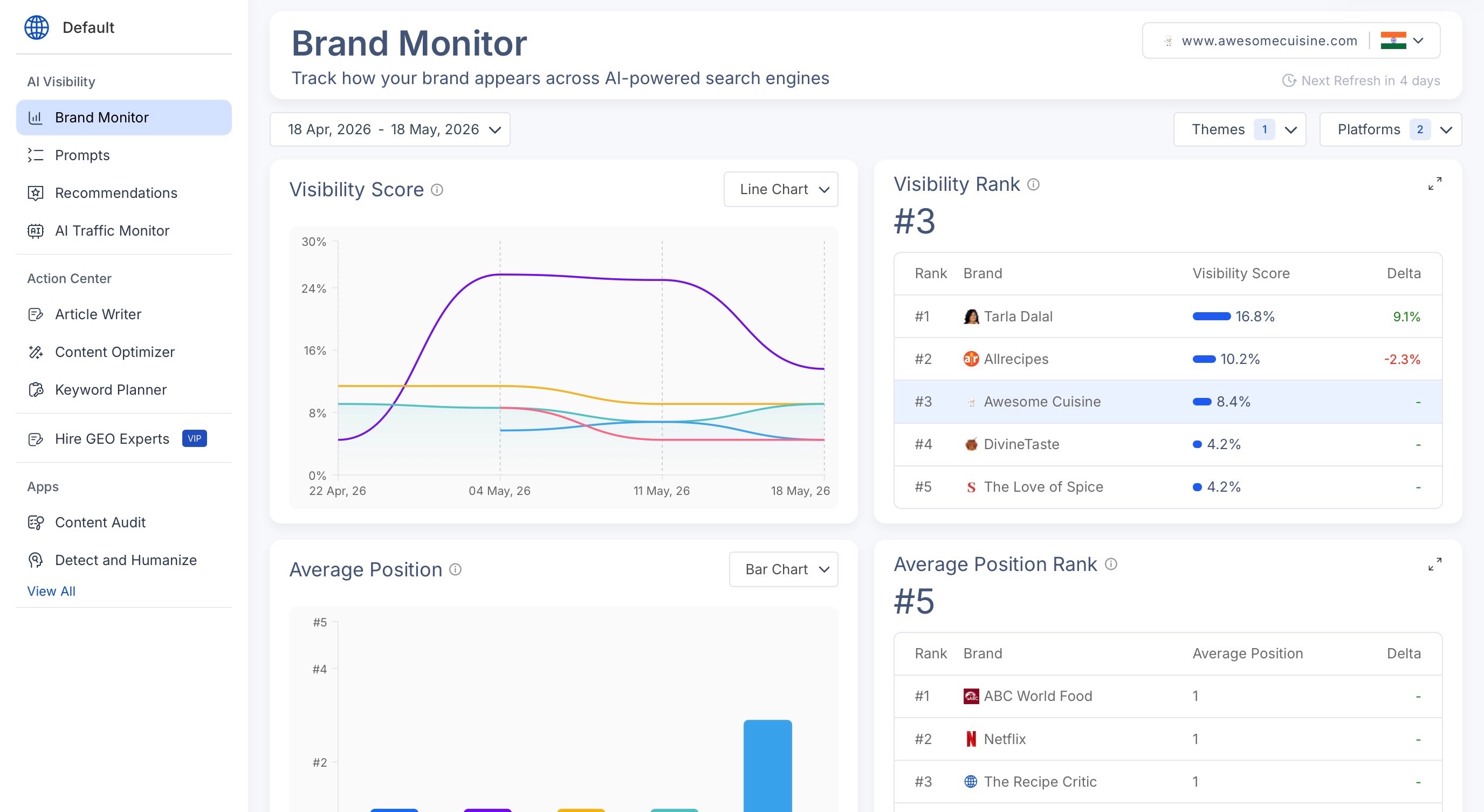
Scalenut takes a more SEO and content-led approach to AI visibility tracking. It helps you monitor how your brand appears in AI responses, compare your visibility against competitors, and identify prompts or topics where you are underperforming.
What I like here is that the insights are tied to action. If your brand is missing from important prompts, you can use that data to decide what to create, refresh, or optimize next.
Scalenut makes more sense if:
- You want AI visibility insights connected to execution
- You want to spot prompt gaps and content opportunities faster
- You want SEO and GEO in one workflow
- You want to improve content, not just report on visibility
Where it may feel limited:
- It may not feel as specialized as Scrunch AI for deep AI visibility monitoring.
- Prompt limits and tracking depth should be checked plan by plan, especially for multiple brands, regions, or competitors.
How Does Scrunch AI Handle AI Visibility Tracking?

Scrunch AI feels more focused on AI visibility intelligence. It helps brands monitor their presence across AI search, understand how AI platforms interpret their brand, and compare visibility against competitors.
This makes it useful for teams that care about prompt-level tracking, persona-level insights, citations, competitor benchmarking, and brand perception in AI-generated answers.
Scrunch AI makes more sense if:
- You want deeper AI visibility monitoring
- You care about persona-level brand insights
- You want stronger competitor and citation visibility
- You need reporting around AI brand presence
Where it may feel limited:
- It is not a full content execution platform, so you may still need other tools for content creation, optimization, audits, and SEO workflows.
- Execution can still happen outside the platform, unless AXP fits your AI agent optimization workflow.
My Verdict
If your main goal is deeper AI visibility monitoring, brand intelligence, and prompt-level reporting, Scrunch AI has the edge.
But if you want AI visibility insights that connect with SEO, content planning, optimization, and execution, Scalenut is the better fit. It helps you turn visibility gaps into actual content and optimization actions.
Want to connect SEO and AEO more effectively? Read our guide on integrating traditional SEO with AEO strategies.
Scalenut Vs Scrunch AI: Which Tool Has Better Citation Analysis And Competitive Benchmarking?
How Does Scalenut Handle Citation Analysis And Competitive Benchmarking?
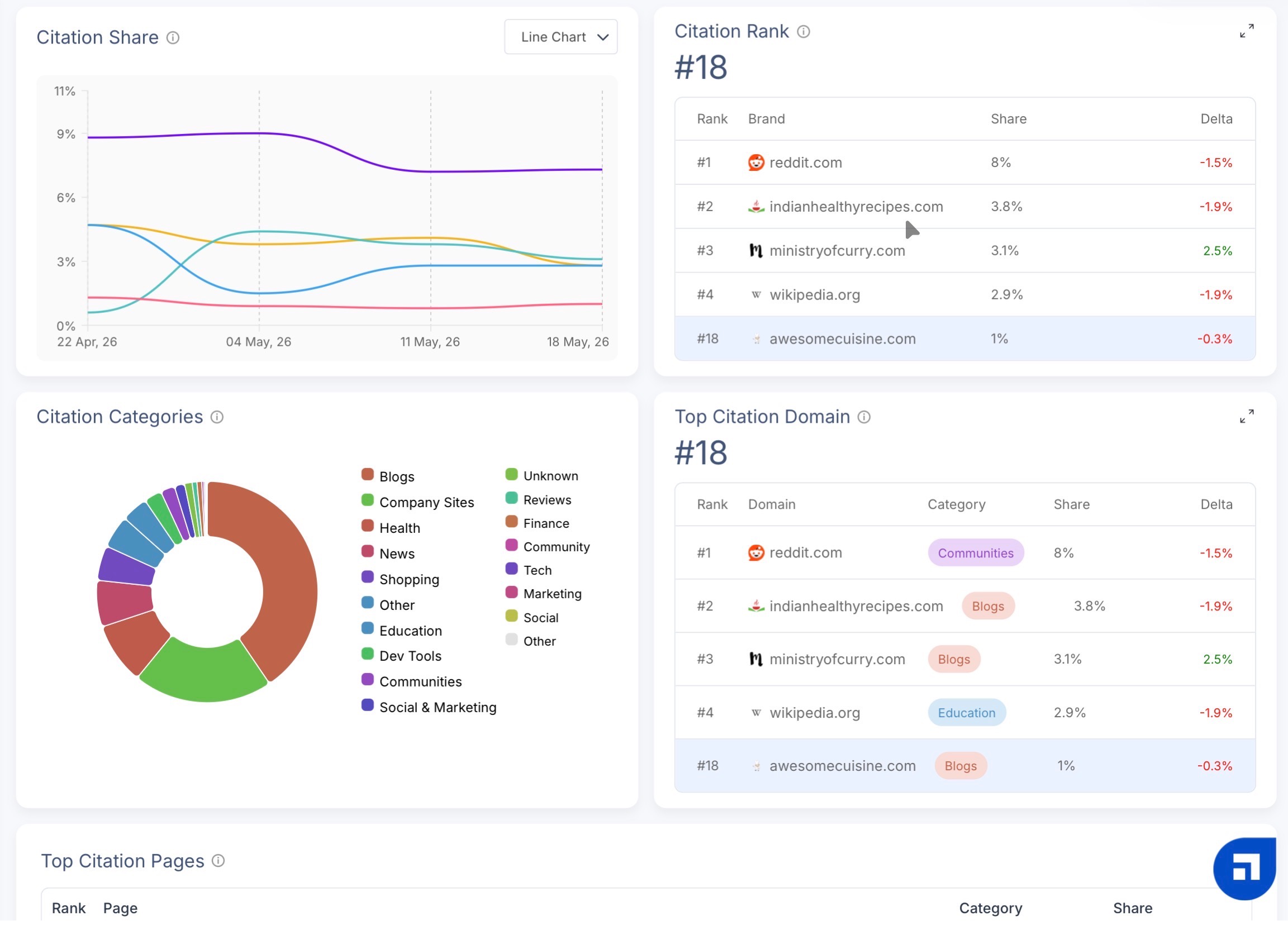
Scalenut looks at citations through a GEO and content execution lens. It shows where your brand is mentioned across different AI search engines, where competitors are getting cited, and which content gaps may be holding you back.
What I like here is that the citation data does not just sit in a report. If a competitor is being cited for prompts where your brand is missing, you can use that insight to create actionable workflows, decide what to create, refresh, or strengthen next.
Scalenut makes more sense if:
- You want citation insights tied to content action
- You want to find prompts where competitors are cited but you are not
- You want to improve topical depth, authority, and on-page content
- You want competitor insights connected with SEO and GEO workflows
Where it may feel limited:
- It may not feel as deep as Scrunch AI if your main goal is dedicated citation intelligence
- It is better suited for teams that want to act on citation gaps, not just study them
How Does Scrunch AI Handle Citation Analysis And Competitive Benchmarking?
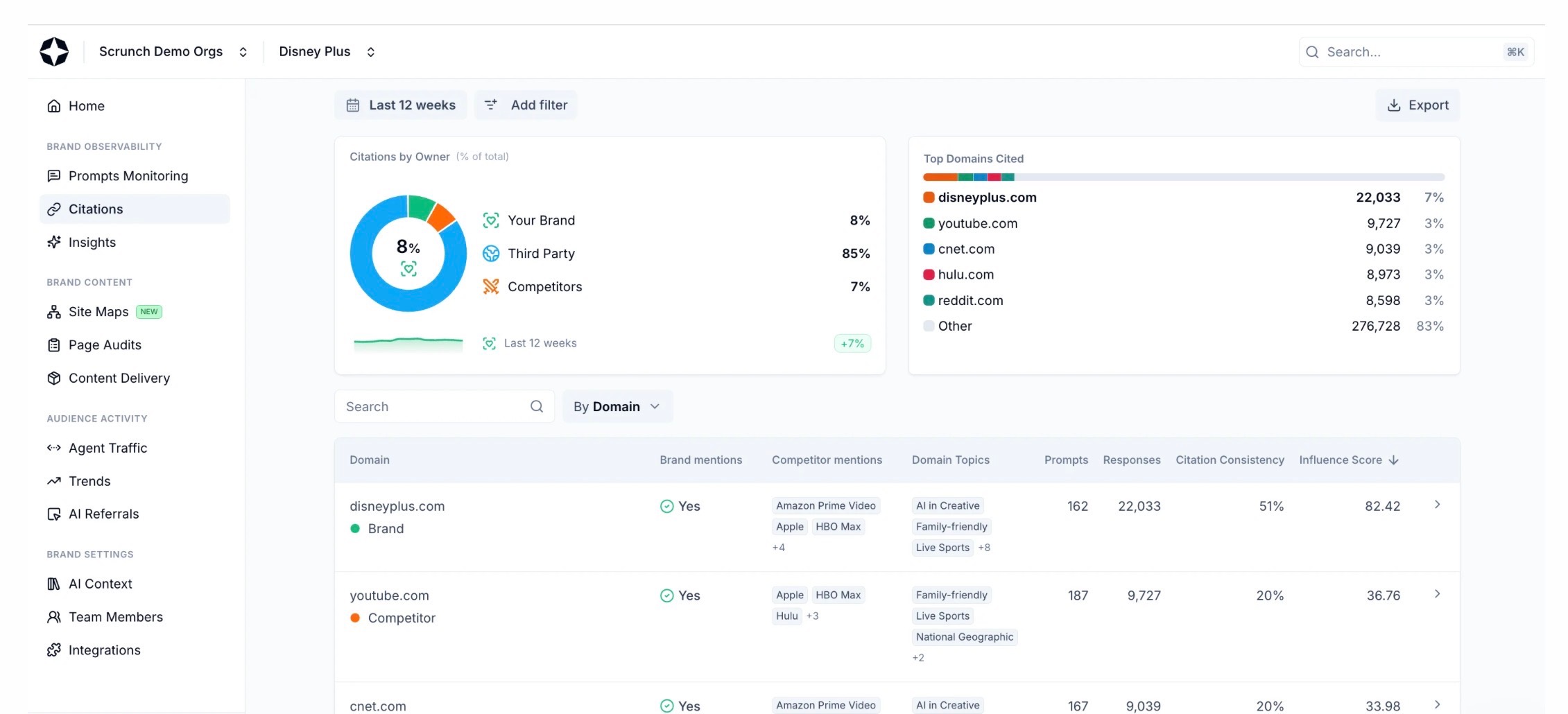
Scrunch AI feels stronger if citation analysis and competitive benchmarking are your main priorities. It helps you see which sources AI platforms rely on, where competitors show up, and how visibility changes across prompts, personas, topics, and geographies.
This makes it useful for teams that want to understand why certain brands are being cited more often in AI-generated answers.
Scrunch AI makes more sense if:
- You want deeper citation analysis
- You care about competitor, persona, topic, and geo benchmarking
- You want to understand which sources AI engines trust
- You need reporting around brand visibility and citation gaps
Where it may feel limited:
- It does not replace a full content execution workflow, so your team may still need separate tools to create or optimize content
- The insights are stronger than the execution layer, unless you are also using AXP or already have a content workflow in place
My Verdict
If your main goal is citation analysis and competitor benchmarking, Scrunch AI has the edge.
But if you want citation insights that feed into content planning, optimization, and GEO execution, Scalenut is the more practical choice. It is better when you do not just want to see where competitors are winning, but actually close those gaps with content.
Want the deeper breakdown? Read our Scrunch AI Review to see where it works, where it feels limited, and whether this GEO tool is worth it in 2026.
Scalenut Vs Scrunch AI: Which Tool Has Better AI Traffic Analytics?
How Does Scalenut Handle AI Traffic Analytics?
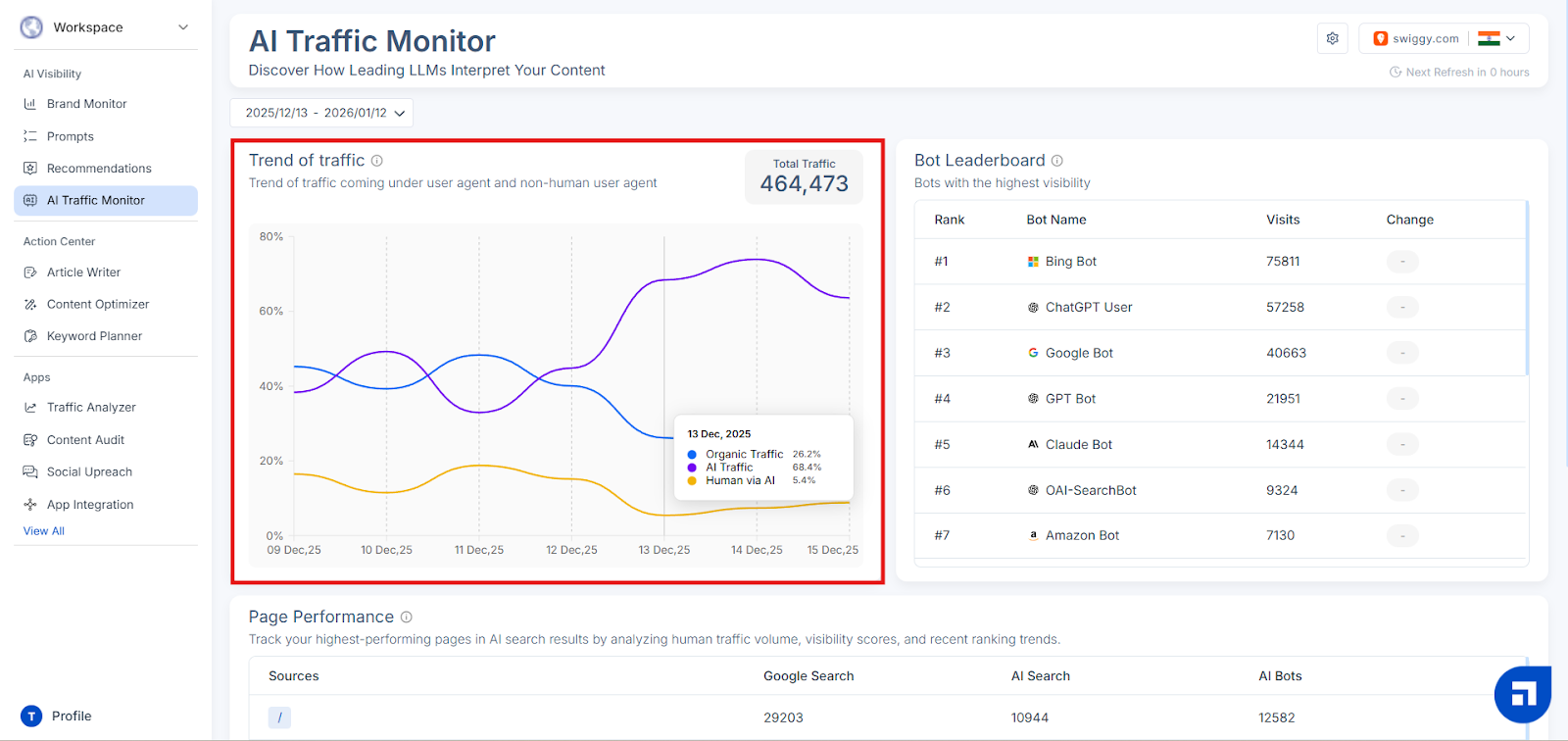
Scalenut’s AI Traffic Monitor helps you see how AI bots and AI-driven visitors interact with your website. It tracks bot activity, source engines, page coverage, human vs AI traffic, and which pages are getting attention from AI crawlers.
What I like here is that the data feels useful for SEO and content teams. If certain pages are being crawled often by AI bots, or driving traffic from AI citations, you can use that insight to decide which pages to update, strengthen, or build around.
Scalenut makes more sense if:
- You want to see which AI bots are visiting your site
- You want to separate human traffic, AI bot traffic, and AI-referred visits
- You want to identify pages getting AI attention
- You want AI traffic data connected with SEO and content optimization
Where it may feel limited:
- It currently relies on Cloudflare integration for AI traffic monitoring
- It may not go as deep into agent experience and crawl diagnostics as Scrunch AI
How Does Scrunch AI Handle AI Traffic Analytics?
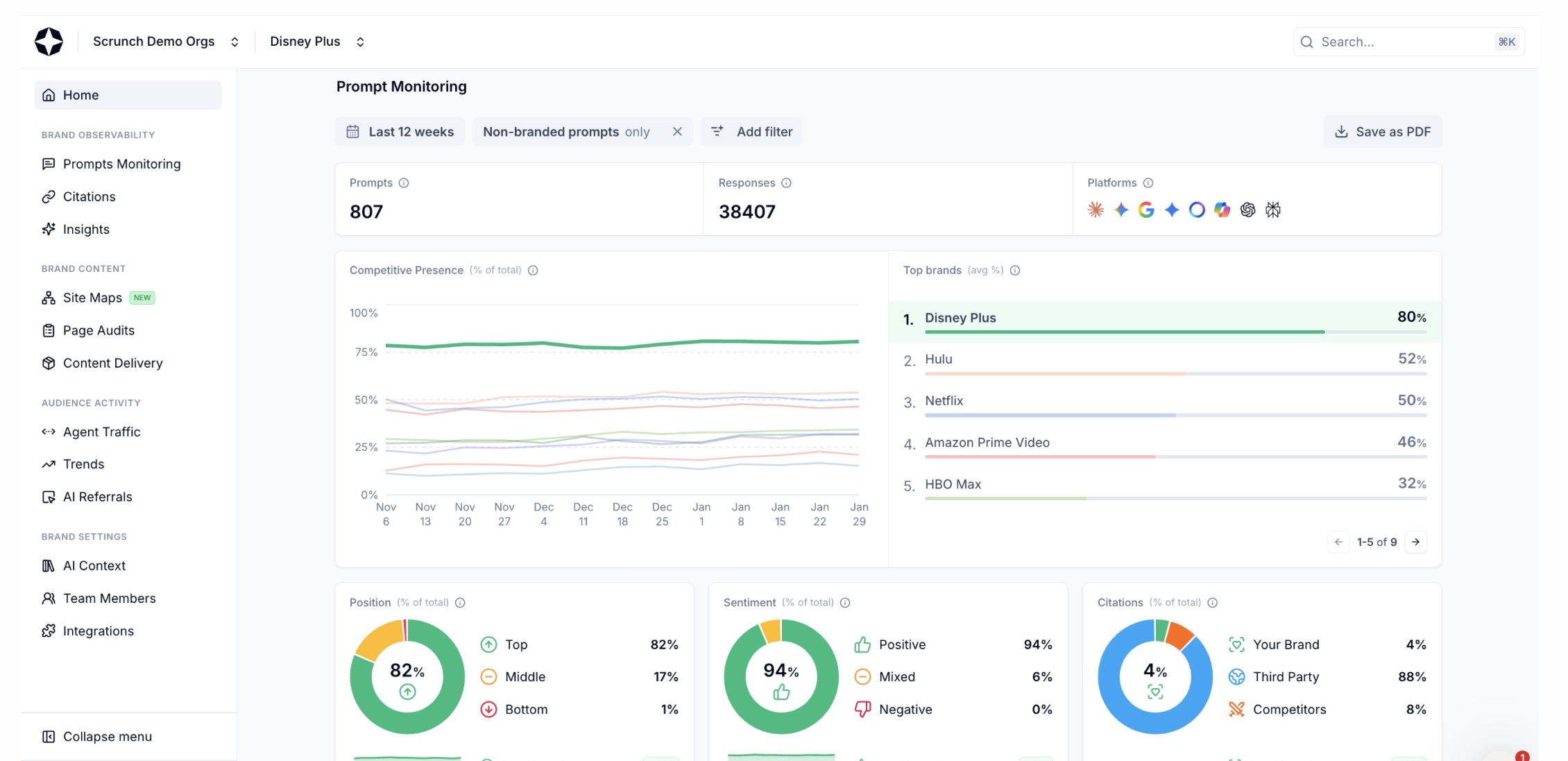
Scrunch AI has a stronger angle around AI bot observability and crawl behavior. It helps teams see how AI bots crawl their site, track traffic trends, detect crawl errors, and understand where AI systems may be struggling to access or interpret content.
This is especially useful if your team cares about the technical side of AI visibility, not just whether your brand appears in AI answers.
Scrunch AI makes more sense if:
- You want real-time AI bot crawl visibility
- You care about crawl health and error detection
- You want to understand how AI agents access your site
- You are interested in AXP for AI-friendly page delivery
Where it may feel limited:
- It is more focused on monitoring and agent experience than content execution
- Your team may still need separate tools for SEO, content creation, and optimization
My Verdict
If your main goal is AI bot observability, crawl health, and agent experience, Scrunch AI has the edge.
But if you want AI traffic insights that connect more naturally with SEO and content decisions, Scalenut is the better fit. It helps you understand which pages AI systems are engaging with, then use that insight to improve your content workflow.
Looking for more options beyond Scrunch AI? Read our Scrunch AI alternatives guide to see which tools are actually worth considering in 2026.
Scalenut Vs Scrunch AI: Which Tool Provides Better Actionable Recommendations And Execution?
How Does Scalenut Handle Recommendations And Execution?
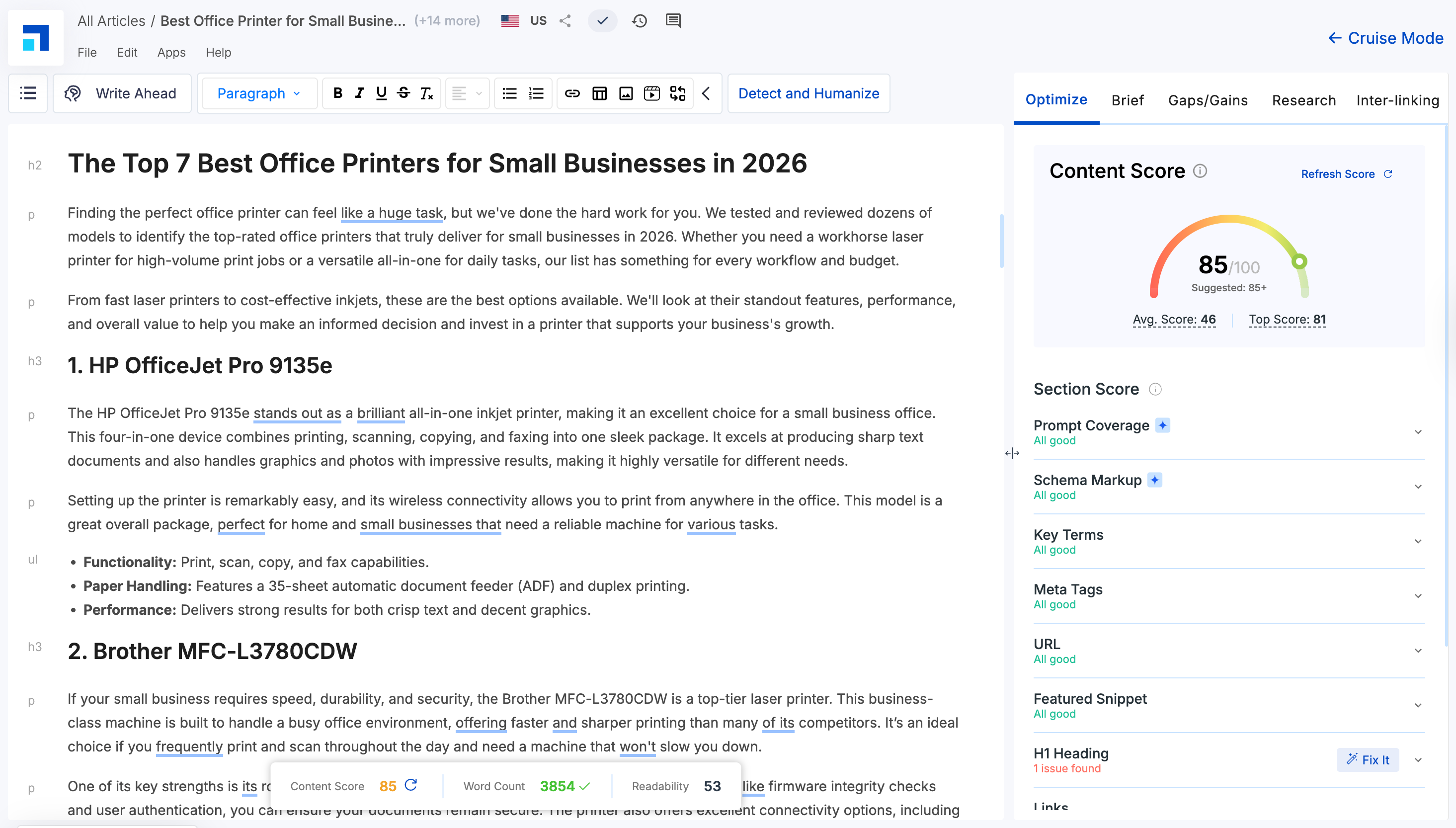
Scalenut is stronger when you want recommendations that lead into actual content work. It helps you identify content gaps, prompt opportunities, citation gaps, and pages that need optimization.
What I like here is that Scalenut does not stop at “here is what is wrong.” You can move from insight to action through content creation, content optimization, audits, internal linking, and GEO-focused updates.
Scalenut makes more sense if:
- You want recommendations connected to content execution
- You need to create, refresh, and optimize content from the same workflow
- You want to improve SEO and GEO together
- You want visibility gaps to become clear content actions
Where it may feel limited:
- It may feel broader than needed if your team only wants AI visibility reporting
- Some execution depth may depend on which Scalenut plan you choose
How Does Scrunch AI Handle Recommendations And Execution?
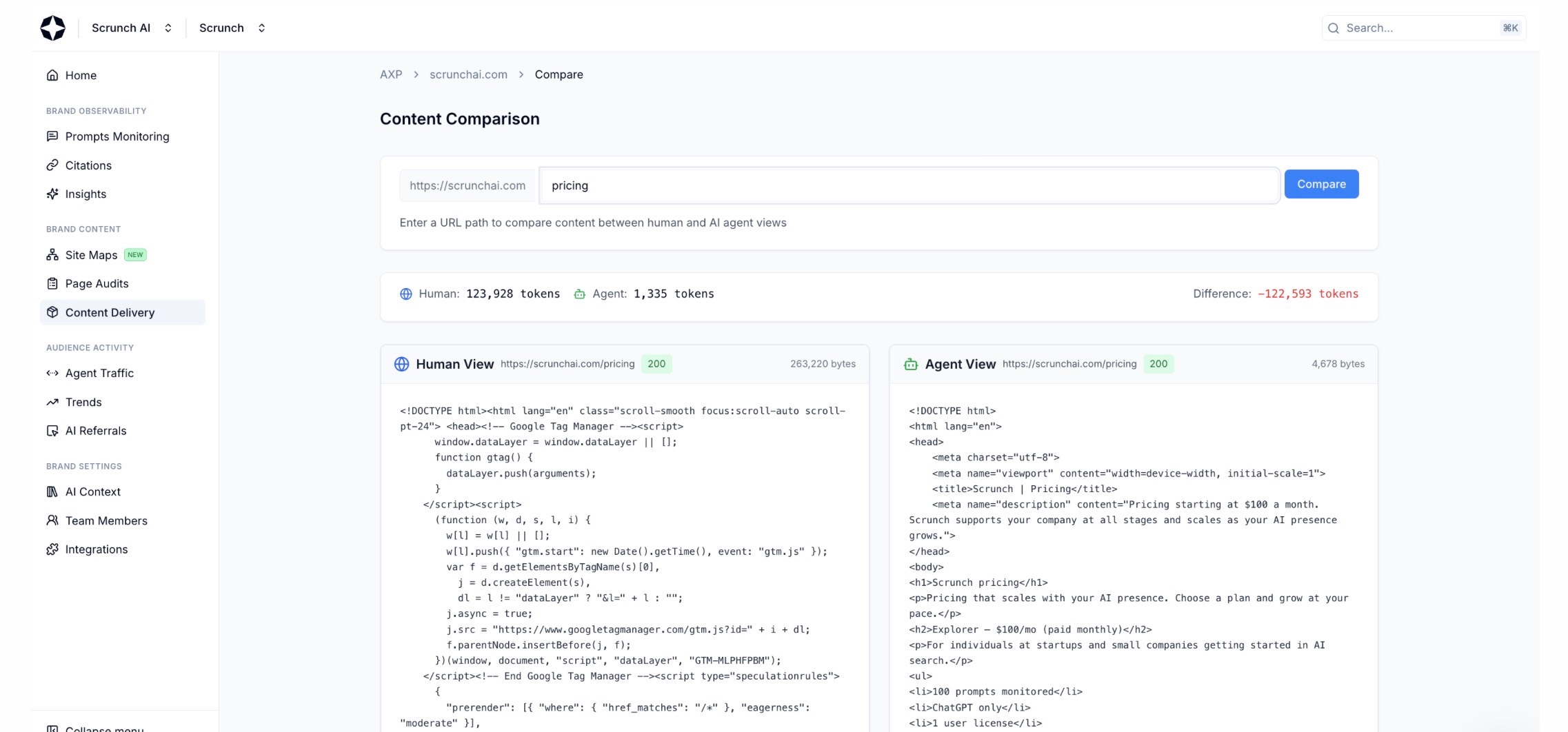
Scrunch AI is useful for identifying where your brand is missing, how AI systems interpret your site, and what may be affecting your visibility. Its strongest execution layer is AXP, which serves cleaner, AI-friendly versions of pages to agents.
That makes Scrunch AI interesting for teams thinking about AI agent experience, not just AI search dashboards. But it is not really a full SEO content execution suite.
Scrunch AI makes more sense if:
- You want AI visibility recommendations and diagnostics
- You care about agent experience and crawl readiness
- You want to improve how AI systems access and understand your site
- You already have a separate SEO or content execution workflow
Where it may feel limited:
- It does not replace content creation, optimization, and audit workflows
- Execution may still happen outside the platform unless AXP is the main use case
My Verdict
If your main goal is AI agent experience, crawl readiness, and technical AI optimization, Scrunch AI has the edge.
But if you want recommendations that turn into content planning, optimization, audits, and SEO/GEO execution, Scalenut is the better fit. It is more useful when your team needs to fix the gaps, not just understand them.
Scalenut Vs Scrunch AI: What Other Unique Features Do They Offer?
What Other Unique Features Does Scalenut Offer?
Beyond AI visibility tracking, citations, traffic monitoring, and execution, Scalenut also brings in a few features that are useful for SEO and content teams.
Some of the standouts include:
- Keyword Planner: Helps you organize topics into keyword clusters, understand search intent, and plan content more strategically.
- Content Optimizer: Gives you a GEO score, content score, coverage gaps, and optimization suggestions for improving search and AI visibility.
- Internal Linking: Helps identify internal link gaps so Google and LLMs can understand your content structure better.
- Backlinks Marketplace: Lets teams secure backlinks through verified publishers without handling cold outreach manually.
- Social Upreach: Adds another distribution layer for teams that want to repurpose or amplify content beyond the blog.
What I like here is that Scalenut’s extra features still stay close to the SEO and content workflow. They are not random add-ons. They support planning, optimization, authority building, and distribution.
What Other Unique Features Does Scrunch AI Offer?
Scrunch AI’s extra features lean more toward AI search intelligence, agent ecosystems, and enterprise-level visibility management.
Some of the standouts include:
- AI Search Trends: Helps teams understand broader shifts in how AI search platforms are behaving.
- Shopping: Tracks AI search performance at the product level, which is useful for ecommerce and product-led brands.
- Prompt Manager And Personas: Helps teams organize prompts and test visibility across different customer journeys.
- Alerts And Reporting: Tracks changes in rankings, citations, and bot behavior so teams can monitor movement over time.
- Governance And Scale: Supports things like SOC 2 Type II, RBAC, multi-site or multi-region use, and Data API access for larger teams.
What I like here is that Scrunch AI’s extra features feel built for teams that treat AI search as a serious reporting and intelligence layer. It is especially useful when multiple markets, personas, product lines, or stakeholders are involved.
My Verdict
Scalenut’s unique features are stronger for teams that want to plan, optimize, distribute, and build authority around content.
Scrunch AI’s unique features are stronger for teams that need AI search intelligence at scale, especially across products, personas, regions, and enterprise customer workflows.
Want better Google AI Overview tracking? Explore the best GEO tools with Google AI Overviews monitoring and find the trackers worth using in 2026.
Scalenut Vs Scrunch AI: Which Tool Offers Better Value For Money?
How Does Scalenut’s Pricing And Value Compare?
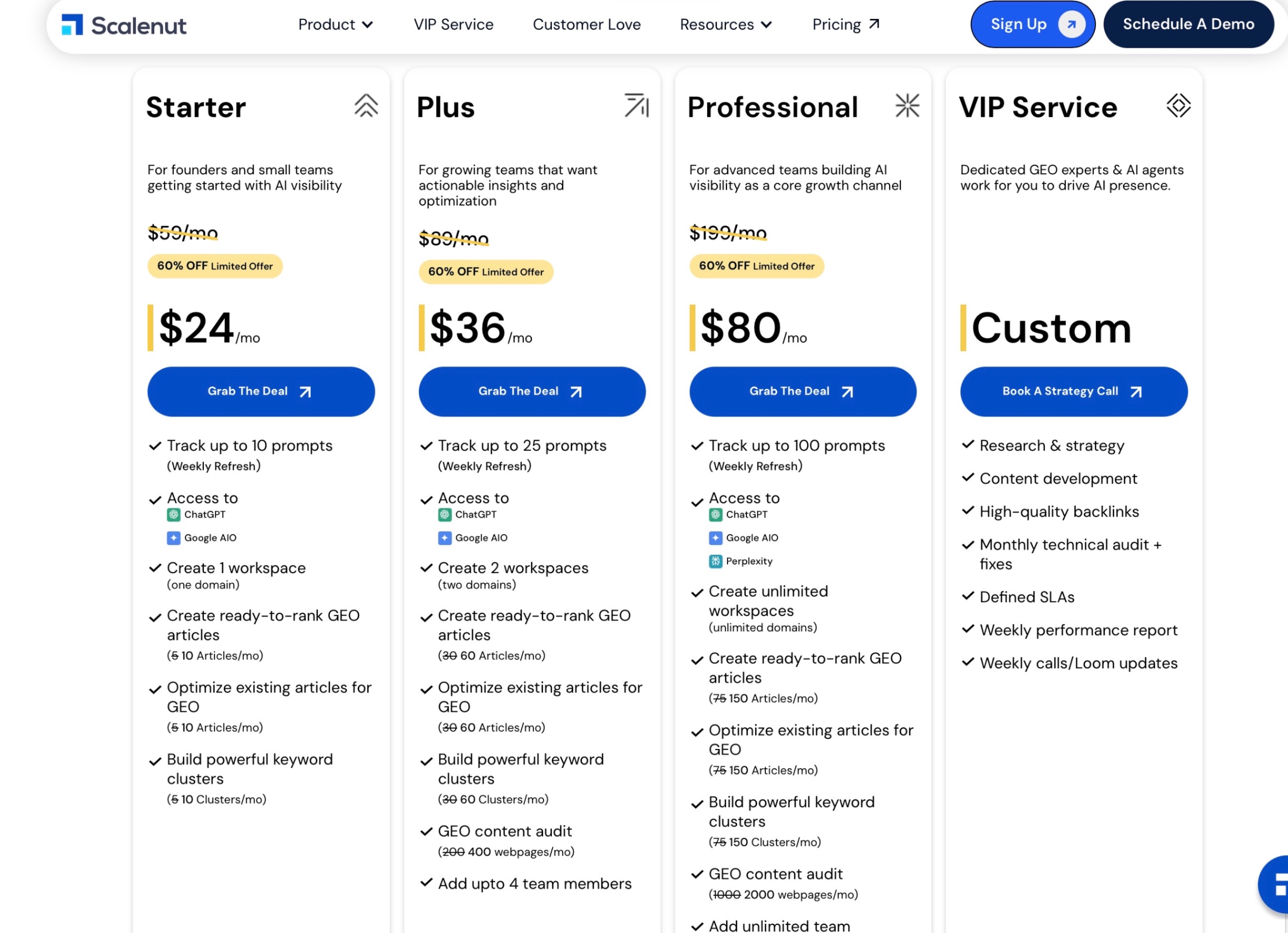
Scalenut’s pricing structure starts at $24/month for Starter, followed by $36/month for Plus, $80/month for Professional, and custom pricing for VIP Service.
For the price, Scalenut feels more practical if your team needs more than AI visibility tracking. You are getting SEO, GEO, content creation, content optimization, keyword clustering, audits, and visibility tracking in one workflow.
What I like here is that Scalenut can reduce the need for separate tools. Instead of paying for one platform to track visibility, another to write content, another to optimize pages, and another to audit content, you can manage most of that inside one system.
Scalenut offers better value if:
- You need SEO and GEO together
- You want content creation and optimization included
- You want to manage planning, audits, and visibility tracking in one place
- You prefer a more execution-focused workflow over a monitoring-only setup
Get started with Scalenut for free!
How Does Scrunch AI’s Pricing And Value Compare?
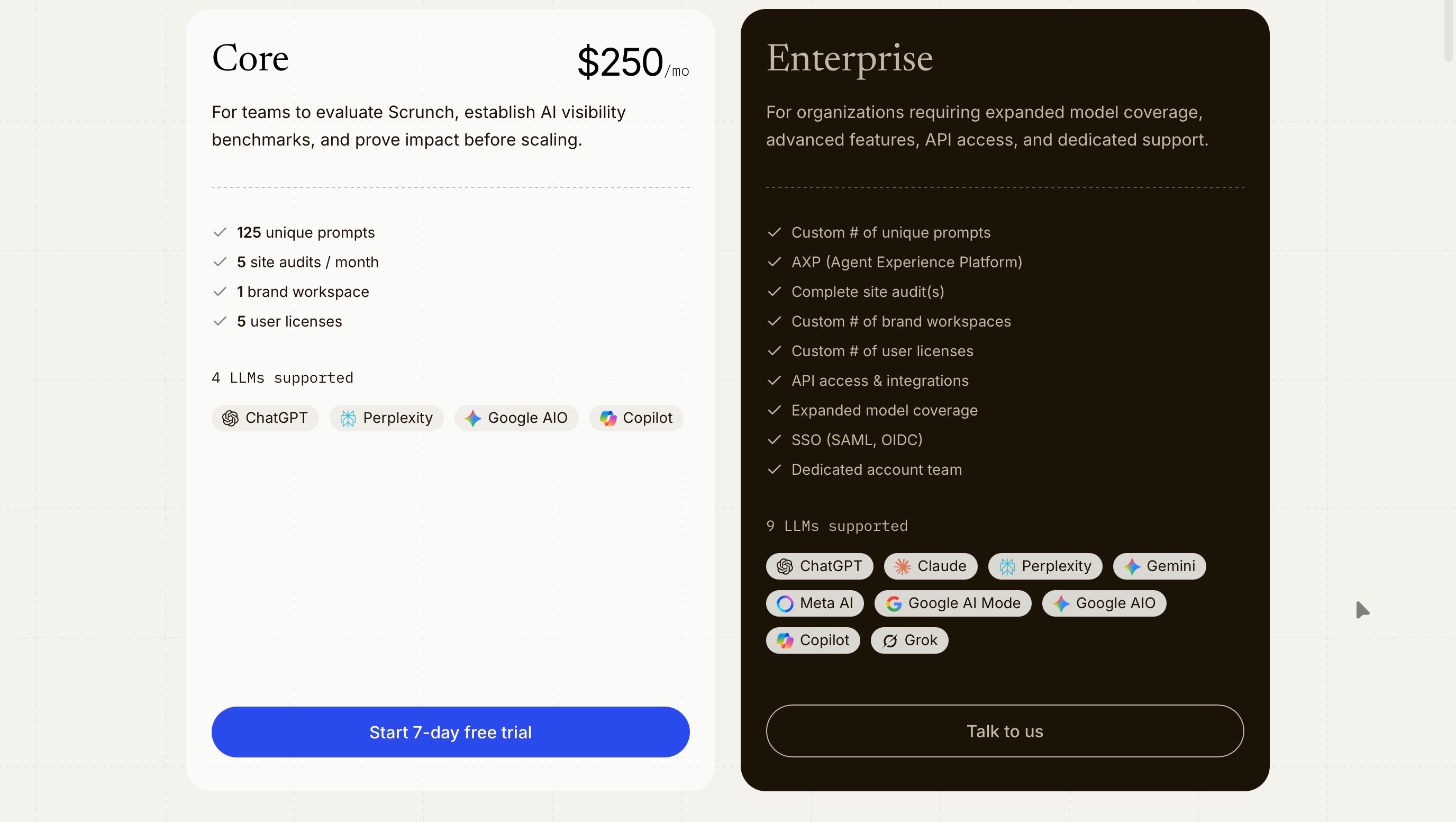
Scrunch AI’s Core plan starts at $250/month, while the Enterprise plan comes with custom pricing. You also get a 7-day free trial for the Core plan.
Scrunch AI makes more sense if your team is mainly paying for AI search intelligence. It gives you stronger value when your priority is AI visibility monitoring, citations, personas, competitor benchmarks, and agent experience through AXP.
The tradeoff is that Scrunch AI is not really built as a full SEO and content execution suite. So if your team still needs content writing, optimization, keyword planning, audits, or internal linking, you may need additional tools alongside it.
Scrunch AI offers better value if:
- You need deeper AI visibility intelligence
- You care about citations, personas, and competitor benchmarking
- You want AI agent experience capabilities
- You already have a separate SEO and content execution workflow
My Verdict
If you are mainly paying for AI search monitoring, citations, persona insights, and agent experience, Scrunch AI can be worth it.
But if you want stronger value from an SEO and content execution standpoint, Scalenut is the better fit. It gives teams more room to plan, create, optimize, audit, and track content without stitching together multiple tools.
Looking for budget-friendly GEO tools? Explore the best GEO tools under $100/month and see which options are worth using in 2026.
Scalenut Vs Scrunch AI: What Are Real Users Saying?
What Do Users Say About Scalenut?
Rated 4.7 on G2, most Scalenut reviews point to one clear strength: it makes GEO and SEO content work easier.
Users often call out its ease of use, content creation, SEO optimization, and AI writing support. That tracks with what I noticed too. Scalenut is not just built to show data. It is built for teams that want to move from keyword research to writing, optimization, audits, and GEO-focused improvements without stitching together too many tools.
A few things users seem to appreciate are:
- The ease of use across the content workflow
- Helpful AI writing and content creation features
- Strong SEO optimization and scoring
- The ability to connect keyword research, planning, and writing in one place
“I like that Scalenut is extremely user-friendly and affordable. It's a scalable way of generating customized content that's searchable and discoverable by Google and AI engines. I appreciate that it actually works, giving me the ability to drive organic traffic to my website without solely relying on a website team. The initial setup was very easy, and I rate it a 10 because I talk about it all the time.”, says Clayton S on G2.
The only limitation I would call out is fit. If your team only wants deep AI analytics and does not need content planning, writing, or optimization, Scalenut may feel like more than required.
What Do Users Say About Scrunch AI?
Rated 4.6 on G2, Scrunch AI reviews are stronger on the AI visibility side.
Users like its dashboard, insights, competitor analysis, citation tracking, and customer support. That makes sense because Scrunch AI is built more like an AI search intelligence layer for understanding where your brand appears, who shows up with you, and which sources AI platforms cite.
A few things users seem to appreciate are:
- The intuitive dashboard
- Clear AI visibility insights
- Useful competitor analysis
- Strong citation and brand presence tracking
- Helpful customer support
Where the feedback gets more mixed is around data flexibility, export limitations, pricing, and setup complexity.
“Some of the features within the platform don't support exporting, which limits our ability to deliver that information directly to our clients. We have to rely upon the dashboard.”, says Joe S on G2.
My Take
The review patterns match what I noticed while testing both tools.
Scrunch AI is liked for AI visibility intelligence, insights, and competitor tracking. Scalenut is liked for SEO optimization, content creation, and day-to-day execution.
So if your team mainly wants an AI visibility monitoring layer, Scrunch AI makes sense. But if you want those insights connected to actual SEO and content work, Scalenut feels like the more practical fit.
Want to improve how your brand shows up in AI answers? Explore the best LLM optimization tools for AI visibilityand see which ones are worth using in 2026.
Scalenut Vs Scrunch AI: Which Tool Fits Your Team Better In 2026?
At this point, the choice is less about which tool is “better” overall and more about what your team needs next. Do you need a workflow for generative engine optimization, or a monitoring tool that helps you understand how your brand appears in search results across generative AI experiences?
When to Choose Scalenut Over Scrunch AI?
Go for Scalenut if you want AI visibility tracking along with SEO and GEO workflows in one platform
Scalenut makes more sense if your team wants to track AI visibility and act on those insights without jumping between multiple tools. Unlike standalone visibility tools, it fits better when AI visibility is part of your broader SEO and content workflow.
Go for Scalenut if:
- You want SEO and GEO in one workflow
- You need content creation, optimization, audits, and internal linking
- You want actionable insights connected to real execution
- You want to close content gaps, not just monitor them
- You prefer a tool that helps you plan, create, optimize, and track from one place
When to Choose Scrunch AI Over Scalenut?
Go for Scrunch AI if you want deeper AI search intelligence and agent experience capabilities
Scrunch AI makes more sense if your team already has content and SEO execution handled elsewhere, and now needs a sharper view of how your brand is interpreted across major AI platforms. It is also useful if you care about citations, sentiment analysis, personas, and how AI agents access your site.
Go for Scrunch AI if:
- You want deeper AI search monitoring
- You care about citations, personas, topics, and geo benchmarking
- You need AI bot observability and AXP
- You want to understand how AI systems access and interpret your site
- You already have a separate SEO or content execution workflow
My Verdict
If your team is mainly focused on AI visibility intelligence, citation tracking, and agent experience, Scrunch AI is the stronger fit.
But if your team wants to track AI visibility and actually improve it through SEO, GEO, and content execution, Scalenut is the more practical choice. It is built for teams that do not just want another dashboard. They want a workflow that helps them move from insight to action.
Final Thoughts
To wrap this up, the right choice really depends on what your team needs next. If your priority is to understand brand performance across AI search results, track citation sources, compare platform coverage, and see how large language models interpret your brand across Google AI and other engines, Scrunch AI is worth considering.
But if you also need to turn those insights into search optimization work, improve referral traffic, and connect GEO with traditional SEO, Scalenut is the more practical next step. Start by listing what your team lacks most right now, monitoring depth or execution, and choose the platform that closes that gap faster.
Frequently Asked Questions
Are there more affordable alternatives to Scrunch AI with similar features?
Yes. Scalenut is a more affordable option if you want AI visibility tracking along with SEO and content execution. Scrunch AI starts at $250/month, while Scalenut has lower entry-level plans, making it easier for smaller SEO and content teams to justify.
Which tool is best for AI-driven brand monitoring and GEO optimization in 2026?
Scrunch AI is stronger if your main focus is AI-driven brand monitoring, citations, personas, and competitor benchmarking. Scalenut makes more sense if you want GEO optimization connected with content planning, writing, audits, and search optimization inside one workflow.
What are the best alternatives to Scrunch AI for improving website visibility in 2026?
Scalenut is one of the stronger Scrunch AI alternatives if your goal is to improve website visibility through SEO, GEO, content optimization, and AI visibility tracking. Semrush and Ahrefs are also useful for traditional SEO, but they are not direct GEO execution tools in the same way.
Which other GEO tools are like Scrunch AI?
Tools like Scalenut, Profound, Peec AI, Otterly AI, and Writesonic overlap with Scrunch AI in different ways. Scalenut is the better fit if you want GEO insights tied to content execution, while Scrunch AI is stronger for AI visibility monitoring and agent experience.
Are there any other AEO tools like Scrunch AI that go beyond analysis and offer actionable insights?
Yes. Scalenut goes beyond analysis by helping teams turn AI visibility gaps into content actions. It supports content recommendations, optimization, audits, internal linking, and GEO-focused workflows, so teams can move from AI monitoring to actual content creation based on the insights.
What are the top-rated Scrunch AI alternatives according to user reviews in 2026?
Some of the top-rated Scrunch AI alternatives include Scalenut, Profound, Peec AI, Writesonic, and Otterly AI. Scalenut (rated 4.7 on G2) stands out for SEO optimization, content creation, and GEO execution, while tools like Profound and Peec AI are stronger fits for teams focused mainly on AI visibility monitoring.
What are the best GEO tools for product marketing teams?
The best GEO tools for product marketing teams are tools that connect AI visibility with content action. Scalenut is a strong fit because it helps teams track visibility, find content gaps, optimize pages, and improve GEO performance without relying only on reports.
Which are the best GEO tools with Google AI Overviews monitoring?
The best GEO tools with Google AI Overviews monitoring should help you track where your brand appears, which competitors show up, and what content needs improvement. Scalenut is useful here because it connects AI Overview visibility with SEO and GEO execution.
What is the best AEO analysis tool for SEO and content teams?
The best AEO analysis tool depends on what your team needs after the analysis. Scrunch AI is stronger for AI visibility intelligence and citation analysis, while Scalenut is better if you want those insights tied to content creation, optimization, and execution.
How much do Scrunch AI visibility features cost?
Scrunch AI pricing starts at $250/month for AI visibility features, with higher tiers depending on prompts, platform coverage, seats, and enterprise needs. Scalenut is more affordable if you also want SEO, GEO, and content execution in one workflow.
Is Scrunch AI worth the investment for improving GEO visibility?
Scrunch AI can be worth it if your team mainly needs AI visibility monitoring, citations, competitor benchmarking, personas, and AXP. But if you also need content creation, optimization, and execution, Scalenut may give better practical value.
How does Scrunch AI's pricing compare to similar GEO tools?
Scrunch AI sits on the higher side compared to many GEO tools, especially for smaller content teams. Scalenut is more affordable and better suited if you want AI visibility tracking along with keyword planning, content writing, optimization, and audits.
Does Scrunch AI help teams scale their GEO strategy effectively?
Yes, Scrunch AI can help teams scale GEO monitoring through prompt tracking, citation analysis, competitor benchmarking, AI traffic insights, and AXP. But for teams that need to scale content execution too, Scalenut offers a more complete SEO and GEO workflow.
Are there any drawbacks to using Scrunch AI based on expert Scrunch AI reviews?
Yes. Common drawbacks include pricing, setup complexity, export limitations, and data flexibility. Scrunch AI is strong for monitoring, but teams that need to act on insights may still need tools like Scalenut for content creation and optimization.
How does Scrunch AI work?
Scrunch AI tracks how your brand appears across AI platforms, monitors prompts and citations, benchmarks competitors, analyzes crawl behavior, and uses AXP to serve AI-friendly page versions. Scalenut works better when those insights need to become SEO and content actions.


.svg)


.webp)