Quick summary: How does visibility in AI work?
Visibility in AI measures how often, prominently, and accurately your brand or content appears in answers from ChatGPT, Gemini, Perplexity, Claude, Copilot, and Google’s AI search experiences. It includes mentions, citations, comparisons, and recommendations.
To manage it effectively:
- Track a fixed set of high-value prompts across each relevant platform.
- Measure mentions, citations, share of voice, position, accuracy, sentiment, prompt coverage, and business impact separately.
- Diagnose whether gaps originate from technical access, unclear content, inconsistent brand information, or weak external validation.
- Use a 90-day program to establish a baseline, address priority gaps, and repeat the same tests.
Traditional SEO still supports discovery, but rankings alone do not determine inclusion in AI answers. The practical goal is to make your brand easy to access, understand, verify, and recommend.
Your pages rank, your brand is established, and your content answers the right questions. Yet when a buyer asks ChatGPT, Gemini, or Perplexity for recommendations, your competitors may appear while you do not. That gap is visibility in AI, and keyword positions alone cannot explain it. You need to know whether AI systems mention your brand, cite your pages, place you prominently, and describe you accurately.
This guide gives you 8 metrics to measure those outcomes, 3 areas to improve, and a 90-day program for turning missed prompts into focused technical, content, and authority work.
What is AI visibility?
AI visibility measures how often and how prominently your brand, website, or content appears in AI-generated answers through mentions, citations, comparisons, or recommendations. AI content visibility focuses specifically on whether your pages are used as sources, while brand visibility covers how your company is presented, even when the information comes from third-party websites.
What counts as AI visibility?
AI visibility is not simply present or absent. A brand may be mentioned without a link, cited through its own page or a third-party source, included in a comparison, recommended, placed prominently or briefly, and described accurately or incorrectly.
For example, the same brand could appear differently across 3 answers:
- Answer 1: Mentions the brand briefly without a link.
- Answer 2: Cites its product page and a supporting review while comparing options.
- Answer 3: Recommends it first but describes one feature incorrectly.
Each answer creates visibility, but its value and potential impact are different.
How does visibility in AI differ from traditional SEO?
Traditional SEO measures whether your pages rank in search results and attract clicks. Visibility in AI looks at whether your brand or content appears inside a generated answer, where it appears, how it is described, and whether the platform cites your website.
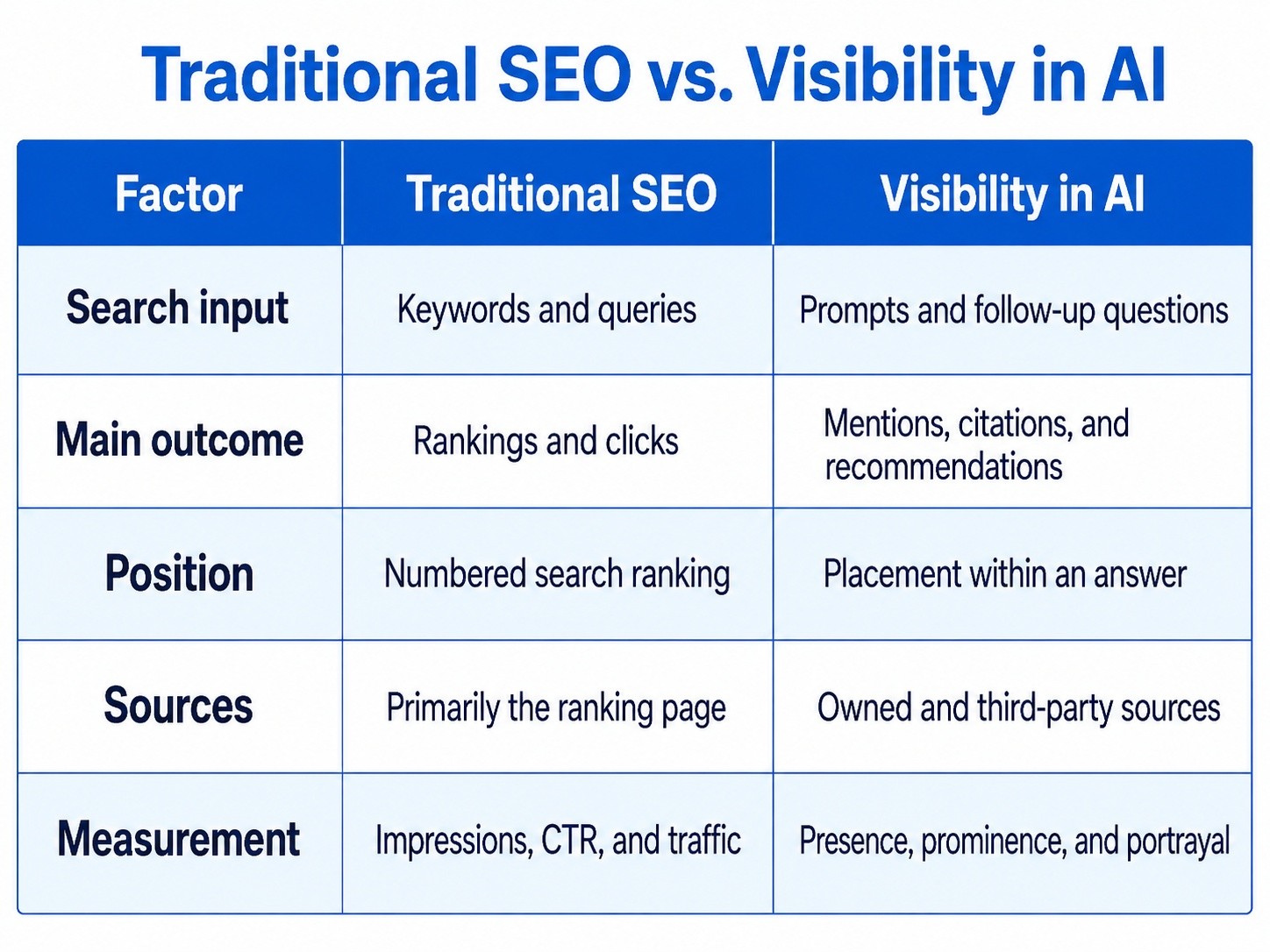
The two still overlap. In March 2026, Ahrefs analyzed 863,000 search results and 4 million AI Overview citations. Only 37.1% of cited URLs also ranked among the top 10 traditional blue links for the same query, while 36.7% did not rank in the top 100.
That does not mean SEO has stopped mattering. Google says pages must still be indexed and eligible for Search to appear as supporting links. However, AI features can run related fan-out searches and select sources beyond those ranking for the original query. AI visibility optimization should therefore complement SEO, not replace it.
Where does Generative AI visibility appear?
People now discover brands across several AI-powered experiences. In May 2026, OpenAI reported that ChatGPT had more than 900 million weekly users, while Google said AI Overviews had reached over 2.5 billion monthly users.
Generative AI visibility commonly appears in 3 places:
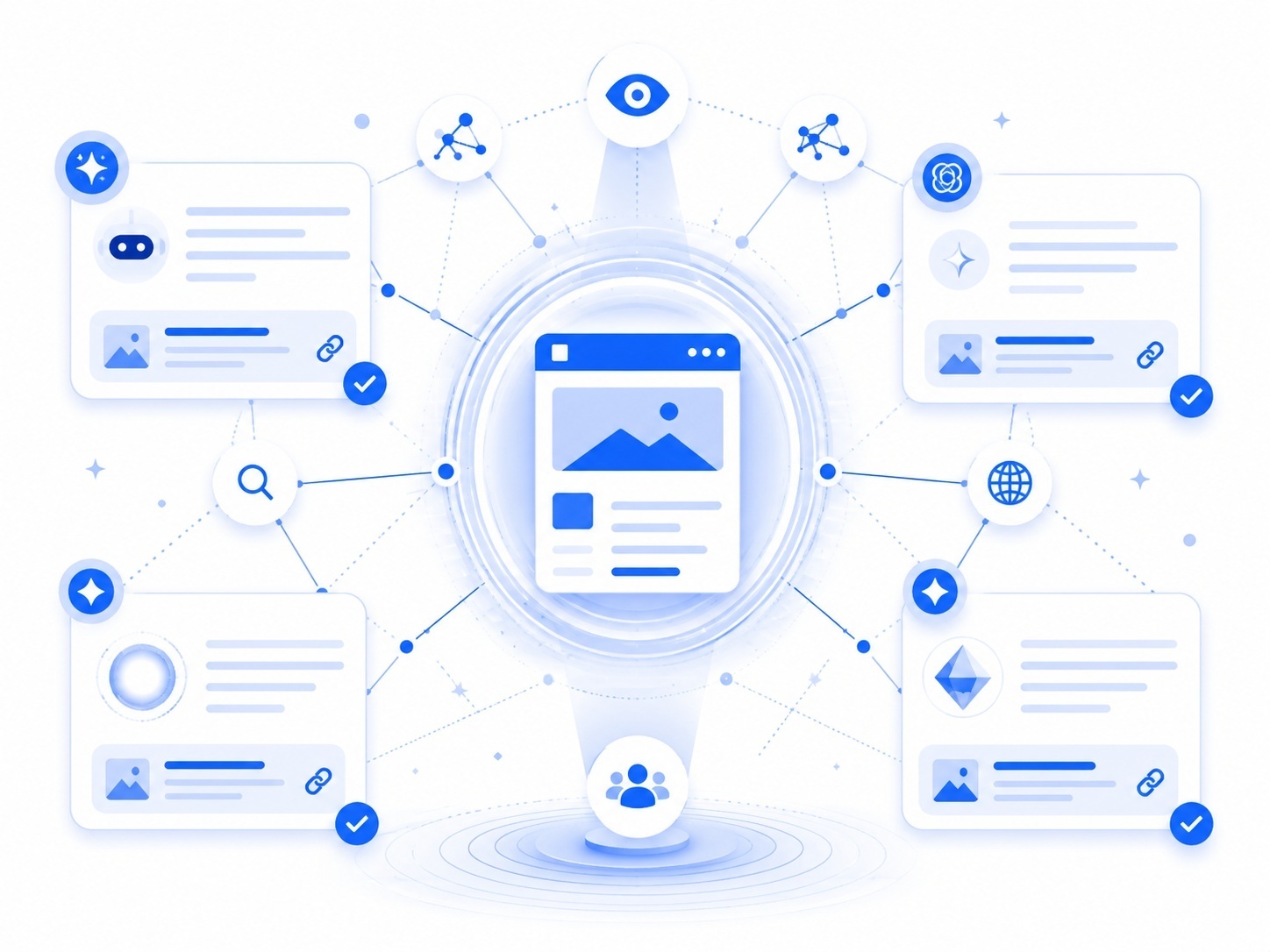
- Chat-based answer engines: Platforms such as ChatGPT, Claude, Perplexity, and Microsoft Copilot may mention, cite, compare, or recommend your brand when answering a user’s question.
- Google’s AI search experiences: AI Overviews, AI Mode, and Gemini synthesize information from multiple sources. Your brand may appear within the generated response, among its citations, or in a follow-up answer.
- AI-powered product discovery: Shopping assistants and recommendation tools can surface products based on factors such as relevance, specifications, price, availability, reviews, and third-party coverage.
Visibility on one platform does not guarantee visibility on another because each system uses different models, sources, and retrieval methods. Start with the platforms your audience uses most, then monitor your presence across each one separately.
Want to understand the optimization layer behind AI visibility? See how GEO works and how it differs from traditional SEO.
Why does visibility in AI matter for brands?
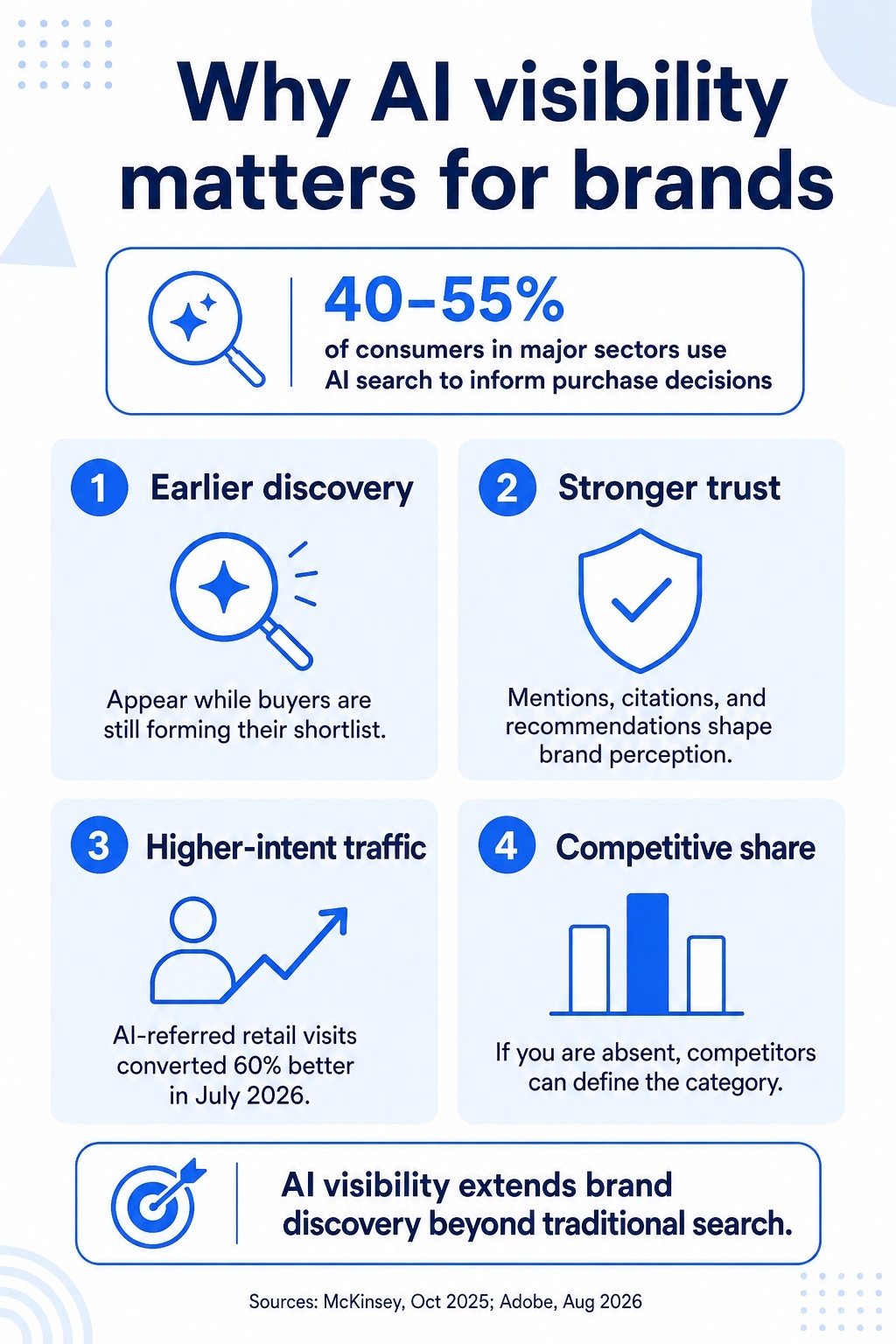
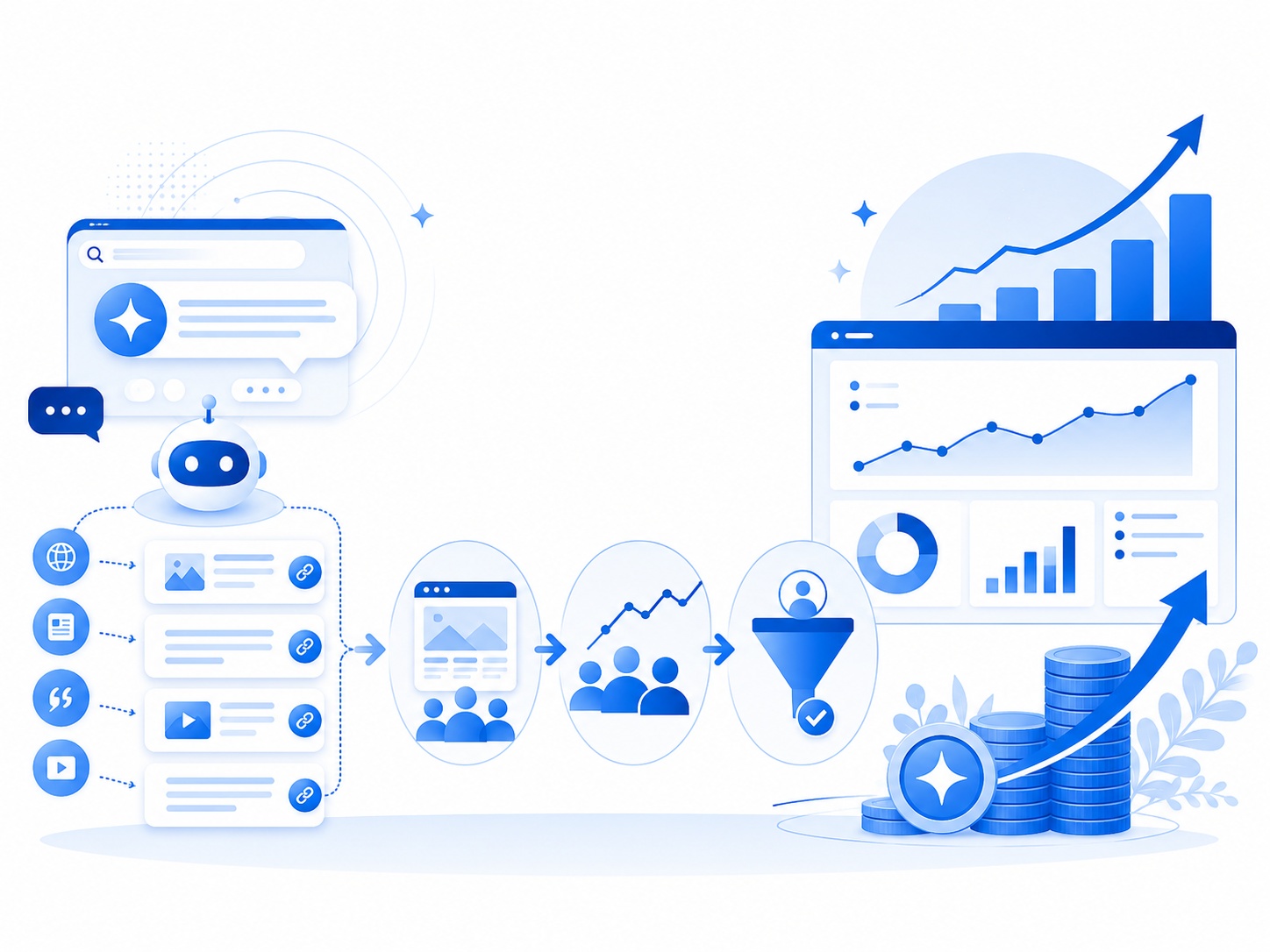
AI-generated answers increasingly influence which brands people discover, trust, and consider before visiting a website. McKinsey found that 40% to 55% of consumers across major sectors already use AI-powered search when making purchase decisions. This is why AI and business visibility can no longer be treated as separate concerns.
The business impact becomes clear in 4 areas:
- Introduces your brand earlier: More than 70% of AI search users ask top-of-funnel questions about categories, brands, products, and services. Appearing in these answers can put your brand into consideration before a buyer has formed a shortlist.
- Shapes trust and perception: An AI recommendation can influence how users view your expertise, products, strengths, and limitations. Adobe’s July 2026 survey found that 89% of consumers using AI for shopping click the links or sources provided, while 66% visit a brand’s website to verify a recommendation.
- Attract high-intent visitors: AI users often compare options and narrow their requirements before clicking. Adobe found that AI-referred retail visitors converted 60% better and generated 53% more revenue per visit than non-AI visitors in July 2026.
- Prevents competitors from owning the conversation: If your brand is absent, AI systems may recommend a competitor or rely on third-party sources to define your category. McKinsey found that brand-owned websites account for only 5% to 10% of the sources referenced in many AI search results.
AI visibility does not replace SEO. It expands brand discovery into the AI-generated answers that increasingly shape awareness, consideration, and purchasing decisions.
See why changing buyer behavior makes AI visibility tracking necessary alongside rankings and traffic reports.
How do AI platforms decide which brands to mention or cite?
AI platforms do not follow one universal ranking formula. For retrieval-enabled answers, the process can be understood like this:
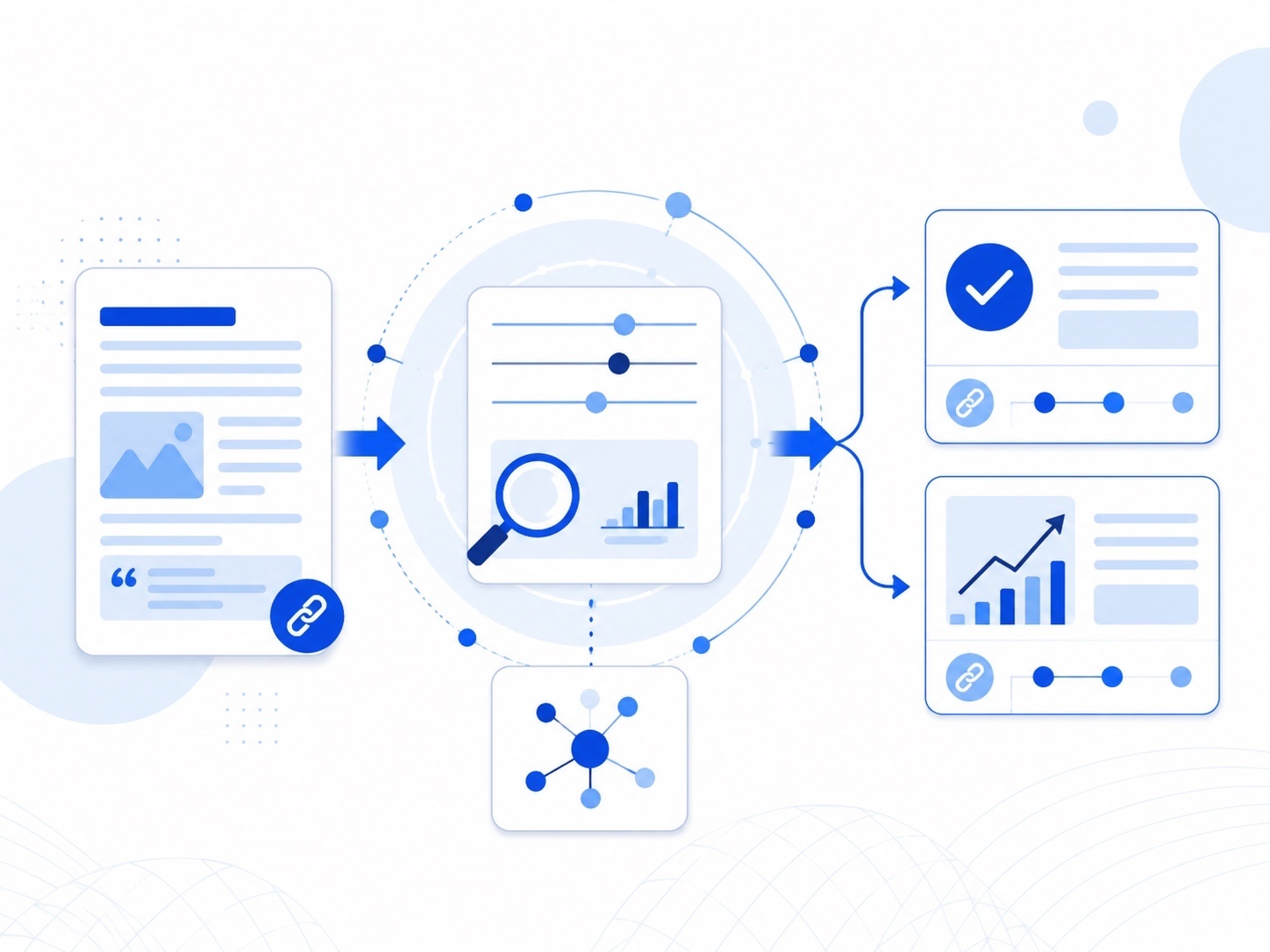
Prompt interpretation → query expansion → source retrieval → passage selection → answer generation → mention or citation
Google confirms that AI Overviews and AI Mode may use query fan-out, running several related searches across subtopics and data sources. The final selection is shaped by 6 connected factors:
- Relevance to the prompt: The platform looks for passages that match the user’s intent, context, and constraints, not merely pages targeting the exact keyword.
- Content clarity and extractability: Definitions, statistics, comparisons, and step-by-step instructions give AI systems usable evidence. An April 2026 study of 21,143 citations found that high-influence pages tended to be more modular, semantically aligned, and rich in extractable evidence. Q&A formatting alone did not improve their influence.
- Authority and evidence: Original research, expert insights, specific examples, and credible sources can strengthen a page’s eligibility for retrieval and citation.
- Third-party corroboration: Reviews, publishers, directories, forums, and industry websites can validate brand claims or provide independent context for comparisons and recommendations.
- Entity consistency: Consistent company names, product details, descriptions, and areas of expertise help platforms understand what the brand represents across multiple sources.
- Freshness and accessibility: Important information should be current, crawlable, internally linked, and available as visible text. Structured data should also match what users can see on the page.
Traditional rankings still matter, but AI visibility ultimately depends on how clearly, credibly, and comprehensively your content addresses the main question and its related subtopics.
Explore how AI citation patterns differ across ChatGPT, Google AI Overviews, and Perplexity.
How should you measure visibility in AI?
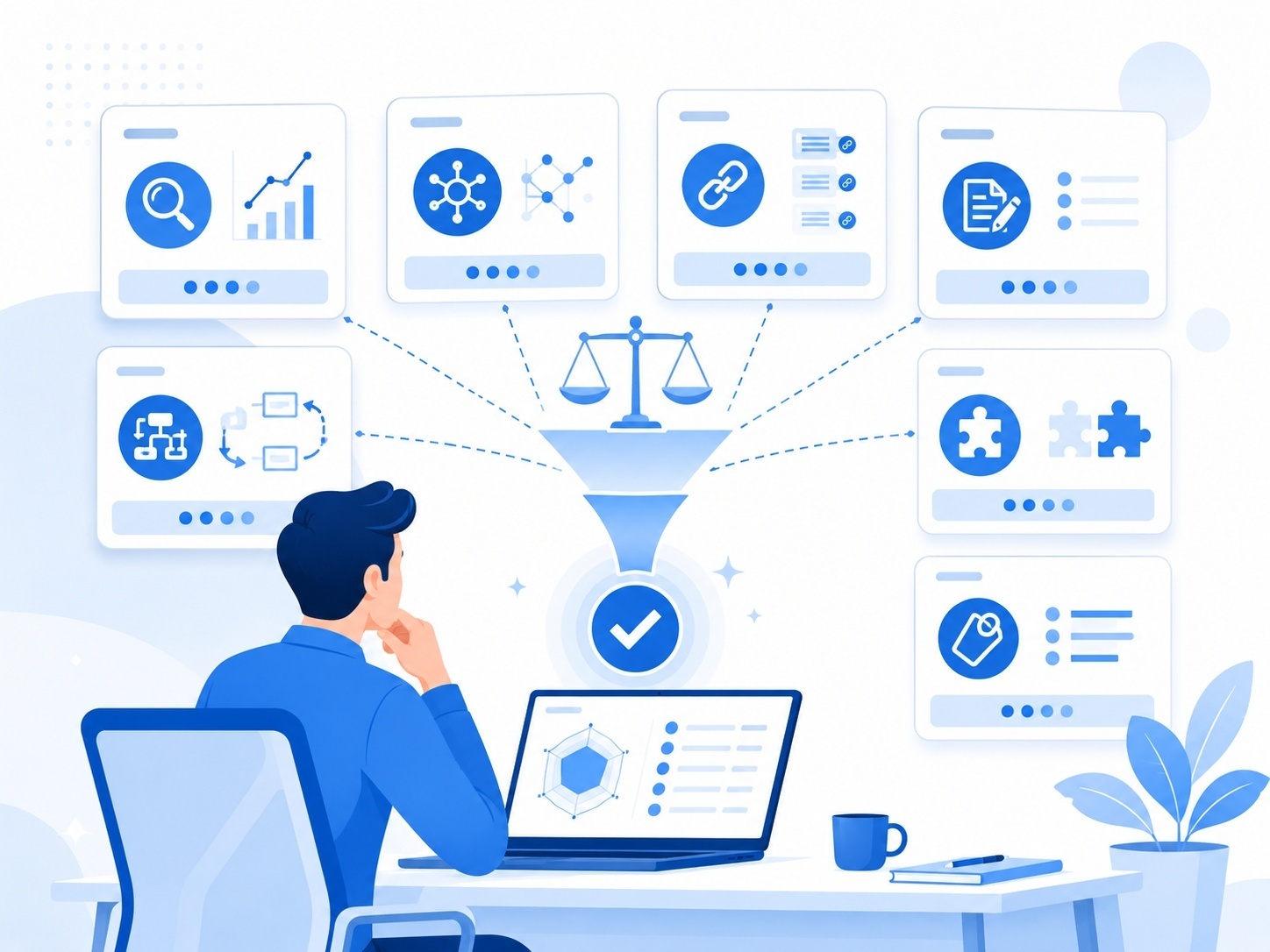
AI visibility is not captured by a single score. A brand may be mentioned frequently but rarely cited, appear prominently on one platform but not another, or receive citations that generate little recognition. The right metrics for AI-driven brand visibility therefore measure presence, prominence, attribution, accuracy, and business impact separately.
Use the following metrics to build a more complete view of your performance:
- Mention rate: The percentage of tracked prompts whose responses name your brand.
- Citation rate: The percentage of responses that link to or reference content from your website.
- Share of voice: Your brand’s share of all mentions received by the competitors included in your tracking set.
- Average position: Where your brand typically appears within an answer, such as first, third, or near the end.
- Citation ownership: The pages and domains AI platforms use when discussing your brand. This reveals whether the information comes from your website, review platforms, publishers, or competitors.
- Sentiment and factual accuracy: Whether AI responses describe your brand positively, neutrally, or negatively, and whether details such as pricing, features, and positioning are correct.
- Prompt coverage: The percentage of important informational, comparative, commercial, and branded prompts where your company appears.
- Traffic and persuasion: AI referral visits, branded searches, assisted conversions, sign-ups, and sales influenced by AI discovery.
Mentions and citations should be measured separately. A June 2026 Semrush study found that 62% of AI citations were “ghost citations,” meaning the platform linked to a website without naming its brand in the answer. A citation may demonstrate source value, but it does not always create brand recognition.
Use these simple formulas to establish consistent benchmarks:
- Mention rate = Brand appearances ÷ Prompts tracked × 100
- Citation rate = Responses citing owned content ÷ Responses tested × 100
- Share of voice = Brand mentions ÷ Total competitor-set mentions × 100
AI answers can vary by platform, location, wording, and testing session. To reduce misleading fluctuations, follow a controlled measurement process:
- Create a fixed set of prompts covering the topics and buying stages that matter to your audience.
- Group prompts by intent, topic, product category, and market.
- Test the same prompts across relevant AI platforms.
- Record mentions, citations, placement, sentiment, and factual accuracy separately.
- Repeat the tests on a consistent schedule instead of reacting to individual answers.
- Compare results by platform and prompt group before reviewing the overall trend.
Connect this monitoring with website performance data. Google Search Console’s generative AI reporting can help teams examine impressions by page, country, device, and date. Combined with prompt-level tracking and conversion data, this shows whether growing visibility in AI is improving recognition, attracting qualified visitors, or influencing customer decisions.
Build a more complete reporting framework with these 10 AI search metrics covering visibility, engagement, and conversions.
How to improve brand visibility in AI-driven search results?
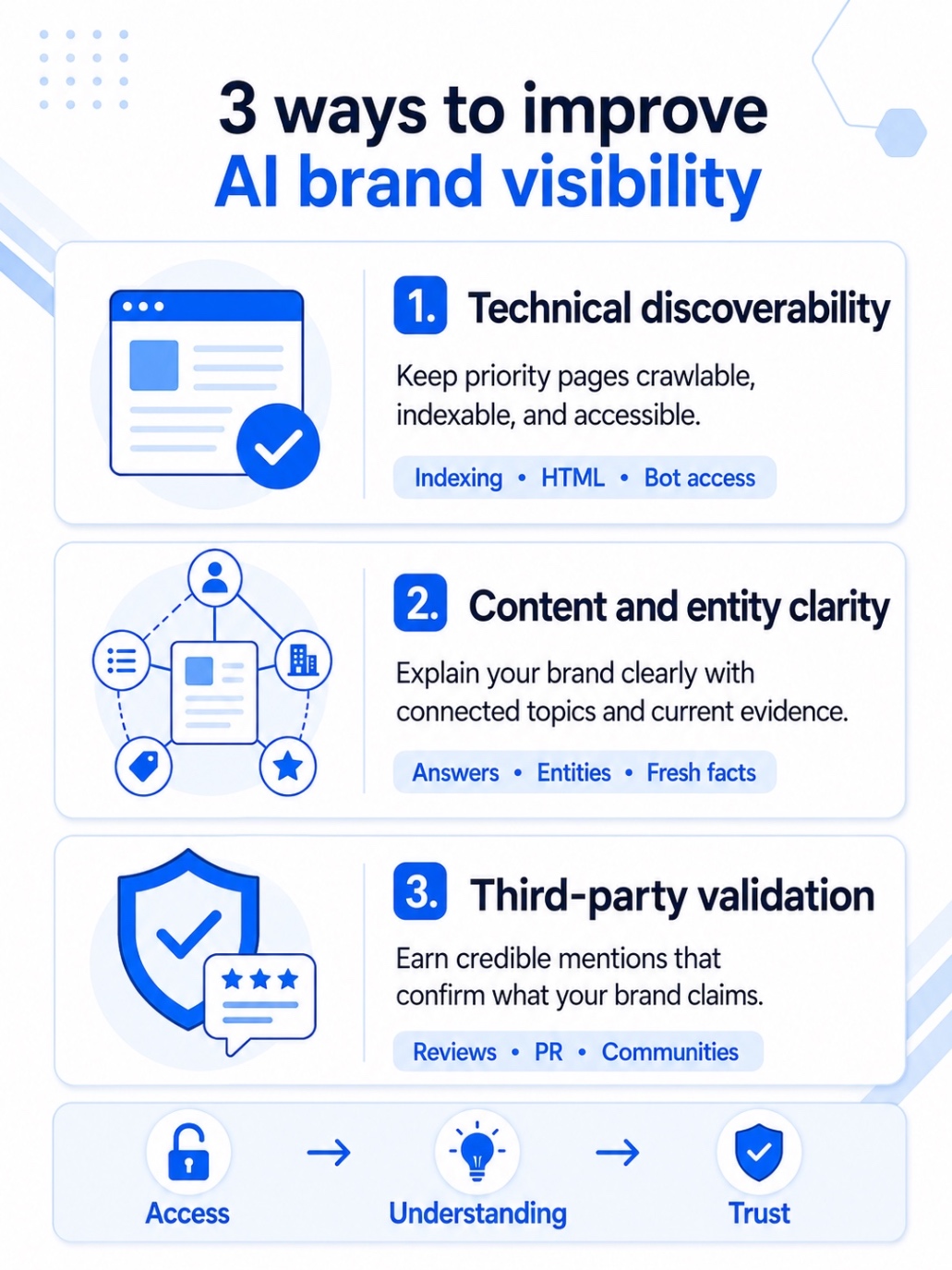
Improving AI visibility requires work across your website, content, and wider web presence. AI platforms need to access your information, understand your brand, and find credible sources that support it.
Here are the 3 areas to prioritize.
1. Improve technical discoverability
The first step in how to improve website AI visibility is ensuring that priority pages can be crawled and indexed. Check response codes, canonicals, XML sitemaps, internal links, and accidental noindex directives. Review robots.txt alongside CDN, firewall, and bot-management rules because a crawler allowed in robots.txt may still be blocked elsewhere.
Keep essential headings, descriptions, prices, availability, specifications, and product details in accessible HTML. Server-rendered text is safer when critical information otherwise depends on JavaScript or user interaction. Images and related product data should remain crawlable. Ecommerce and local businesses should also keep Merchant Center feeds and Google Business Profile information accurate.
Search and training crawlers serve different purposes:
- OpenAI: OAI-SearchBot supports ChatGPT search visibility, while GPTBot controls content collection for model training.
- Perplexity: PerplexityBot discovers pages for search results and is not a model-training crawler.
- Anthropic: Claude-SearchBot supports search discovery, ClaudeBot supports model development, and Claude-User handles user-triggered retrieval.
- Google: Googlebot controls Google Search crawling, including AI Overviews and AI Mode. Google-Extended manages certain Gemini training and grounding uses but does not affect Search inclusion or rankings.
Google does not require special AI schema for generative search, and llms.txt neither helps nor harms Google Search visibility. Use structured data only for a legitimate SEO purpose and ensure it matches visible content.
2. Improve content and entity clarity
The practical answer to how to increase brand visibility in AI is to remove ambiguity. Clearly explain what your company does, which category it belongs to, who it serves, and what differentiates it. Keep brand, product, category, and feature descriptions consistent across owned and external profiles.
Answer the main question directly, then add evidence, examples, limitations, and next steps. Maintain a connected explanation instead of publishing isolated answer blocks.
Build topical coverage through pillar and supporting pages connected by descriptive internal links. Add useful comparison and evaluation content. Support important claims with original research, first-party data, named experts, clear methodology, or firsthand experience.
Keep pricing, features, integrations, specifications, and availability current. Review missed prompts and competitor citations to determine whether you should update an existing page, create a missing guide, or add stronger evidence.
Adobe’s August 2026 analysis found that explanatory resources were generally easier for AI systems to interpret than thin or highly dynamic transactional pages. Giving commercial pages enough context can strengthen AI content visibility without weakening the buyer experience.
3. Strengthen third-party validation
Your website explains your brand, but independent sources help confirm its claims. External credibility is central to how to improve brand visibility in AI responses.
Pursue relevant industry coverage, analyst reports, review platforms, expert contributions, customer discussions, partnerships, podcasts, webinars, and digital PR. Participate helpfully in communities where customers evaluate your category. Keep external listings accurate and request corrections when trusted sources contain outdated information.
Ahrefs’ December 2025 research found that branded web mentions correlated strongly with visibility across major AI platforms. This does not prove causation, but it reinforces the value of a credible and consistent presence across the web.
Focus on genuine corroboration from sources that influence real decisions, not manufactured mentions.
Technical access creates eligibility, clear content builds understanding, and independent validation builds confidence.
Learn how to make your strongest pages more referenceable with our guide to improving AI citations.
Which mistakes weaken AI visibility optimization?
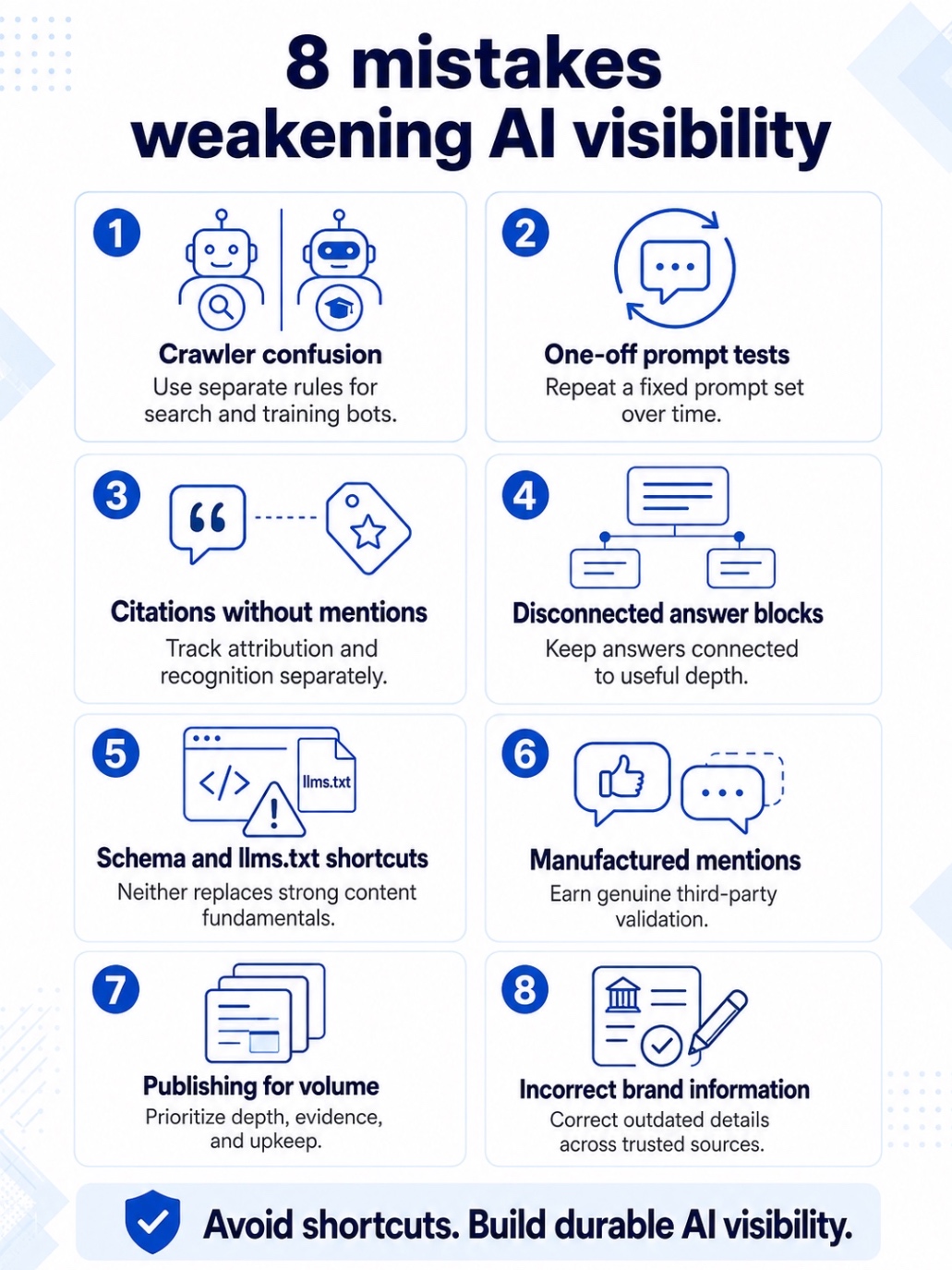
AI visibility can decline even when a team is publishing regularly and tracking citations. The problem is often an unreliable tactic, incomplete measurement, or conflicting information.
Here are 8 mistakes that can undermine the work.
1. Treating all AI crawlers alike
Search, training, and user-triggered crawlers serve different purposes. Review each bot separately so you do not block search visibility while trying to restrict model training.
2. Relying on one-off prompt tests
AI answers vary by platform, wording, location, and testing session. Use a fixed prompt set, repeat tests consistently, and evaluate trends instead of reacting to one response.
3. Measuring citations without mentions
A platform can cite your page without naming your brand. Track mention rate and citation rate separately to distinguish source attribution from actual brand recognition.
4. Creating disconnected answer blocks
Direct answers help retrieval, but excessive chunking can make a page repetitive and shallow. Follow concise answers with connected explanations, evidence, examples, and useful context.
5. Treating schema or llms.txt as shortcuts
Google does not require special AI schema and ignores llms.txt for Search visibility. Use structured data only when it supports a valid search feature and matches visible content.
6. Manufacturing third-party mentions
Artificial reviews, forum posts, or low-quality placements are not how to improve brand visibility in AI responses. Earn credible coverage from sources that genuinely influence customer decisions.
7. Publishing pages for volume
More pages do not automatically create authority. Prioritize complete topical coverage, original evidence, clear differentiation, and maintained content over near-duplicate pages targeting every prompt variation.
8. Ignoring incorrect brand information
Outdated prices, features, descriptions, and listings can shape inaccurate answers. Monitor how platforms portray your brand and correct conflicting information across owned pages and authoritative external profiles.
The strongest way to improve AI visibility is to replace isolated hacks with accurate content, controlled measurement, appropriate crawler access, and genuine external validation.
Check your workflow against this AI search optimization checklist to catch visibility blockers before publishing.
How does AI visibility differ across industries?
AI platforms do not evaluate every industry through the same evidence. User intent, risk level, purchase journey, and available sources determine where brands appear and which claims are considered credible.
Here is how the most important visibility surfaces change across 4 industry groups:
1. SaaS and B2B companies
Visibility often appears in product comparisons, software shortlists, use-case answers, and vendor recommendations. AI systems may use product pages, documentation, review platforms, case studies, expert articles, and customer discussions. Brands should keep features, pricing, integrations, and positioning consistent while supporting performance claims with specific evidence.
2. Ecommerce and local businesses
Product discovery depends heavily on accurate specifications, pricing, availability, images, ratings, location details, and customer reviews. Google confirms that Merchant Center and Business Profiles can help products and services appear in AI responses. These businesses should keep product feeds and local profiles aligned with their websites.
3. Healthcare, finance, and regulated industries
Visibility depends more heavily on accuracy, qualified expertise, current evidence, and authoritative sources because incorrect information can cause real harm. Google’s helpful and reliable content guidance emphasizes clear sourcing and demonstrable expertise. Expert authors, medical reviewers, publication dates, regulatory information, and carefully framed claims are particularly important.
4. Publishers and media companies
Publishers often gain visibility as cited or quoted sources rather than recommended products. Their challenge is balancing discoverability with content protection and licensing. Cloudflare’s 2026 AI crawler access controls allow content owners to monitor and manage how AI services access their work, making crawler policies part of both visibility and commercial strategy.
The right approach is therefore industry-specific: identify the questions your audience asks, the evidence those answers require, and the sources AI platforms use to verify them.
Use this AEO vs GEO comparison to match the right optimization approach to your industry and audience.
How do you build a 90-day AI visibility program?
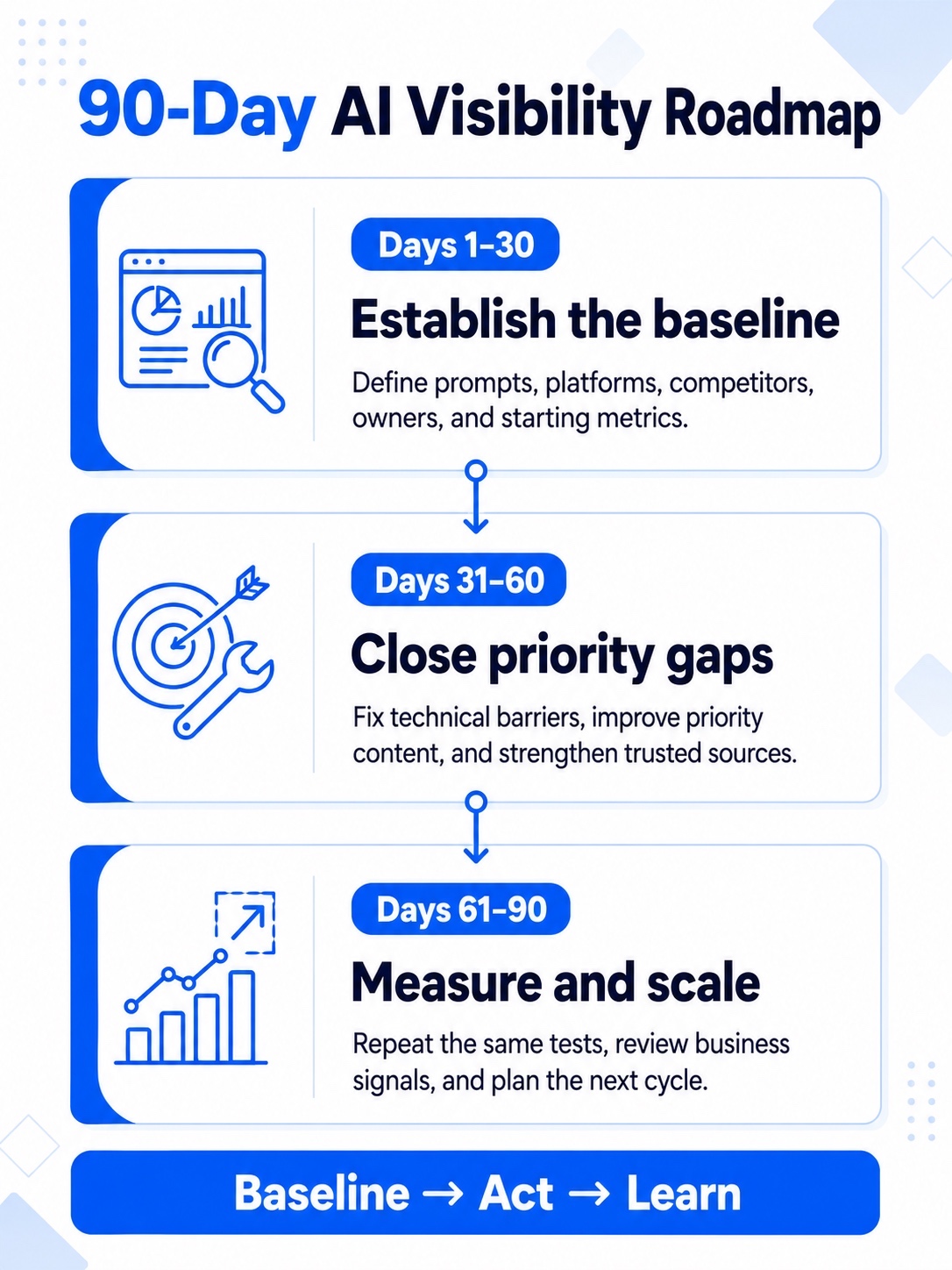
A 90-day program turns how to improve brand visibility in AI-driven search results from a broad goal into an owned, measurable workflow. It creates operating discipline, not a guarantee that mentions, citations, or recommendations will improve within a fixed period.
Here is how to organize the actions, owners, deliverables, and measurement cadence across 3 phases.
1. Days 1–30: Establish the baseline
Begin by measuring your current position before making changes.
Owners: Assign a program lead and representatives from SEO, content, analytics, web development, product marketing, and digital PR.
Actions: Select the AI platforms, markets, and competitors you need to track. Build a fixed prompt set covering informational, comparative, commercial, and branded intent. Test those prompts consistently and record mention rate, citation rate, share of voice, position, sentiment, and factual accuracy. Audit crawlability, index eligibility, priority content, entity consistency, and the external sources influencing AI responses.
Deliverables: Produce a prompt library, baseline dashboard, technical issue list, competitor comparison, source map, and ownership document.
Review schedule: Hold one weekly working session and establish a monthly reporting format. Google’s generative AI performance report can supplement prompt tracking with page, country, device, and impression data where available.
2. Days 31–60: Close priority gaps
Use the baseline to identify which problems have the greatest business relevance.
Owners: SEO and web teams handle technical barriers, content teams address information gaps, product teams verify brand details, and PR teams work on external authority.
Actions: Group gaps by cause, such as inaccessible pages, missing topic coverage, weak evidence, inaccurate information, or limited third-party validation. Prioritize prompts connected to valuable topics and buying decisions. Update useful existing pages before creating new ones, publish missing comparisons or guides, correct product and profile information, and pursue credible coverage from sources that already influence category discussions.
Deliverables: Complete priority page updates, new content briefs, technical fixes, corrected external profiles, an outreach plan, and a dated change log.
Review schedule: Review implementation weekly, but avoid changing direction because of one fluctuating response. Record what changed so later movement can be evaluated in context.
3. Days 61–90: Measure and scale
Repeat the original tests under the same conditions to create a fair comparison.
Owners: The analytics lead evaluates results, while the program owner decides what to expand, revise, or stop.
Actions: Compare mentions, citations, share of voice, position, accuracy, and prompt coverage with the baseline. Connect those results with AI referral traffic, branded search, assisted conversions, and other business signals. Treat relationships as directional unless stronger evidence establishes causation. Scale the activities showing consistent progress and move newly discovered prompts into the next measurement cycle rather than altering the current benchmark.
Deliverables: Create a 90-day performance report, updated dashboard, next-quarter backlog, and documented operating process.
Review schedule: Continue weekly monitoring and conduct a deeper monthly review. The most reliable way to improve AI visibility is to repeat this baseline, action, and learning cycle instead of treating it as a one-time campaign.
Start the first 30 days with a structured process to audit brand visibility across prompts, competitors, citations, and answer accuracy.
Which AI visibility trends should brands watch in 2026?
AI search is becoming a measurable part of brand discovery, reputation, and customer decision-making. The most important AI visibility trends show how teams must adapt their monitoring, content, and reporting practices.
Here are 6 developments brands should prepare for:
1. Visibility measurement is becoming more standardized
An IAB measurement framework reports that more than 20 companies now sell AI visibility tools using different methodologies. Emerging standards are beginning to define visibility through presence, prominence, portrayal, persuasion, and data quality.
2. Each platform requires separate monitoring
ChatGPT, AI Overviews, AI Mode, Perplexity, and Gemini use different models, sources, and retrieval processes. A combined score can hide platform-specific gains, losses, citations, or inaccuracies, so teams should examine each platform separately.
3. Third-party corroboration is becoming more influential
AI systems can use publishers, review platforms, videos, directories, forums, and customer discussions when evaluating brands. Consistent recognition across credible external sources can reinforce positioning and product claims beyond what a company says on its website.
4. Brand accuracy is becoming a governance concern
Visibility can become harmful when AI responses misstate pricing, features, policies, or positioning. Marketing, product, legal, and support teams need a shared process for finding inaccuracies and correcting conflicting information across owned and authoritative external sources.
5. Product and agentic discovery is expanding
AI experiences are moving beyond answering questions to comparing products, checking availability, and completing tasks. Brands need accurate product feeds, accessible interfaces, clear specifications, and current pricing so AI systems can use their information reliably.
6. Attribution extends beyond referral traffic
AI may influence awareness and consideration without generating a traceable click. Brands should compare visibility changes with branded searches, direct visits, assisted conversions, customer surveys, and sales feedback rather than measuring performance through AI referrals alone.
Together, these shifts make AI and business visibility part of the same operating discipline rather than separate marketing concerns.
Explore the wider shifts shaping AEO trends in 2026 and how brands should adapt.
Conclusion
Start by selecting the AI platforms and high-value prompts that matter most to your audience. Record your mentions, citations, position, accuracy, and competitor share to establish a baseline. Then identify the most important visibility gap and assign a clear owner to address it.
Improve technical access, update weak or outdated pages, correct conflicting brand information, and strengthen credible third-party coverage. Repeat the same prompt tests consistently to measure progress instead of reacting to individual answers. Treat visibility in AI as an ongoing program that connects monitoring directly to action.
Frequently asked questions
Is AI visibility the same as GEO or AEO?
Not exactly. Generative engine optimization and answer engine optimization describe practices for improving how content appears in responses produced by artificial intelligence. AI visibility is the measurable outcome. A strong approach combines both disciplines with established best practices instead of treating them as SEO replacements.
What is considered a good AI visibility score?
No universal score defines success. Useful visibility tracking evaluates brand presence across relevant queries, citation patterns, average placement, sentiment analysis, and competitor share. AI brand visibility delivers real value when those indicators improve consistently and connect to greater consideration, accurate representation, or conversions.
Can you track AI visibility for free?
Yes. Marketing teams and small businesses can manually test their brand name across major AI search engines using a fixed prompt set written in natural language. Free checks suit an early use case, but paid tools provide repeatable monitoring, history, competitor comparisons, and larger samples.
How often should brands measure their AI visibility?
Measure frequently enough to see direction without reacting to individual responses. A weekly or monthly schedule usually works for most brands. Review entity signals, trust signals, brand signals, and consistent mentions together, then use meaningful changes to guide the next content strategy decision.
How long does it take to improve AI visibility?
There is no guaranteed timeline. Progress depends on crawlability, authority, competition, and content optimization. Improvements in traditional search results and Google search results can support visibility, but increases in organic traffic may appear before, after, or independently of AI mentions.
Can smaller or newer brands gain visibility in AI answers?
Yes. AI search visibility matters for emerging companies because clear expertise can help them appear beside established competitors. Building brand awareness among potential customers requires focused coverage, original evidence, credible external references, and consistent usefulness instead of matching larger brands’ publishing volume.
Which AI platform should a brand prioritize first?
Start with the platform your audience uses for the highest-value decisions. Compare prompt coverage with organic search traffic, direct visits, and web traffic to identify where discovery already occurs. Prioritize one platform initially, but test others because models and source selections vary.
How is AI visibility different from traditional brand monitoring?
Brand monitoring records mentions across news, social platforms, reviews, and the wider web. Visibility analysis examines how AI systems interpret those references through entity recognition and whether the resulting answer strengthens or weakens brand perception, recommendation likelihood, accuracy, and customer consideration.


.svg)


.webp)