

Scalenut vs AthenaHQ: Which Is Worth Investing in 2026?

Scalenut Vs AthenaHQ Quick Summary
- Best Overall: Scalenut is the better choice for most SEO and content teams because it combines AI visibility tracking with content creation, optimization, audits, internal linking, backlinks, and SEO workflows.
- Best For AI Visibility Intelligence: AthenaHQ is stronger for monitoring brand visibility, citations, competitors, and share of voice across a wider set of AI search platforms.
- Best For GEO + SEO Execution: Scalenut is the better fit when AI visibility insights need to become content briefs, page updates, optimization tasks, and authority-building actions.
- Best For Citation And Source Insights: AthenaHQ offers strong source intelligence, while Scalenut is more practical when citation gaps need to connect with content, backlinks, and community engagement.
- Best For Prompt Understanding: AthenaHQ stands out for prompt volume and trend intelligence, while Scalenut is stronger for turning prompt gaps and query fan-out insights into content improvements.
- Best For Competitor Benchmarking: AthenaHQ works well for broader competitor visibility reporting, but Scalenut is more useful when competitor gaps need to turn into SEO and content actions.
- Best Pricing Value: Scalenut offers better overall value, with plans starting at $24/month. AthenaHQ starts at $245/month, making it better suited for teams focused mainly on AI search intelligence.
AI search is now a real part of how people discover brands. It is no longer enough to rank on Google alone.. Teams also need to know whether they show up in ChatGPT, Perplexity, Gemini, Google AI Overviews, and other AI answers. That is why GEO tools have become important, and Scalenut and AthenaHQ are two names that stand out in this space.
At first glance, both tools seem to solve the same problem: helping brands track and improve AI visibility. But once I started comparing them closely, the difference became clearer. They overlap in some areas, but they are not built for the exact same kind of team, workflow, or use case.
I tested both Scalenut and AthenaHQ to understand which one would actually make more sense for my team. In this review, I’ll break down how they compare across visibility tracking, citations, prompts, competitors, pricing, user reviews, and overall value.
What Is Scalenut?
Scalenut is an SEO + GEO platform that helps teams plan, create, optimize, and improve content for both search engines and AI search engines. It brings AI visibility tracking, keyword planning, content creation, content optimization, audits, and SEO workflows into one platform, so teams can manage organic visibility and AI search presence from the same place.
What Is AthenaHQ?
AthenaHQ is an AEO and GEO platform that helps brands understand and improve how they appear across AI search engines. It focuses on AI visibility tracking, brand mentions, citations, competitor insights, and workflows that help teams monitor and optimize their presence in AI-generated answers across platforms like ChatGPT, Perplexity, Claude, Gemini, and more.
Which Tool Offers Better AI Visibility Tracking?
AI visibility tracking is usually the first thing people check in a GEO tool. Before you optimize anything, you need to know where your brand shows up in the search results, which AI platforms mention you, how often competitors appear, and whether your visibility is improving or dropping.
How Does Scalenut Handle AI Visibility Tracking?
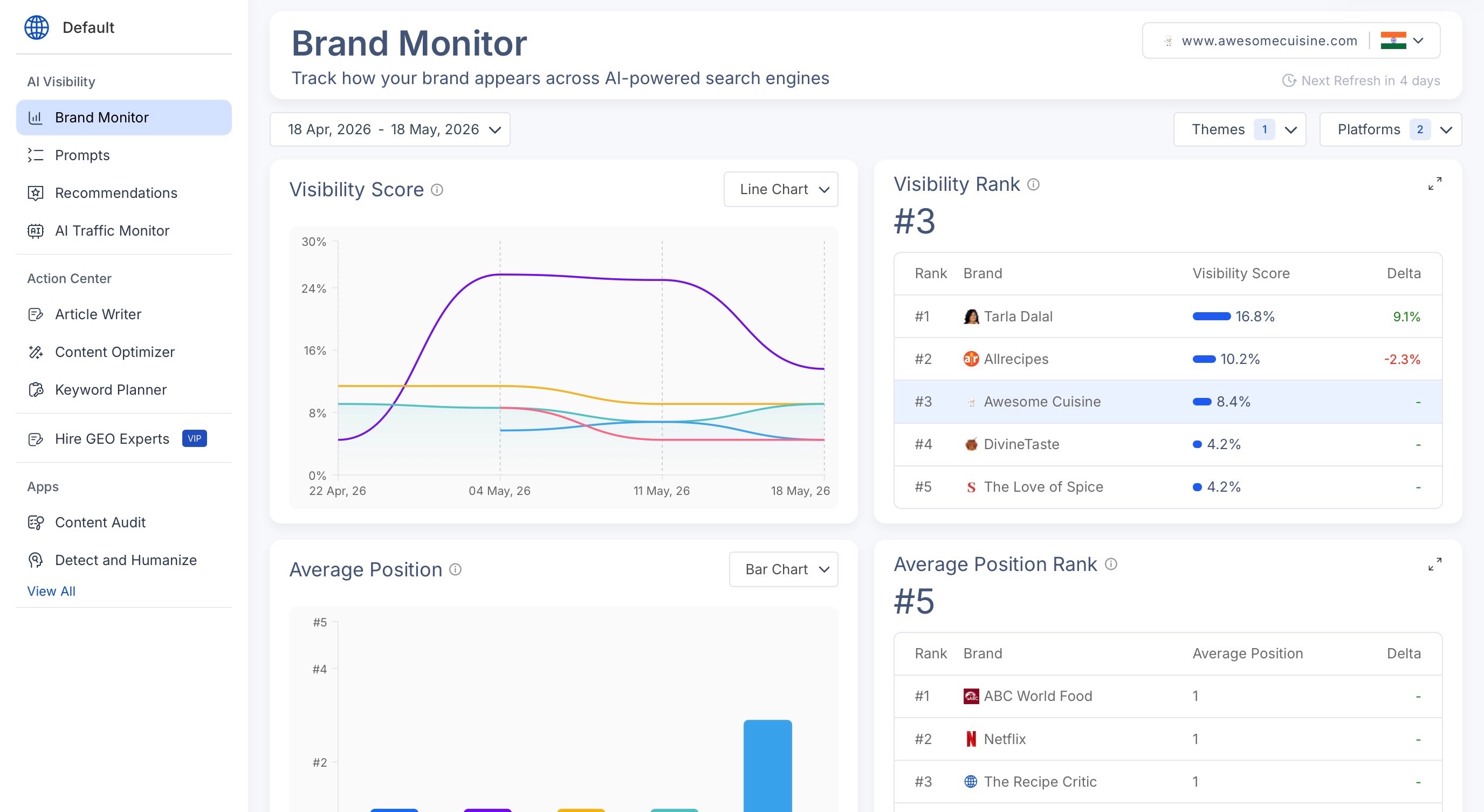
Scalenut tracks AI visibility in a more SEO-led way. You can monitor Visibility Score, Share of Voice, Average Position, prompt tracking, brand mentions, sentiment, citations, and query fan-out across platforms like ChatGPT, Google AI, and Perplexity, depending on the plan.
What stood out to me is that Scalenut does not keep AI visibility separate from the rest of your SEO work. The insights connect with prompt gaps, recommendations, AI traffic monitoring, content optimization, and audit workflows. So if your brand is missing from important prompts, it is easier to figure out what to fix next.
How Does AthenaHQ Handle AI Visibility Tracking?
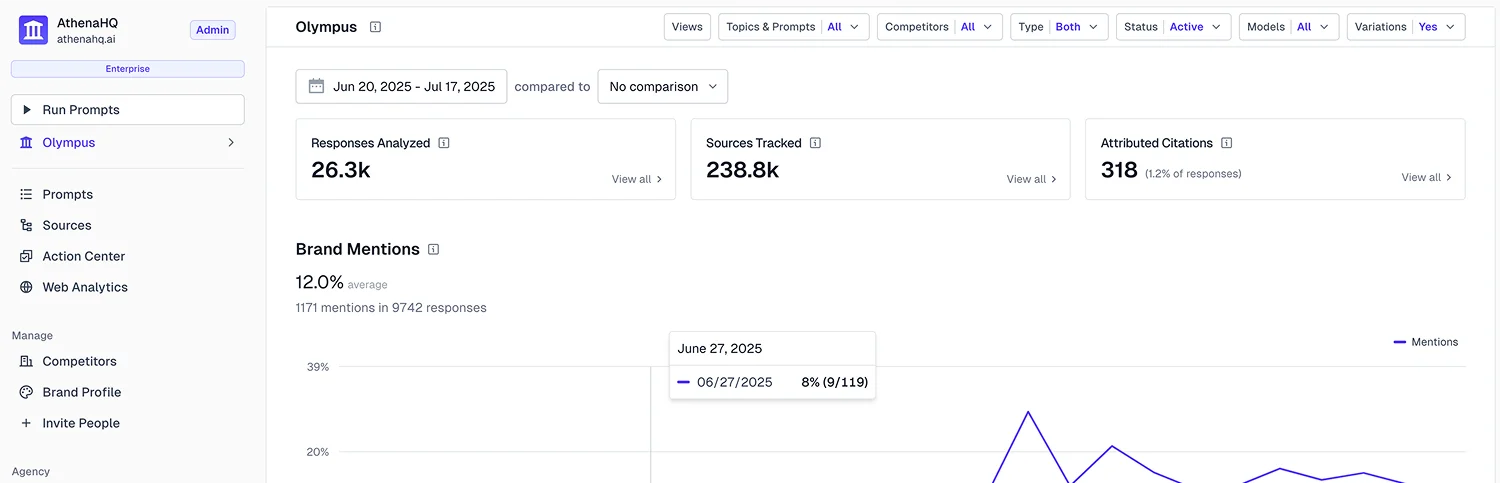
AthenaHQ feels stronger if your main priority is wider generative AI platform coverage. It tracks brand visibility across major engines like ChatGPT, Perplexity, Gemini, Google AI Mode, Google AI Overviews, Claude, Copilot, and Grok.
What I liked here is that AthenaHQ is very focused on the visibility layer. It gives you a broad view of where your brand is being mentioned, missed, or compared against competitors. But it still feels more like an AI search intelligence platform than traditional SEO tools that provide a full SEO workflow, so you may need a separate process to turn those insights into content updates or SEO fixes.
My Take
AthenaHQ wins on wider AI platform coverage. But if you want AI visibility tracking that connects more naturally with SEO, content planning, optimization, and GEO execution, Scalenut feels more practical.
Which Tool Gives Better Citation And Source Insights?
Citation tracking matters because AI visibility is not just about being mentioned. You also need to know whether AI engines are citing your website, which sources they trust, and why competitors may be getting referenced instead of you.
How Does Scalenut Handle Citation And Source Insights?
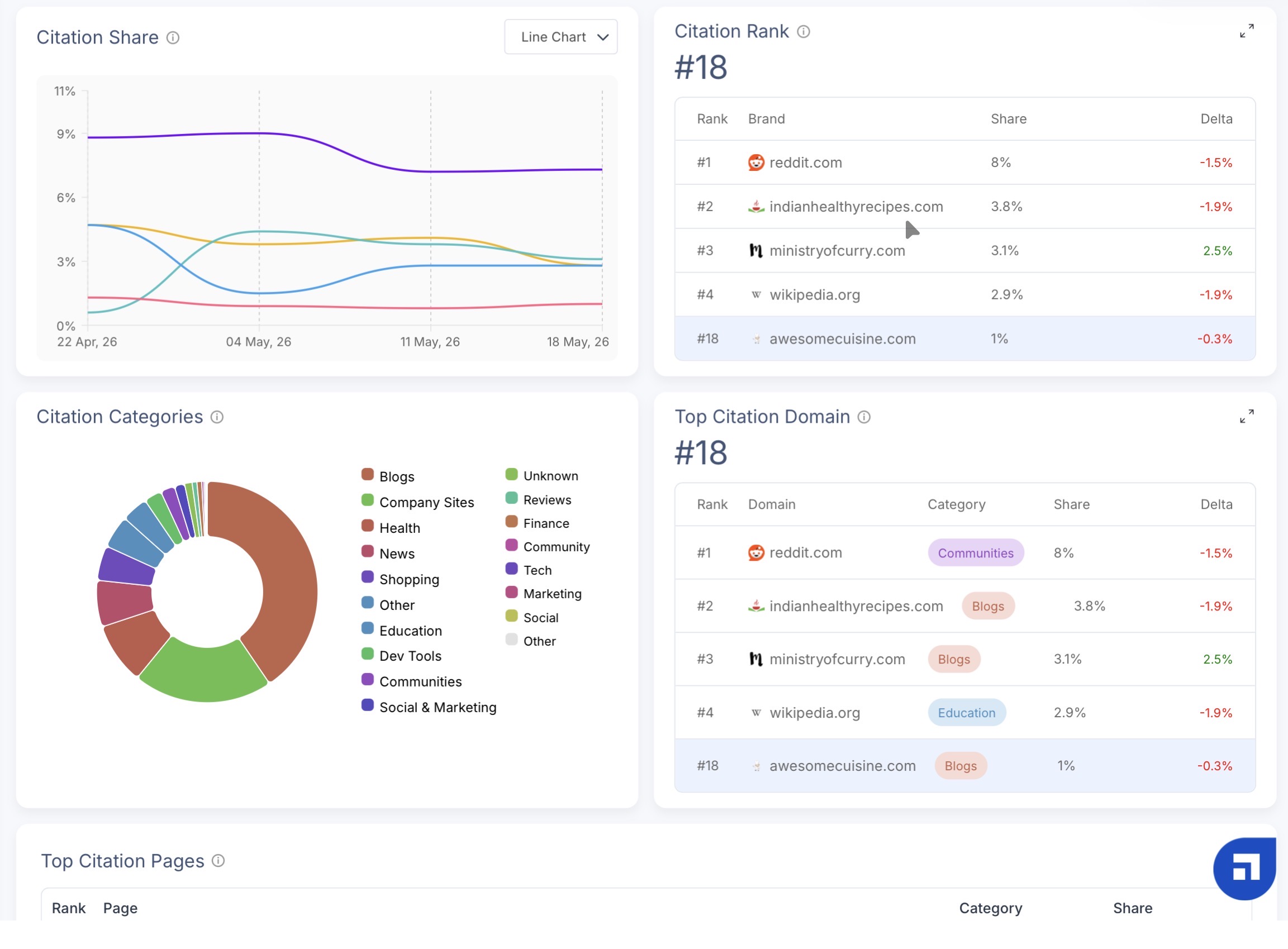
Scalenut looks at citations in a practical SEO-first way. It separates brand mentions from actual citations, so you can see whether AI is simply naming your brand or using your site as a trusted source.
What I liked here is that Scalenut connects citation gaps to action. It shows prompts where competitors are cited but your brand is missing, then ties those gaps to content opportunities, backlink suggestions, and platform engagement ideas. So you are not just looking at citation data. You get a clearer sense of what to create, improve, or build authority around next.
How Does AthenaHQ Handle Citation And Source Insights?
AthenaHQ is also strong here, especially if you want a more dedicated citation intelligence view. It helps you understand which sources influence AI answers, how often your brand is cited, and how your citation presence compares with competitors.
Where AthenaHQ feels useful is in the clarity of its reporting. It gives teams a good view of the source layer behind AI visibility. But it However, its Action Center still feels more intelligence-led than execution-led, so you may need a separate content or SEO workflow to act on those insights properly.
My Take
AthenaHQ is stronger if your main goal is citation intelligence and source-level reporting, especially with its advanced features. But Scalenut feels more practical if you want citation insights tied to content gaps, backlinks, community signals, and actual SEO execution.
Want to go deeper into citation and AI visibility workflows? Explore the best LLM optimization tools for AI visibility to see which platforms are worth considering.
Which Tool Helps You Understand Prompts Better?
Prompt understanding matters because GEO is not just about tracking keywords anymore. You need to know which AI prompts trigger your brand, which ones bring up competitors, and what subtopics AI engines consider before forming an answer.
How Does Scalenut Help You Understand Prompts?
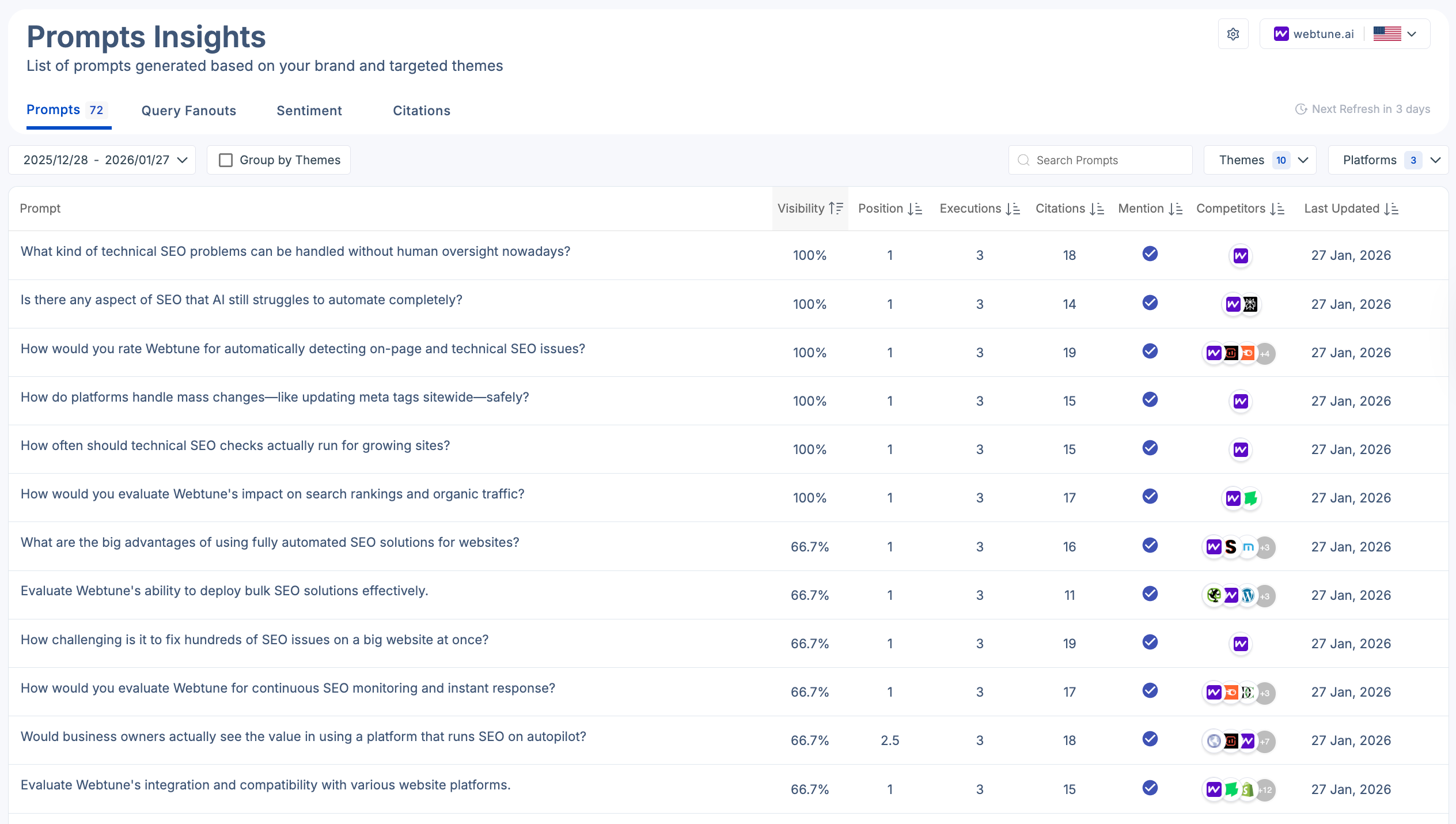
Scalenut gives you a more content-friendly view of prompts. Its Prompt Insights section helps you track queries by visibility, citation frequency, competitor mentions, and sentiment. It also shows query fan-out, which means you can see the sub-queries or reasoning paths AI engines may use before generating an answer.
What I liked here is that Scalenut makes prompt data easier to act on. If a prompt fans out into angles like pricing, setup, alternatives, or use cases, you can quickly spot what your content may be missing. That is useful when you are building briefs, adding FAQs, refreshing pages, or making a page more complete for AI search.
How Does AthenaHQ Help You Understand Prompts?
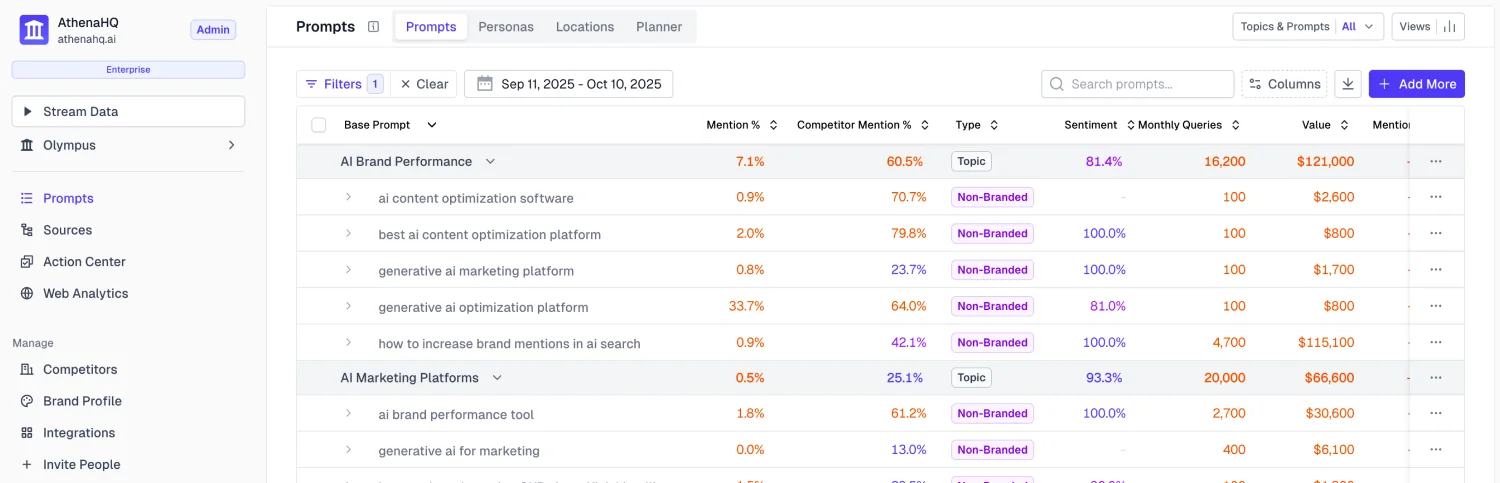
AthenaHQ is also strong here, especially for teams that want prompt demand and trend-level intelligence. Its Prompt Volume feature estimates AI search prompt volume, identifies trending prompts by vertical, and supports region-based prompt analysis.
That makes AthenaHQ useful if you want to understand which AI search prompts may be worth prioritizing before investing in content or authority building. But it still feels more like a strategic intelligence layer. You get useful prompt direction, but the actual content planning and search optimization work may still need to happen elsewhere.
My Take
AthenaHQ is stronger if you care about prompt volume, trends, and demand estimation. But Scalenut feels more practical for content and SEO teams because it helps you understand prompt gaps and turn them into briefs, sections, FAQs, and optimization tasks.
Need expert help turning prompts into content? Explore the best AI SEO agency for prompt-optimized LLM content to see which agencies can support AI-ready content workflows.
Which Tool Is Better For Competitor Benchmarking?
Competitor benchmarking matters because AI search is rarely brand-neutral. If a competitor keeps showing up in “best tools,” “alternatives,” or “which platform should I choose” prompts, you need to know where they are winning and why.
How Does Scalenut Handle Competitor Benchmarking?
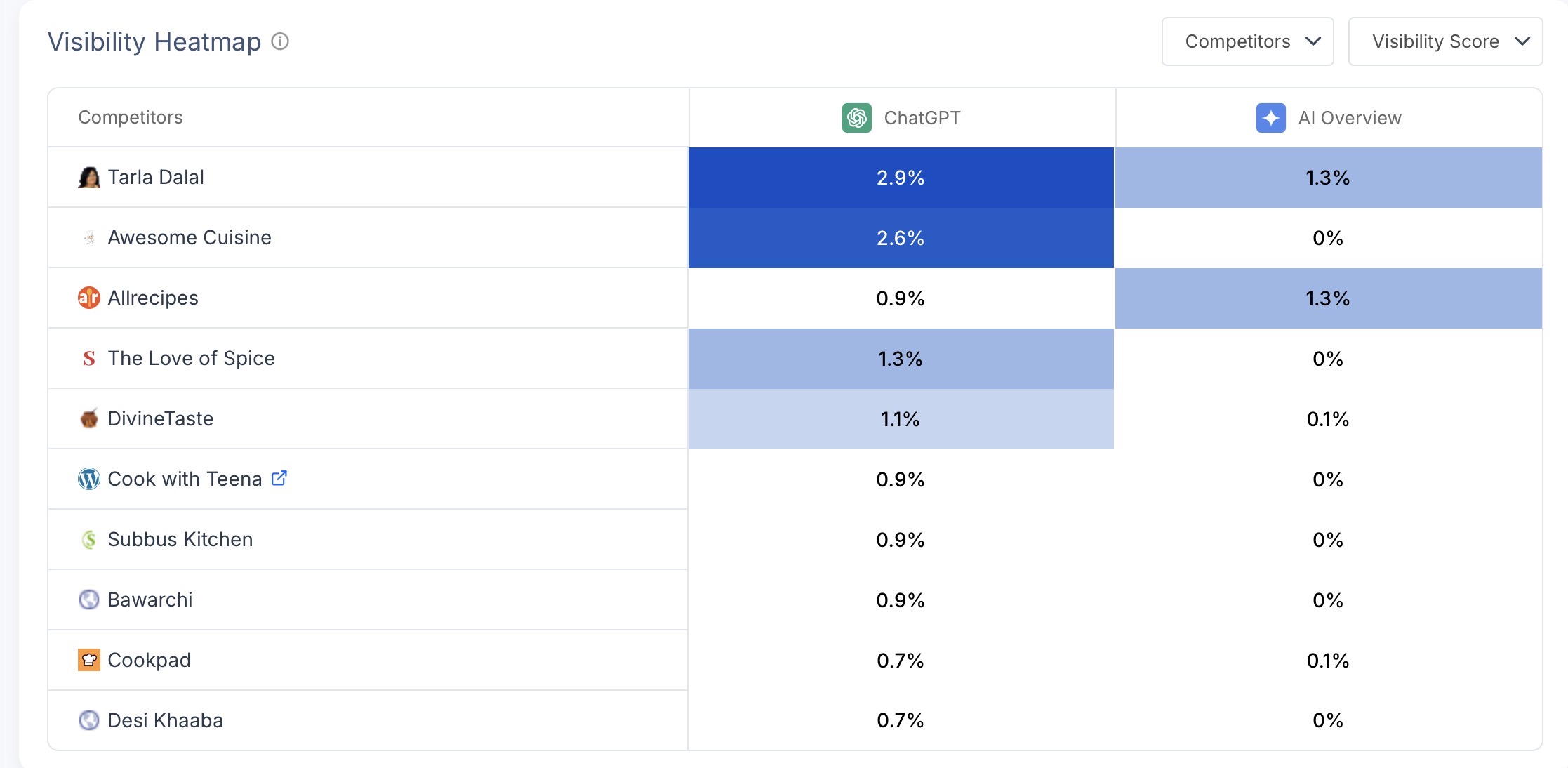
Scalenut gives you a useful competitor view through its AI Visibility and Brand Monitor features. You can track metrics like Visibility Score, Share of Voice, Average Position, visibility heatmaps, prompts, citations, and competitor mentions across AI engines.
What I liked here is that Scalenut does not just show you that a competitor is ahead. It helps you spot the prompts where they are appearing, the sources they are being associated with, and the content or authority gaps you may need to fix. That makes the benchmarking feel more useful for SEO and content teams, not just leadership reporting.
How Does AthenaHQ Handle Competitor Benchmarking?
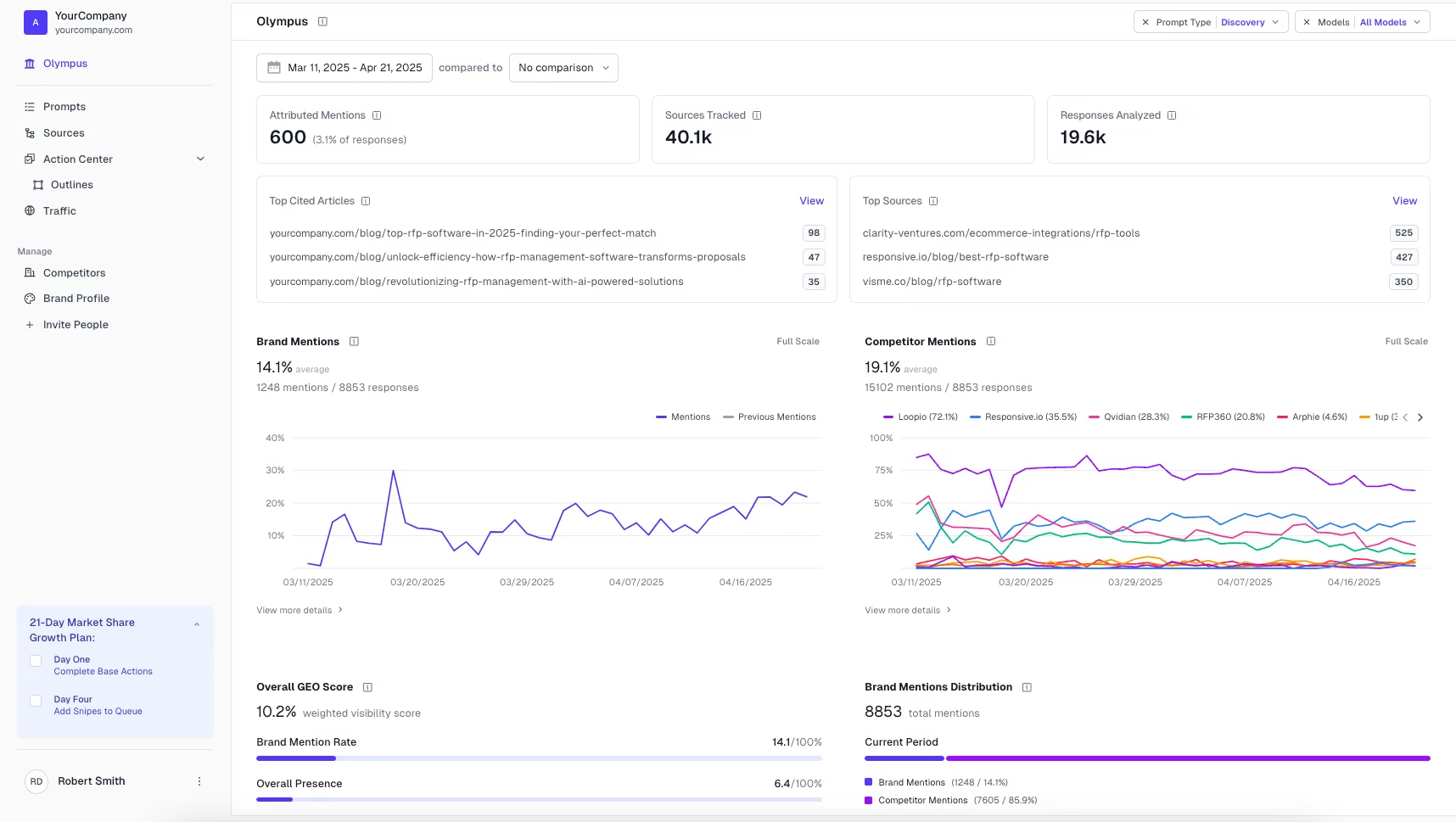
AthenaHQ also does this well, especially if you want a broader competitive benchmarking and AI visibility view. It tracks competitor AI visibility in real time and compares share of voice, recommendation frequency, positioning, brand mentions, citation rate, and sentiment across generative engines.
Where AthenaHQ feels strong is in competitive intelligence. It gives you a clearer sense of how your brand stacks up against competitors across AI platforms and connects to business outcomes. But again, it feels more reporting and intelligence-led, while the actual content fixes may still need a separate workflow.
My Take
AthenaHQ is stronger if you want broad competitor visibility reporting across AI visibility platforms. But Scalenut feels more practical if your goal is to turn competitor gaps into content updates, prompt coverage improvements, citation opportunities, and SEO actions.
Want to compare more options? Explore the best GEO tools for competitor analysis to see which platforms are worth using in 2026.
Which Tool Is Better For Turning GEO Insights Into Action?
GEO insights are useful, but only if they help you decide what content strategy to write, refresh, optimize, build, or fix next. This is where the difference between a reporting tool and an execution workflow becomes clearer.
How Does Scalenut Turn GEO Insights Into Action?
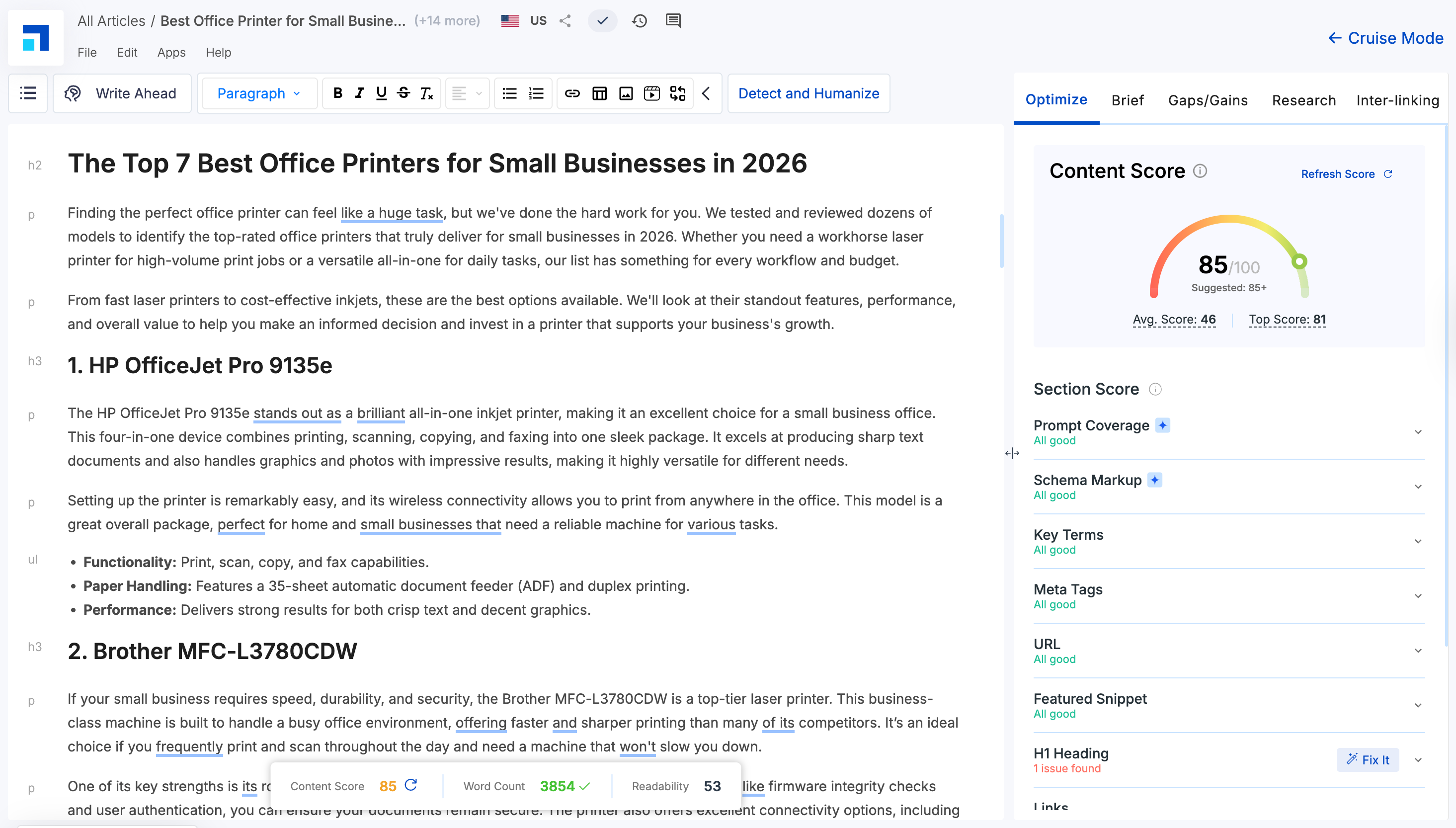
Scalenut feels stronger here because its GEO insights are connected to the actual SEO and content workflow. Its Recommendations engine helps identify content gaps, prompts where competitors are being cited, backlink opportunities, and platform engagement ideas, including keyword research.
What I liked here is that Scalenut does not leave you staring at a dashboard wondering what to do next. You can move from AI visibility data to keyword planning, AI-assisted article creation, content optimization, audits, internal linking, OnPage Pro, and backlink opportunities. That makes it more useful for teams that need to execute the GEO strategy, not just report on it.
How Does AthenaHQ Turn GEO Insights Into Action?
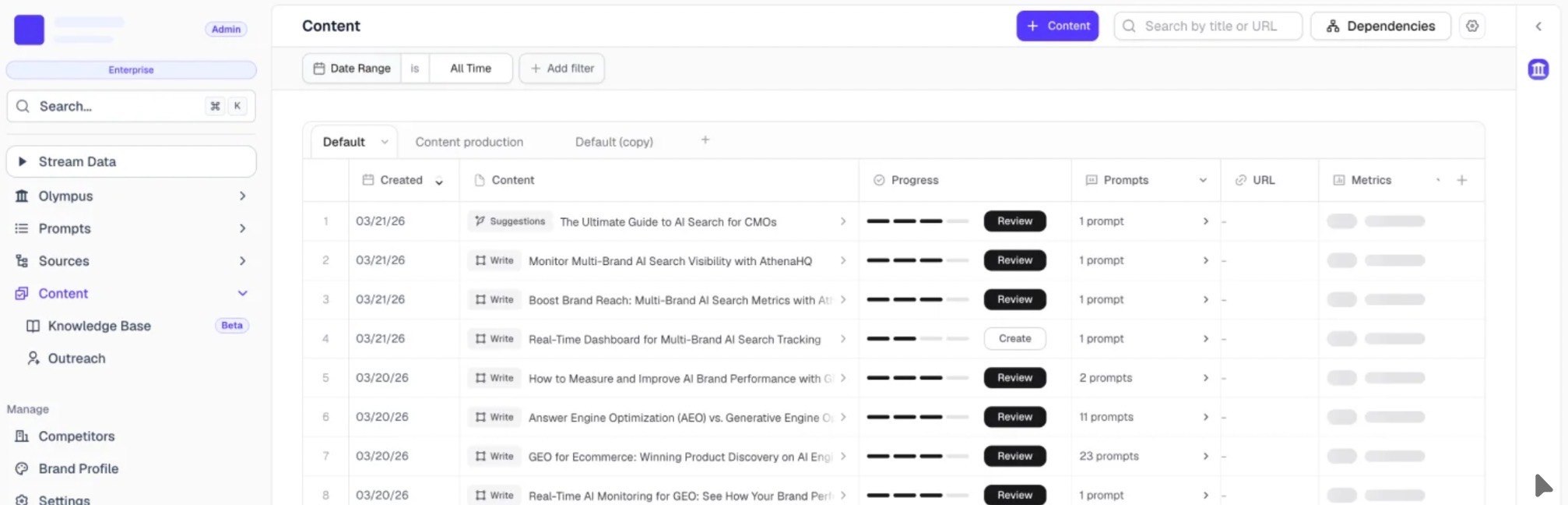
AthenaHQ also has a solid action layer. It offers automated content optimization recommendations, content gap insights, citation source analysis, link-building direction, and workflow support for improving AI search visibility.
Where AthenaHQ feels useful is that it helps teams organize their AEO work around visibility gaps and source opportunities. But from a content team’s point of view, it still feels more focused on AI search recommendations and workflow guidance than full SEO content execution.
My Take
AthenaHQ is strong if you want actionable recommendations and workflows built around AI search visibility. But Scalenut feels stronger for hands-on execution because it connects GEO insights with content creation, optimization, audits, internal links, backlinks, and broader SEO workflows in one place.
Want to connect AEO with traditional SEO more effectively? Read our guide on how to integrate AEO with traditional SEO strategies for maximum visibility.
Scalenut Vs AthenaHQ Pricing: Which Tool Gives Better Value?
Pricing is where the difference between these two tools becomes very clear. AthenaHQ starts much higher, while Scalenut gives you more entry points depending on how much AI visibility tracking, content creation, and SEO execution you need.
How Is Scalenut Priced?
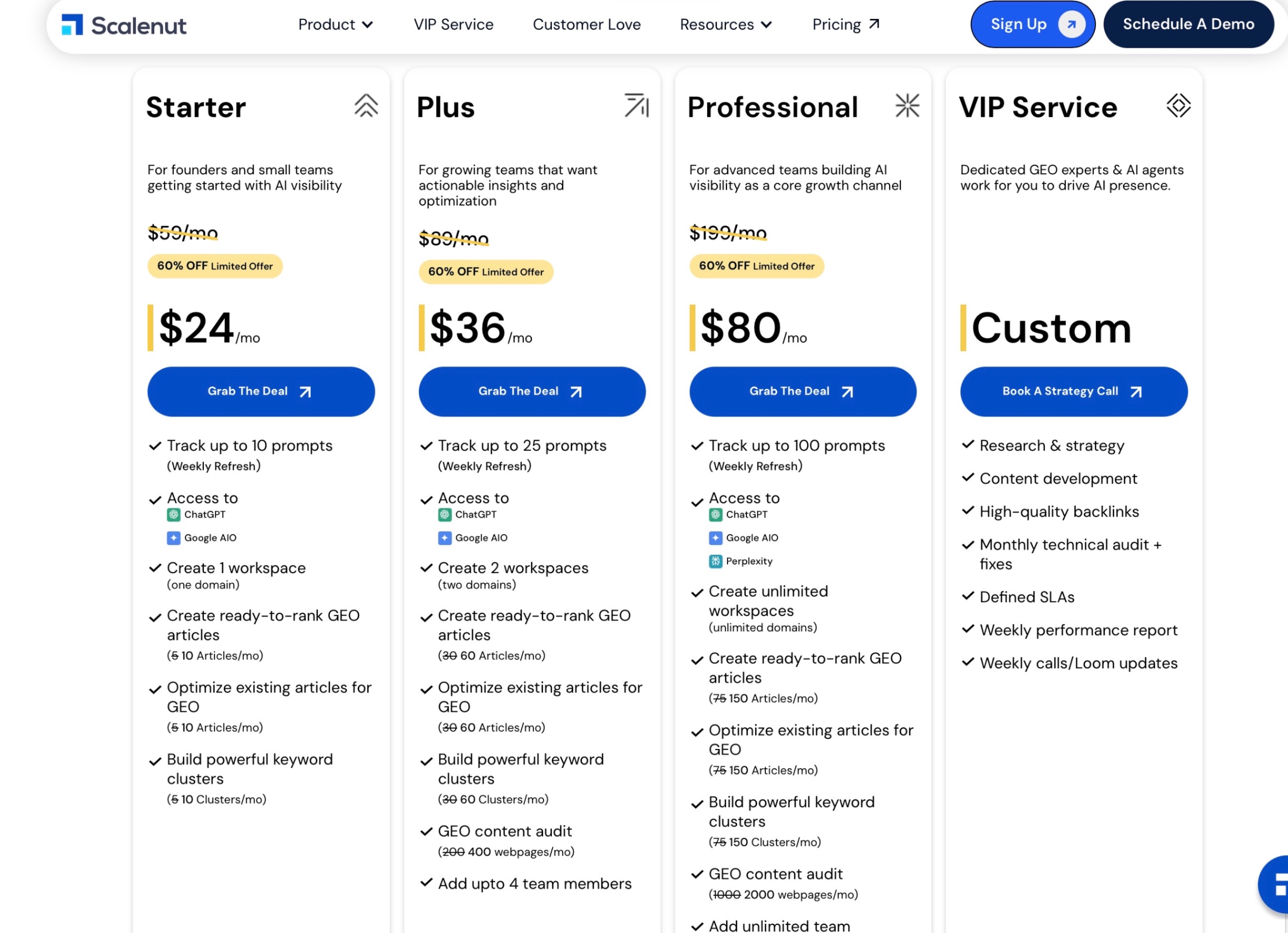
Scalenut has four pricing options:
- Starter: $24/month
- Plus: $36/month
- Professional: $80/month
- VIP Service: Custom
What I like about Scalenut’s pricing is that it feels more accessible for teams that want both GEO and SEO in one place. You are not only paying for AI visibility tracking. You also get access to content creation, optimization, audits, keyword clustering, and other execution features depending on the plan.
Get started with Scalenut for free!
How Is AthenaHQ Priced?
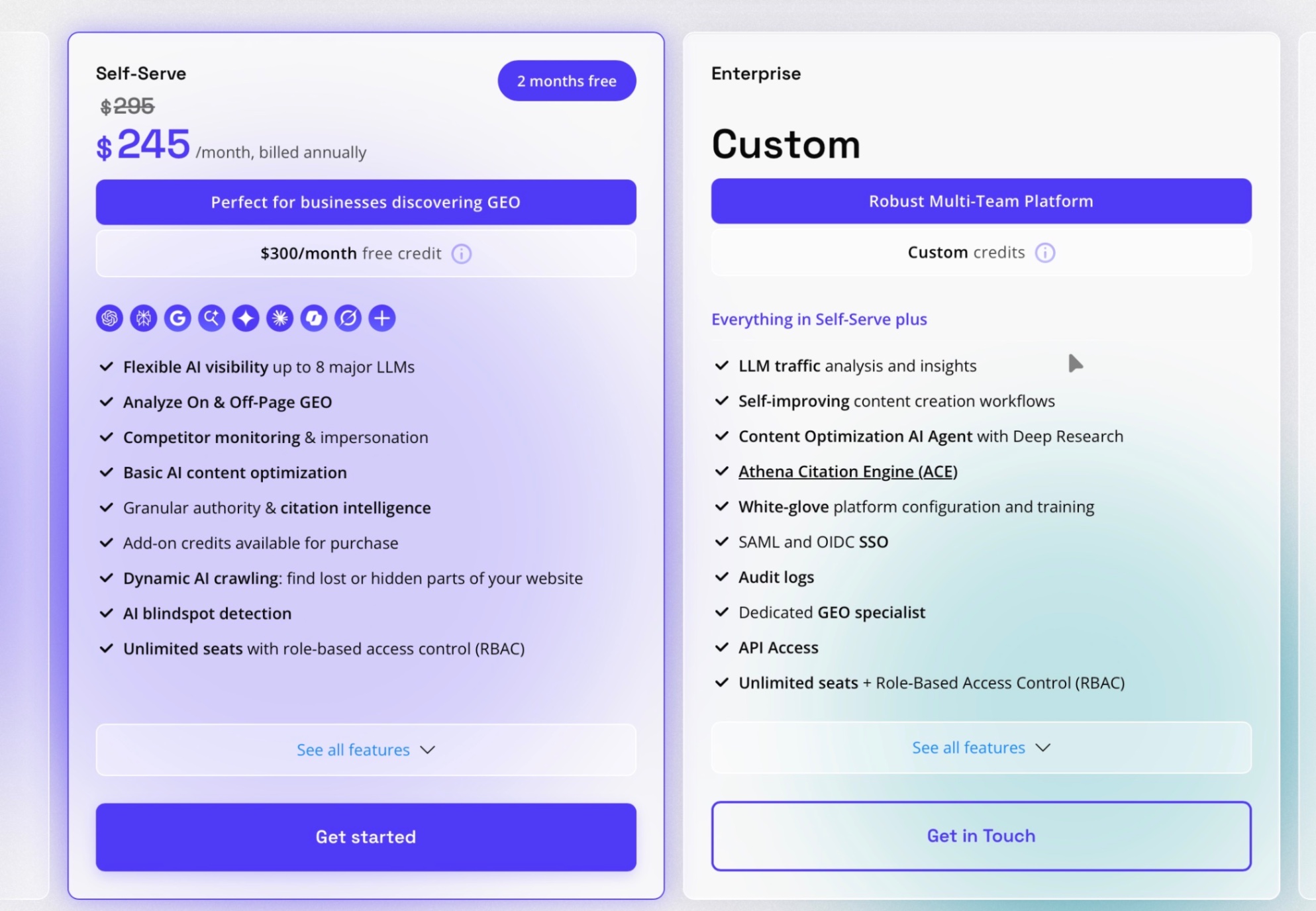
AthenaHQ has two pricing options:
- Self-Serve: $245/month, billed annually
- Enterprise: Custom
AthenaHQ is clearly priced for teams that are serious about AI search visibility and want a more dedicated GEO platform. The Self-Serve plan gives teams access to AthenaHQ without going straight into an enterprise contract, which is useful if the main priority is AI visibility coverage and AEO reporting.
My Take
For overall value, Scalenut is the better choice. It gives teams a lower starting price and a broader SEO + GEO workflow, which makes more sense if you need to track visibility, create content, optimize pages, and act on insights from one platform.
AthenaHQ makes more sense if your team is focused mainly on AI visibility, citation intelligence, and AEO reporting across a wider AI search environment. But purely from a value-for-money perspective, Scalenut feels like the more practical option for most SEO and content teams.
Scalenut Vs AthenaHQ Reviews: What Are Real Users Saying?
User reviews show a clear difference in how people experience both tools. Scalenut is appreciated more for the day-to-day SEO and content workflow, while AthenaHQ gets praised for AI visibility insights and strategic clarity.
Scalenut Review: What Are Real Users Saying About Scalenut?
What stands out in Scalenut’s reviews is that users seem to value how practical it is for content work. Scalenut users appreciate how it helps not only with visibility tracking but also with content creation, SEO scoring, and optimization. Users also appreciate how the platform helps them move faster without making the workflow too complicated.
“What I like best about Scalenut is how it combines AI writing with built-in SEO tools. The Cruise Mode makes it really easy to go from keyword research to a full article in one smooth process. It saves me time and helps me create content that actually ranks.”, says Jerry F on G2.
That lines up with Scalenut’s biggest strength in this comparison. It is built for teams that need to do the actual work after finding a visibility gap, whether that means creating a new article, improving an existing page, or tightening SEO basics.
The only limitation I would call out is fit. If your team only wants deep AI visibility tracking and does not need SEO plus GEO execution, Scalenut may feel like more than what you need. But for content and SEO teams, that broader workflow is exactly what makes it useful.
Want a deeper look at its SEO and GEO workflow? Read our full Scalenut review to see where it stands out and where it may not be the right fit.
AthenaHQ Review: What Are Real Users Saying About AthenaHQ?
AthenaHQ reviews lean more toward insight quality. Users seem to appreciate that it helps them understand what is happening across AI search, where their brand stands, and what actions they should prioritize.
That makes sense because AthenaHQ is more focused on AI visibility intelligence and connects these visibility metrics to provide a clearer view of AI search performance and competitor positioning without building the tracking process manually.
The limitation is that some users point to restrictions in self-serve plans and room for improvement in areas like prompt visibility, outreach, and competitor benchmarking.
“Local business schema and map pack visibility aren't part of the platform. We still need separate tools for traditional local SEO. It would be helpful if AthenaHQ could at least surface when AI models are pulling from Google Maps data versus web content, so we could prioritize fixes.”, says a G2 user.
That connects directly to where Scalenut has an advantage. If you need a tool that goes beyond insights and helps you act through content creation, optimization, audits, links, and broader SEO workflows, Scalenut feels more complete.
Want the full breakdown of its AI visibility features? Read our complete AthenaHQ AI review to see what it does well and where it still feels limited.
How Does AthenaHQ Compare To Other AI Visibility Platforms?
AthenaHQ is a strong AI visibility platform, but it is not the only tool worth comparing. Some platforms go deeper into enterprise analytics, some are built for content operations, and others focus more on how AI agents understand and interact with your website.
Here is how AthenaHQ compares with a few other AI visibility platforms.
1. AthenaHQ Vs Profound
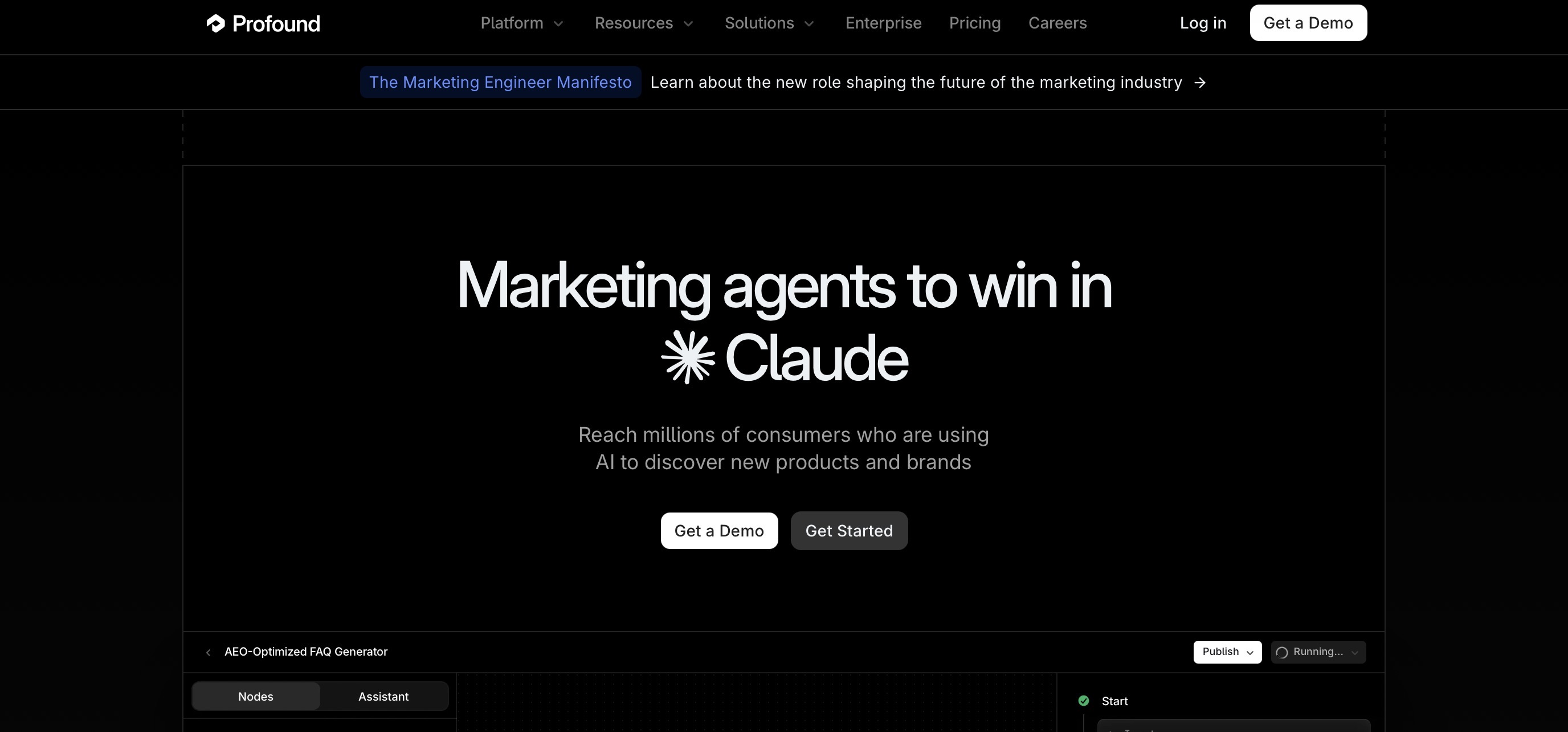
Who Is Profound Best For?
Profound is best for enterprise teams that need deeper AI search analytics, advanced reporting, citation data, share of voice tracking, sentiment insights, and competitor visibility across multiple AI answer engines.
How Does Profound Compare To AthenaHQ?
Profound feels more enterprise-heavy, while AthenaHQ feels easier to approach if your team wants AI visibility intelligence without a heavier setup. I would look at Profound for deeper analytics and enterprise reporting, and AthenaHQ for a cleaner AI visibility workflow that is easier to adopt.
Want to see how both tools stack up in more detail? Read our full AthenaHQ vs Profound comparison before choosing your AI visibility platform.
2. AthenaHQ Vs AirOps
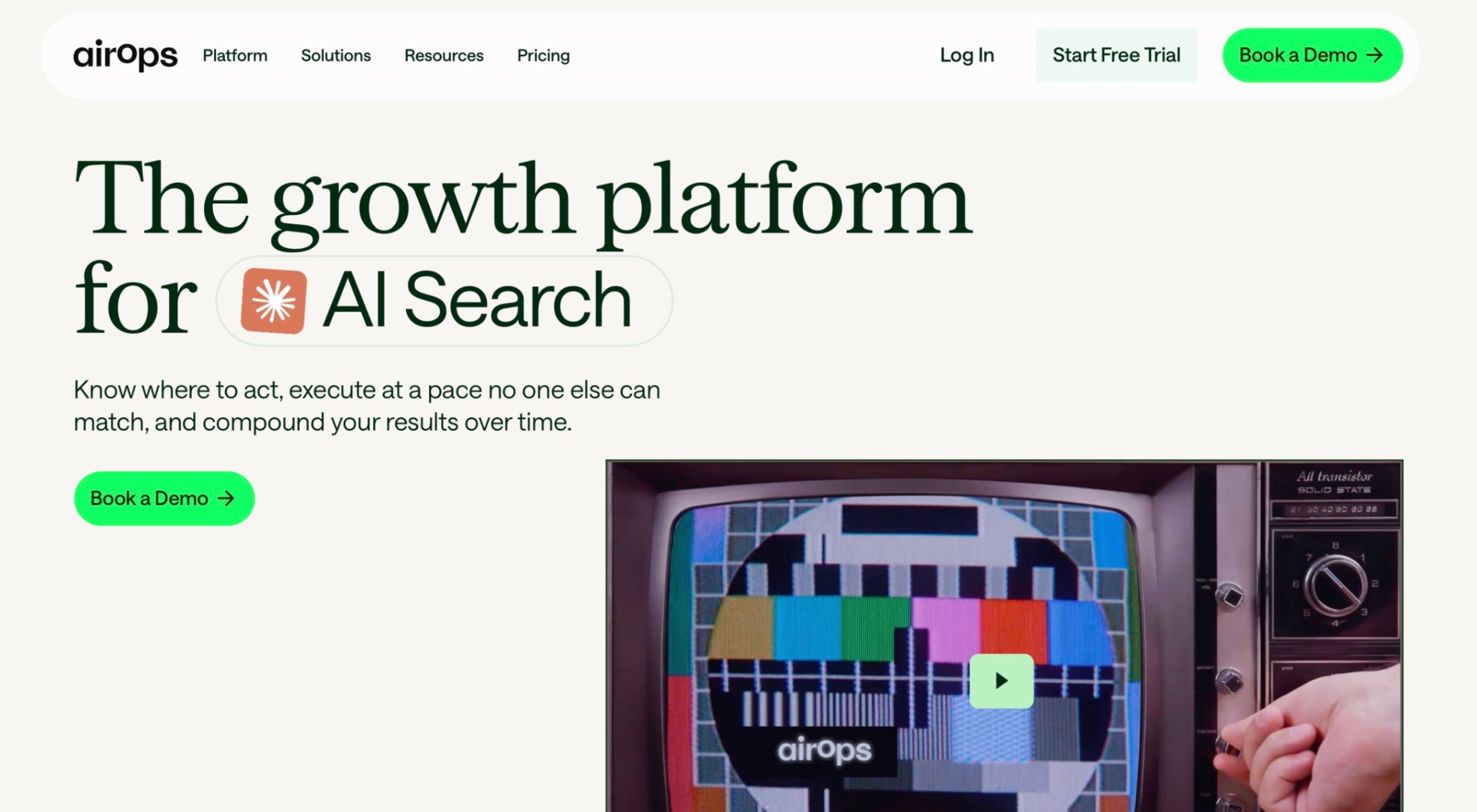
Who Is AirOps Best For?
AirOps is best for teams that already have a larger content operation and want to scale AI search workflows with content planning, refreshes, publishing support, review processes, and performance tracking.
How Does AirOps Compare To AthenaHQ?
AthenaHQ is better if the priority is monitoring AI visibility, citations, competitors, and source-level insights. AirOps is better if the team wants to turn AI search insights into structured content workflows. I would choose AthenaHQ for visibility intelligence and AirOps for content operations at scale.
Still deciding between the two? This AthenaHQ vs AirOps comparison breaks down which platform fits your GEO and content workflow better.
3. AthenaHQ Vs Scrunch AI

Who Is Scrunch AI Best For?
Scrunch AI is best for teams that want AI visibility tracking along with a stronger focus on how AI agents read, crawl, and experience their website. It is especially useful for brands that care about site-level diagnostics, citations, and AI agent experience.
How Does Scrunch AI Compare To AthenaHQ?
AthenaHQ feels stronger if you want a straightforward AI visibility intelligence and reporting platform. Scrunch AI is worth considering if you want to understand how AI systems interact with your website, not just whether your brand appears in AI answers.
Final Verdict: Should You Choose Scalenut Or AthenaHQ?
Both tools are useful, but they solve slightly different problems. AthenaHQ is built more for AI search intelligence. Scalenut is better if the goal is to connect AI visibility insights with SEO, content, and execution.
When Should You Choose Scalenut Over AthenaHQ?
Choose Scalenut if:
- The team needs SEO and GEO in one workflow, not separate tools for tracking and execution.
- Content creation, optimization, refreshing, and audits are a regular part of the workflow.
- AI visibility insights need to connect with content gaps, prompt coverage, internal linking, backlinks, and on-page improvements.
- The goal is not just to see where the brand is missing, but to actually fix those gaps through content and SEO work.
- Overall value matters, especially for teams that want AI visibility tracking plus a broader content and SEO stack.
For most SEO and content teams, Scalenut feels like the more practical choice because it connects the insight layer with the work that comes after it.
When Should You Choose AthenaHQ AI Over Scalenut?
Choose AthenaHQ if:
- The main priority is AI visibility intelligence across multiple AI answer engines.
- Brand mentions, citations, competitor visibility, and share of voice are the biggest reporting needs.
- The team needs stronger AEO reporting and source intelligence for strategic decision-making.
- AI search monitoring matters more than managing the full SEO content workflow.
- There is already a separate content, SEO, or outreach process in place to act on the insights.
AthenaHQ makes sense for teams that want a dedicated AI search intelligence platform. But if the goal is to turn AI visibility gaps into content, SEO, and GEO improvements, Scalenut is the stronger all-around choice.
Want to compare more options before deciding? Explore which AthenaHQ replacement tool is worth your money to find the best fit for your GEO workflow.
Frequently Asked Questions
Does Scalenut or AthenaHQ deliver better results for AI visibility and brand discovery?
Both tools help with AI visibility, but they support different workflows. AthenaHQ is stronger for broad AI visibility tracking and reporting, while Scalenut is more practical when teams want to connect visibility insights with content creation, optimization, and SEO execution.
What are the main differences between Scalenut and AthenaHQ for generative engine optimization?
Scalenut combines AI visibility tracking with SEO workflows, content creation, optimization, audits, internal linking, and backlink opportunities. AthenaHQ focuses more on AI visibility intelligence, citation tracking, competitor benchmarking, and AEO reporting across a wider AI search environment.
What are the main differences in pricing and scalability between Scalenut and AthenaHQ?
Scalenut offers tiered plans starting at $24/month on its current offer, with Plus at $36/month and Professional at $80/month. AthenaHQ starts at $245/month when billed annually, with custom Enterprise pricing. Scalenut offers better value for teams that need SEO plus GEO execution.
Is AthenaHQ more suitable for enterprises compared to Scalenut?
AthenaHQ can suit teams that need deeper AI visibility intelligence, broader AI engine coverage, and executive-level reporting. Scalenut is better suited for teams that want scalable SEO and GEO execution, especially when content planning, optimization, audits, and visibility tracking need to work together.
What do user reviews say about AthenaHQ versus Scalenut?
Scalenut users often value its practical SEO and content workflow, especially for creating, optimizing, and improving content. AthenaHQ users appreciate its AI visibility insights and strategic reporting, though some mention self-serve limitations and a need for more depth in certain advanced areas.
Scalenut vs AthenaHQ AI: Which is the best GEO tool for product marketing teams?
Scalenut is the better GEO tool for product marketing teams that need visibility tracking plus content execution. It helps teams connect AI search insights with product-led content, Google search performance, optimization, and brand awareness. AthenaHQ is stronger if reporting is the main priority.
Scalenut vs AthenaHQ AI: Which is the best GEO tool with Google AI Overviews monitoring?
Scalenut is a better fit if Google AI Overviews monitoring needs to connect with content updates, SEO best practices, and execution workflows. AthenaHQ is useful for broader AI visibility reporting, but Scalenut feels more practical when teams also want to improve rankings and referral traffic.
Is AthenaHQ more effective than Scalenut for measuring generative AI ROI?
AthenaHQ may be stronger for measuring generative AI ROI if the focus is attribution, especially for e-commerce teams using Shopify and prompt-level ROI models. Scalenut is better when ROI depends on connecting AI visibility with content execution, AI traffic insights, optimization, and broader SEO improvements.
Which is better for enterprises: Scalenut or AthenaHQ?
AthenaHQ may suit enterprises that need broad AI visibility intelligence, competitor tracking, citations, and executive reporting. Scalenut is better for enterprise teams that want SEO and GEO execution in one workflow, including content planning, optimization, audits, internal linking, and visibility tracking.


.svg)


.webp)