Quick summary: What are the best Writesonic alternatives in 2026?
- Scalenut: Better for teams that want SEO and GEO execution beyond AI writing, including audits, internal linking, optimization, publishing, and AI visibility within standard paid plans.
- Frase: Better when SERP research, briefs, content refreshes, publishing, and monitoring declining pages are central to your workflow.
- Surfer SEO: Better when page-level content optimization, audits, topical planning, and AI visibility are your main priorities.
- Jasper: Better for brand-governed marketing content where voice, company knowledge, audiences, and style rules need to stay consistent at scale.
- Semrush: Better when you need deeper keyword research, competitor intelligence, technical SEO, rank tracking, and AI visibility in one broader search stack.
- Copy.ai: Better when GTM workflow automation across marketing and sales matters more than dedicated SEO and GEO execution.
- ChatGPT: Better for flexible research, writing, analysis, custom GPTs, and project-based work, but it does not provide a purpose-built AI visibility platform like Writesonic.
- Rytr: Better when you mainly need affordable AI writing, tone matching, editing, and plagiarism checks without paying for broader SEO features.
- Advanced Web Ranking: Better when rank tracking, SERP reporting, forecasting, competitor monitoring, and AI-search measurement are more important than content generation.
- Bottom line: Scalenut is the strongest fit for connected SEO and GEO execution, while the other alternatives make more sense when you need deeper specialization in optimization, research, branding, automation, writing, or measurement.
Writesonic does a lot well. It combines AI content creation, SEO workflows, site auditing, AI visibility tracking, and GEO capabilities in one platform.
But that breadth does not fit every team equally. Content volume, tracked prompts, users, projects, AI platform coverage, and access to advanced optimization or Action Center features vary by plan, which can make another tool a better fit for a specific workflow.
This guide compares nine Writesonic alternatives by pricing, features, SEO and GEO capabilities, content workflows, and where each one offers a stronger fit than Writesonic, so you can quickly narrow the options to the tool that matches what you actually need.
Why should you look for a Writesonic alternative?
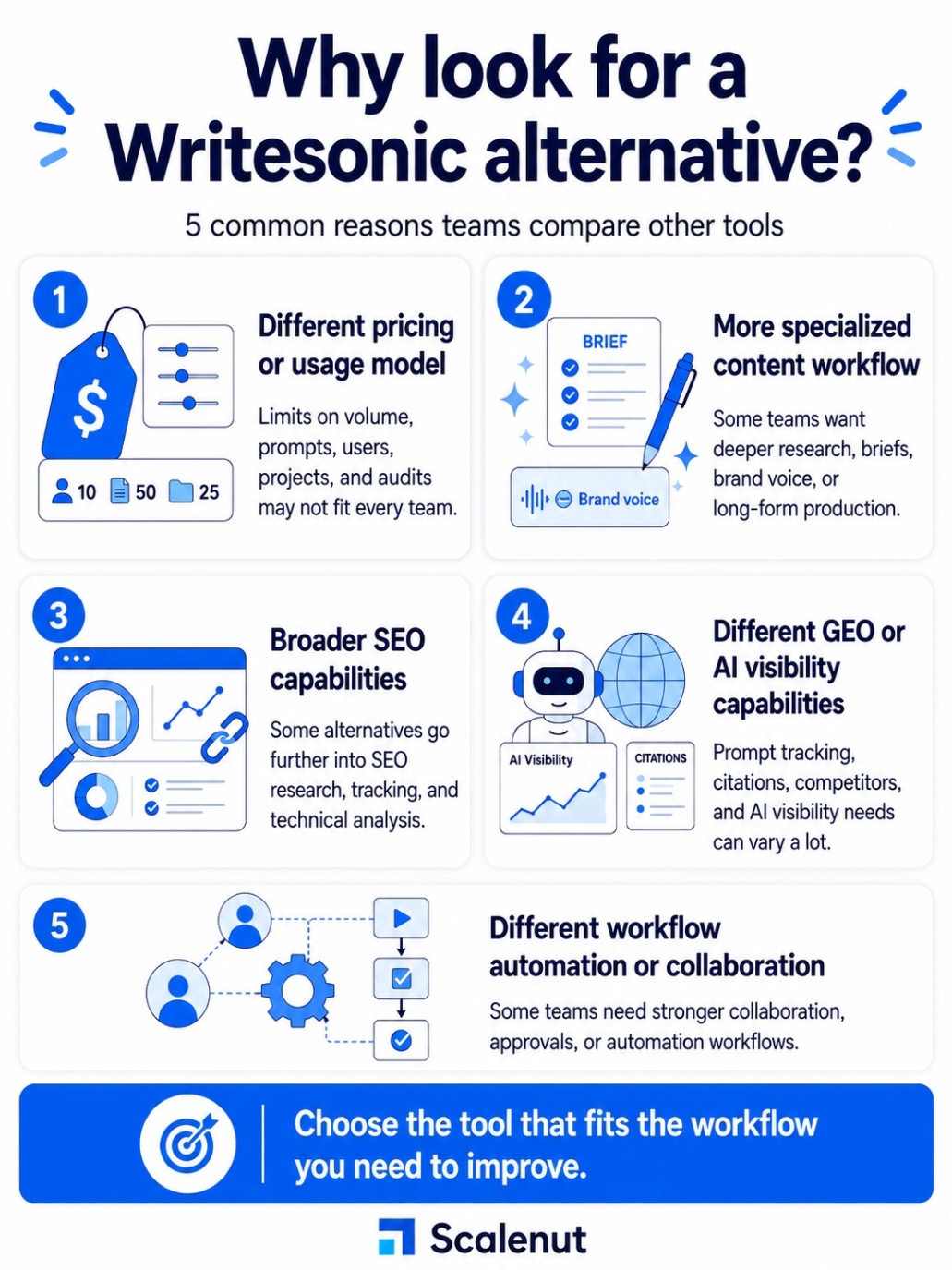
Writesonic combines AI content creation, SEO, site auditing, AI visibility tracking, and GEO workflows in one platform. But that breadth does not automatically make it the right fit for every team. Your ideal alternative depends on the capabilities you use most, the volume you need, and how your wider marketing stack is structured.
Here are five reasons you may want to consider other Writesonic alternatives.
1. You need a different pricing or usage model
Writesonic’s plans vary significantly by content volume, tracked prompts, users, projects, site audits, and GEO access. For example, Starter includes 15 AI articles, 50 tracked prompts, one user, and one project, while higher plans increase these allowances. Full tracking across 10 AI platforms and the complete Action Center are reserved for Enterprise.
If your usage is concentrated in one area, another pricing structure may offer better value.
2. You want a more specialized content workflow
Writesonic covers research, AI article creation, brand voice, and SEO-focused content production. However, some teams may prefer alternatives to Writesonic that go deeper into a specific workflow, such as SERP research, editorial briefs, brand governance, content optimization, or high-volume long-form production.
3. You need broader SEO capabilities
Writesonic includes content strategy and site auditing, but your requirements may extend further into backlink research, dedicated rank tracking, competitor intelligence, or more extensive technical SEO analysis. In that case, a broader SEO suite may fit your stack better.
4. You need different GEO or AI visibility capabilities
Writesonic tracks prompts, citations, sentiment, competitors, and AI visibility, while its Action Center surfaces content, off-site citation, and technical opportunities. Platform coverage and execution capabilities vary by plan, so teams needing broader AI-engine coverage or a different GEO workflow should compare those limits carefully.
5. You need different workflow automation or collaboration
Lower Writesonic plans also limit users, projects, and agentic workflow runs. Teams managing multiple brands, clients, approval processes, or complex automation may therefore benefit from Writesonic competitors built around different collaboration and operational models.
The strongest alternative is not simply the platform with more features. It is the one whose limits, specialization, and workflow match how your team actually works.
Still deciding what your replacement needs to do? See how to choose generative AI optimization tools based on workflow, SEO, GEO, and fit.
How did we evaluate the best Writesonic alternatives?
We evaluated each tool against the workflows a current Writesonic user may want to replace or improve. Since Writesonic now combines AI content creation, SEO, site auditing, AI visibility tracking, brand controls, integrations, and agentic workflows, the comparison needed to go beyond AI writing alone.
We assessed every alternative using the same criteria:
- AI content creation and controls
- SERP and keyword research
- Content optimization and refresh
- Broader SEO and technical capabilities
- GEO and AI visibility
- Brand voice and governance
- Workflow automation and collaboration
- Integrations and publishing
- Pricing and scalability
- Overall replacement coverage
The goal was to identify which workflow each tool is best suited for, rather than rank platforms purely by feature count.
Disclosure: Scalenut is our product, and all platforms were assessed using the same evaluation criteria and current publicly available product information.
Want a broader benchmark? Compare the best AI tools for SEO and AEO by optimization, AI visibility, execution, pricing, and use case.
What are the 9 best Writesonic alternatives in 2026?
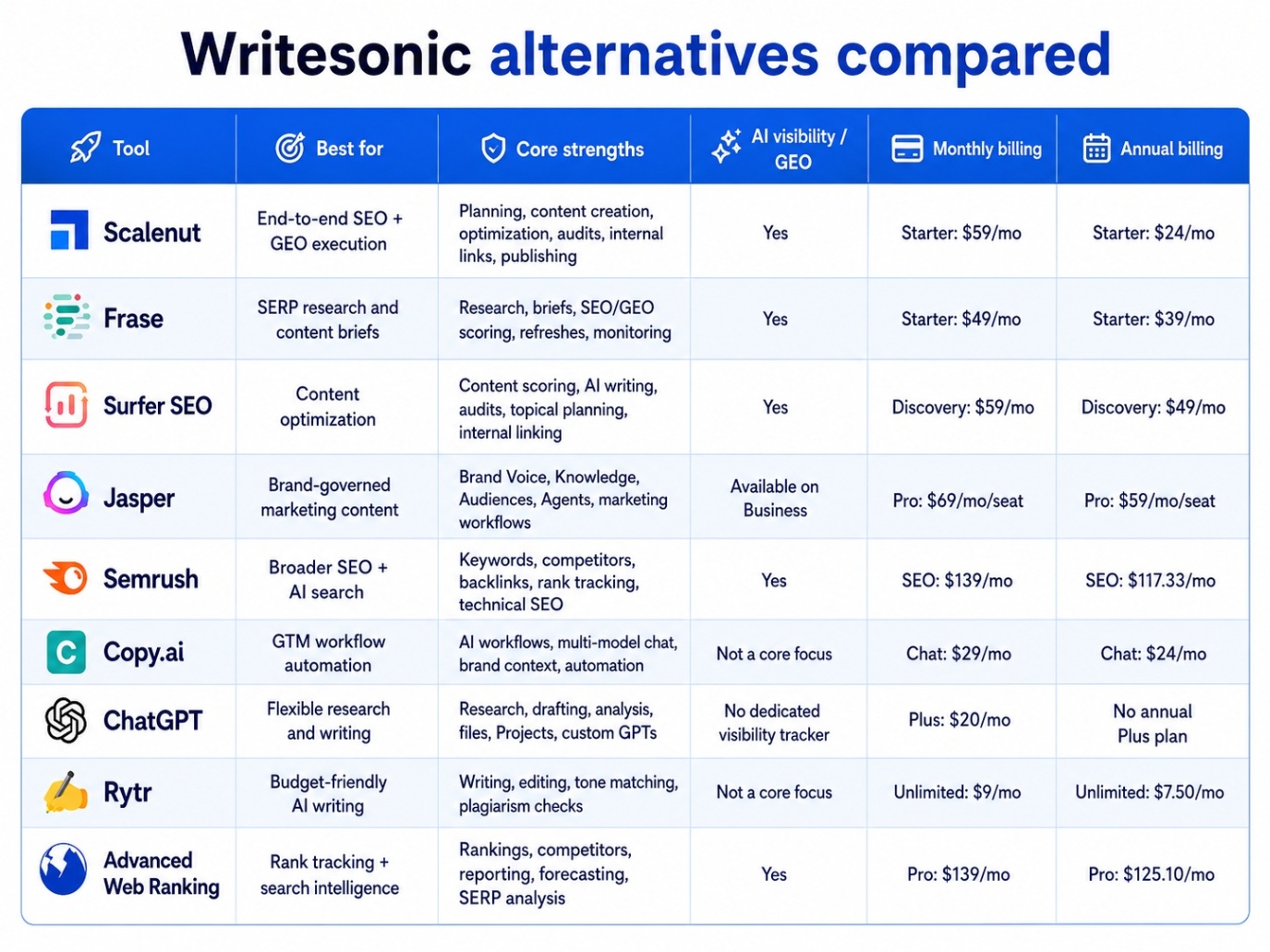
The 9 best Writesonic alternatives to consider are Scalenut, Frase, Surfer SEO, Jasper, Semrush, Copy.ai, ChatGPT, Rytr, and Advanced Web Ranking. The right choice depends on whether you need stronger AI content creation, SEO optimization, GEO capabilities, workflow automation, or rank tracking.
Here’s a closer look at each alternative, including its key features, pricing, ideal workflow, and where it stands out compared with Writesonic.
1. Scalenut - Best for end-to-end SEO and GEO content execution
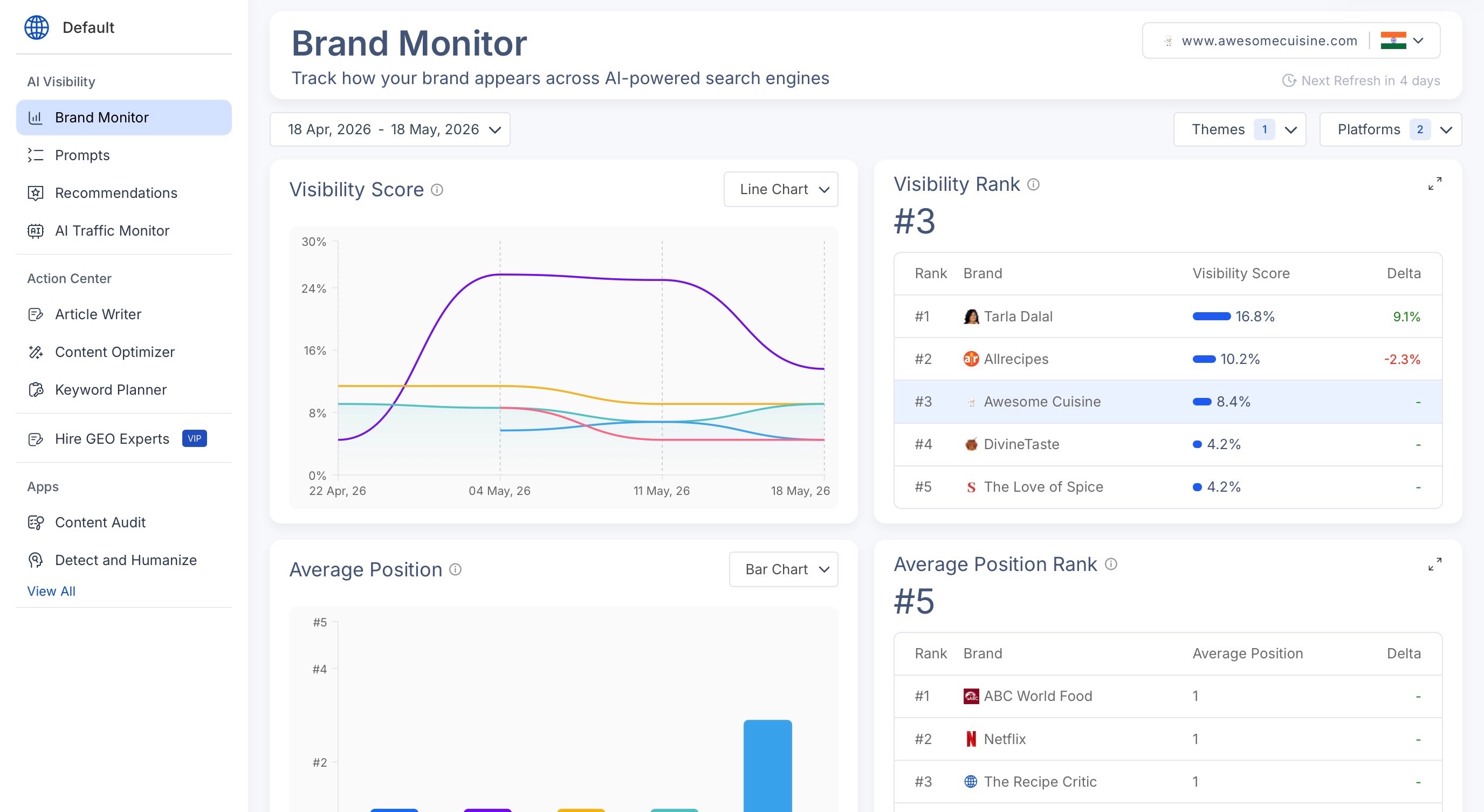
Scalenut connects keyword planning, AI-assisted content creation, optimization, content auditing, internal linking, publishing, and AI visibility in one platform. Its workflow is built for teams that want to use search and AI visibility data to decide what to create or improve, then execute those changes without moving between separate research, writing, and optimization tools.
Why choose Scalenut over Writesonic?
Scalenut is a strong alternative to Writesonic for teams that want SEO and GEO execution within standard paid plans. Scalenut Plus includes Content Audit, OnPage Pro, internal linking, topic-gap recommendations, WordPress and Shopify publishing, Social UpReach, and backlink workflows, while Professional adds advanced keyword planning and cannibalization analysis.
Writesonic also combines content, SEO, and AI visibility, but its full Action Center and Content Optimization capabilities are reserved for Enterprise. Scalenut may therefore suit teams that want more optimization and execution capabilities without moving to an enterprise plan.
Key features
- Keyword Planner: Builds topic clusters using keyword intent, search metrics, competitor gaps, and AI-generated prompts that can feed directly into content creation.
- Article Writer and Cruise Mode: Uses SERP competitors, reference content, AI prompts, custom instructions, and brand voice to research, structure, and generate long-form content.
- Content Optimizer and Content Audit: Helps refresh existing pages using content gaps, NLP terms, prompt coverage, GEO scoring, and Google Search Console performance data.
- AI Visibility: Tracks visibility score, share of voice, average position, prompts, mentions, citations, sentiment, query fan-out, competitors, and AI crawler/referral activity.
- SEO and GEO execution tools: Includes internal linking, OnPage Pro, auto-optimization, WordPress and Shopify publishing, Social UpReach, and backlink workflows, with availability depending on plan.
Pricing
- Starter: $59/month monthly or $24/month billed annually under the current offer
- Plus: $89/month monthly or $36/month billed annually under the current offer
- Professional: $199/month monthly or $80/month billed annually under the current offer
- VIP Service: Custom pricing
Where Scalenut stands out
- Gives teams content planning, creation, optimization, auditing, internal linking, on-page SEO, publishing, and AI visibility workflows within the same platform.
- Makes several execution capabilities available below the enterprise tier, which is relevant for teams that want to act on SEO and GEO opportunities rather than primarily monitor them.
Want to see how the platform works beyond this comparison? Read our full Scalenut review for a deeper look at its SEO, GEO, content, and AI visibility workflows.
2. Frase - Best for SERP research, briefs, and content refresh workflows
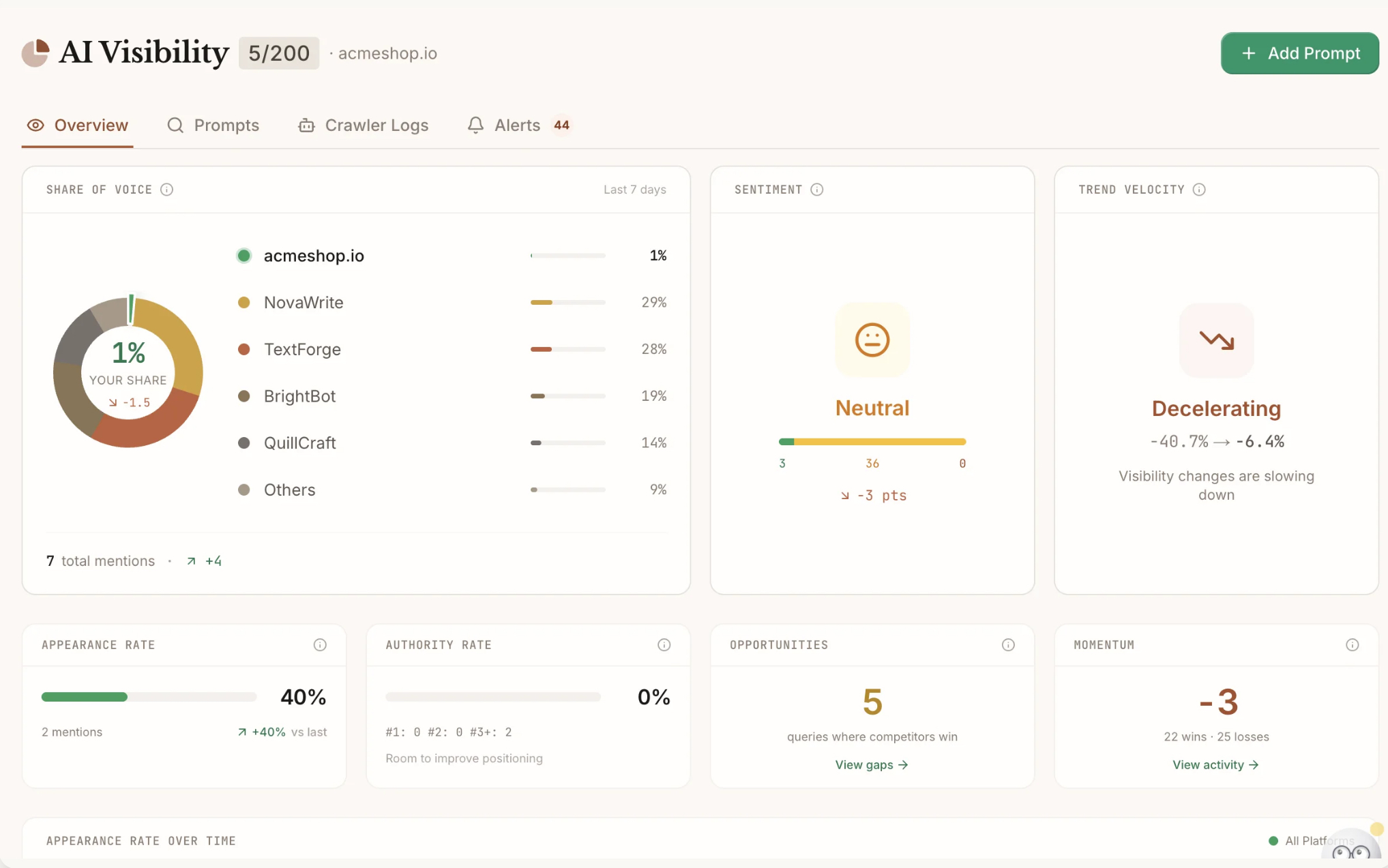
Frase connects SERP research, content briefs, AI writing, SEO and GEO scoring, publishing, and post-publish monitoring. Its Content Opportunities feature combines Google Search Console data, competitor gaps, repeatable content patterns, and decay signals to prioritize what to create or refresh, making it useful for teams that want research and execution closely connected.
Why choose Frase over Writesonic?
Frase is worth considering when your workflow starts with identifying content opportunities and turning them quickly into research-backed briefs, drafts, and refreshes. Its AI Agent can research SERPs, create briefs and drafts, apply brand voice, score content for SEO and GEO, and publish to supported CMS platforms. Content Guard also monitors selected pages for ranking decay and prepares updates for approval.
Writesonic also covers AI content, SEO, site auditing, and AI visibility, but Frase places more emphasis on the continuous content lifecycle from opportunity detection through publishing and maintaining existing pages.
Key features
- Content Opportunities: Prioritizes new-content and refresh opportunities using Search Console data, competitor gaps, content patterns, and decay signals.
- SERP research and briefs: Analyzes ranking pages and generates briefs with topics, questions, competitor information, and structural guidance.
- Frase Agent: Handles research, briefs, drafting, scoring, clustering, repurposing, and publishing through natural-language instructions.
- SEO and GEO optimization: Scores content for both traditional search and AI search while identifying specific optimization gaps.
- Content Guard and AI Visibility: Monitors content decay and tracks brand visibility across supported AI platforms, with engine coverage increasing by plan.
Pricing
- Starter: $49/month monthly or $39/month billed annually
- Professional: $129/month monthly or $103/month billed annually
- Scale: $299/month monthly or $239/month billed annually
- Enterprise: Custom pricing
Where Frase stands out
- Connects opportunity discovery, SERP research, briefing, drafting, SEO/GEO optimization, publishing, and content refreshes in one continuous workflow.
- Content Guard adds a practical post-publish layer by identifying ranking decay and preparing fixes instead of limiting the workflow to creating new content.
If Frase is on your shortlist, compare Scalenut vs Frase across GEO, SERP research, content workflows, automation, and pricing.
3. Surfer SEO - Best for SEO and AI search content optimization
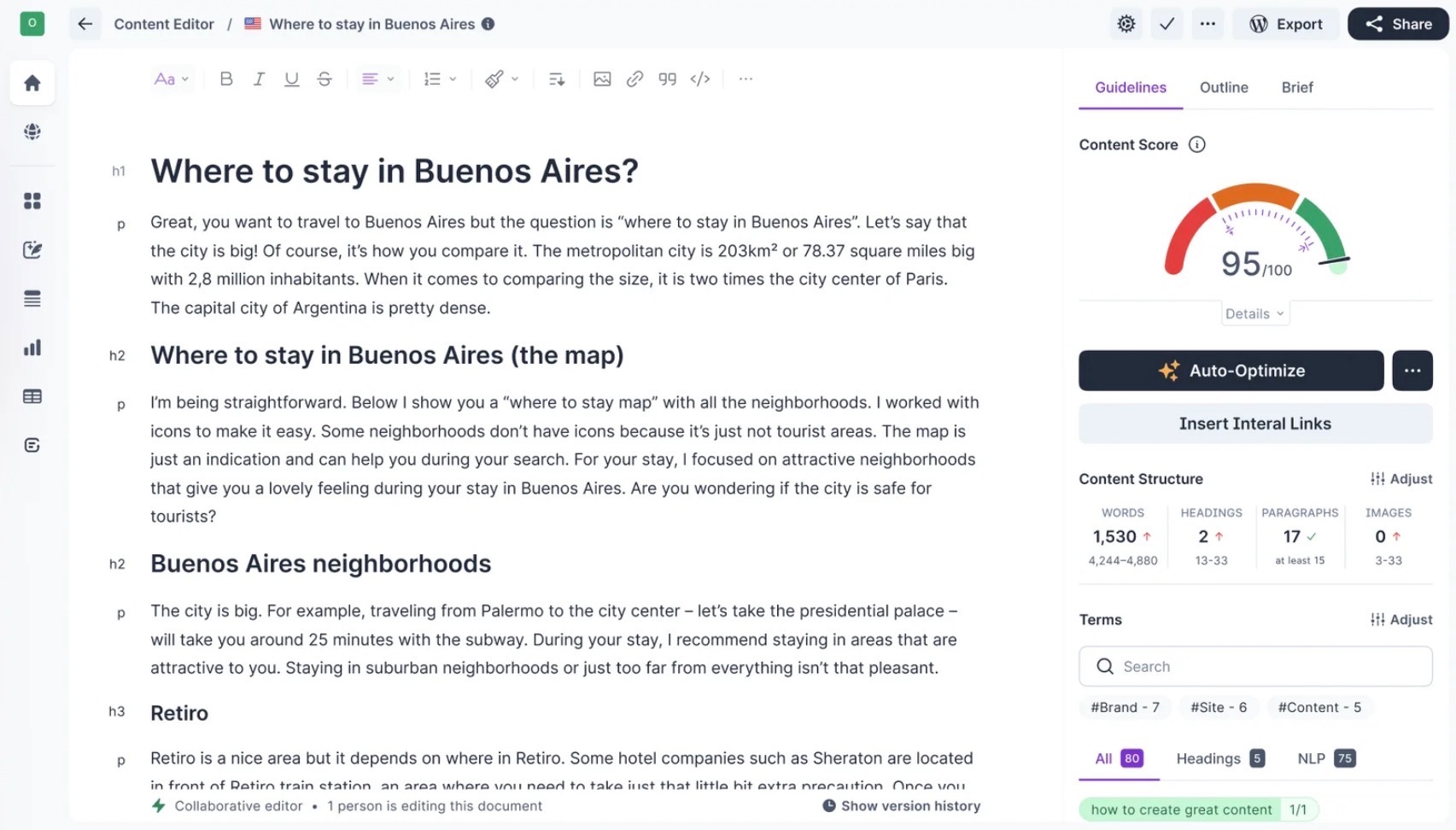
Surfer SEO is built around creating, optimizing, and maintaining content for both traditional search and AI-generated answers. Its Content Editor analyzes competing pages and provides real-time Content Score, SEO Score, AI Search Score, keyword guidance, and structural recommendations, making it particularly useful for teams focused on page-level optimization.
Why choose Surfer SEO over Writesonic?
Surfer is worth considering when content optimization is the core workflow you want to strengthen. Its Content Editor, one-click optimization, internal linking, audits, keyword research, and topical mapping are included across its paid plans, while Writesonic currently reserves its dedicated Content Optimization feature for Enterprise.
Surfer also connects optimization with AI visibility tracking on Standard and higher plans. This makes it a stronger fit when your priority is continuously improving existing and new pages for Google and AI search, rather than emphasizing high-volume AI article production or broader agentic workflows.
Key features
- Content Editor: Provides real-time SEO and AI-search scoring, relevant-term recommendations, competitor analysis, and optimization guidance.
- Auto-Optimize and Facts: Adds missing terms and relevant factual coverage to strengthen topic depth and optimization.
- Surfer AI: Generates long-form content using SERP data, NLP analysis, custom instructions, templates, and brand voice settings.
- Content Audit and Topical Map: Identifies underperforming pages, content gaps, ranking drops, and new topics worth targeting.
- AI Tracker: Monitors visibility, mentions, average position, competitors, prompts, and cited sources across supported AI search platforms.
Pricing
- Discovery: $49/month, billed annually
- Standard: $99/month, billed annually
- Pro: $182/month, billed annually
- Peace of Mind: $299/month, billed annually
- Enterprise: From $999/month, tailored package
Where Surfer SEO stands out
- Makes content optimization a core capability across paid plans rather than reserving it for enterprise customers.
- Connects page-level SEO optimization with content audits, topical planning, internal linking, and AI visibility tracking in the same content-focused workflow.
Considering Surfer for deeper content optimization? Compare Scalenut vs Surfer SEO across content, GEO, AI visibility, workflows, and pricing
4. Jasper - Best for brand-governed marketing content
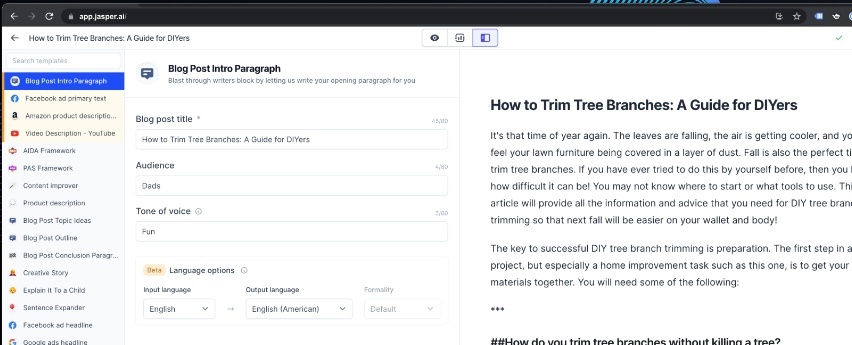
Jasper is an AI marketing platform built around brand consistency, reusable business context, marketing agents, and structured content workflows. Jasper IQ centralizes Brand Voice, Knowledge, Audiences, and style rules so teams can apply the same brand context across Canvas, Agents, and other Jasper workflows instead of rebuilding instructions for each asset.
Why choose Jasper over Writesonic?
In a Writesonic vs Jasper AI comparison, Jasper is particularly relevant when brand governance across multiple marketing formats is a bigger priority than SEO content production alone. Pro includes two Brand Voices, five Knowledge assets, and three Audiences, while Business adds unlimited Jasper IQ customization, custom agents, Grid, API access, and enterprise governance.
For teams evaluating Writesonic vs Jasper for enterprise marketing teams, Jasper's strongest distinction is how deeply brand rules, audience context, company knowledge, and workflow governance are embedded into content generation. Writesonic also supports brand voice and enterprise approval workflows, so the choice comes down to whether you prioritize Jasper's brand-governance system or Writesonic's broader SEO and AI-search execution stack.
Key features
- Jasper IQ: Centralizes brand voice, company knowledge, audiences, and visual or style context for reuse across marketing workflows.
- Brand Voice: Learns tone and writing characteristics from uploaded text, files, or URLs and applies them across Jasper workflows.
- Marketing Agents: Handles tasks such as research, content creation, optimization, translation, and other marketing workflows.
- Content Pipelines: Structures repeatable workflows across planning, creation, adaptation, activation, and optimization.
- Style Guide: Business plans can automatically apply defined grammar, terminology, formatting, and brand rules during generation.
Pricing
- Pro: $69/month billed monthly or $59/month billed annually
- Business: Custom pricing
Where Jasper stands out
- Strong brand-governance layer for teams that need consistent voice, audience context, company knowledge, and style rules across large volumes of marketing content.
- Business plans support custom agents, structured content pipelines, Grid, API access, and enterprise controls for teams building repeatable marketing workflows at scale.
Need to compare Jasper with other writing-first platforms? See the best AI writing tools for SEO, marketing copy, brand content, and long-form writing.
5. Semrush - Best for broader SEO and AI search workflows
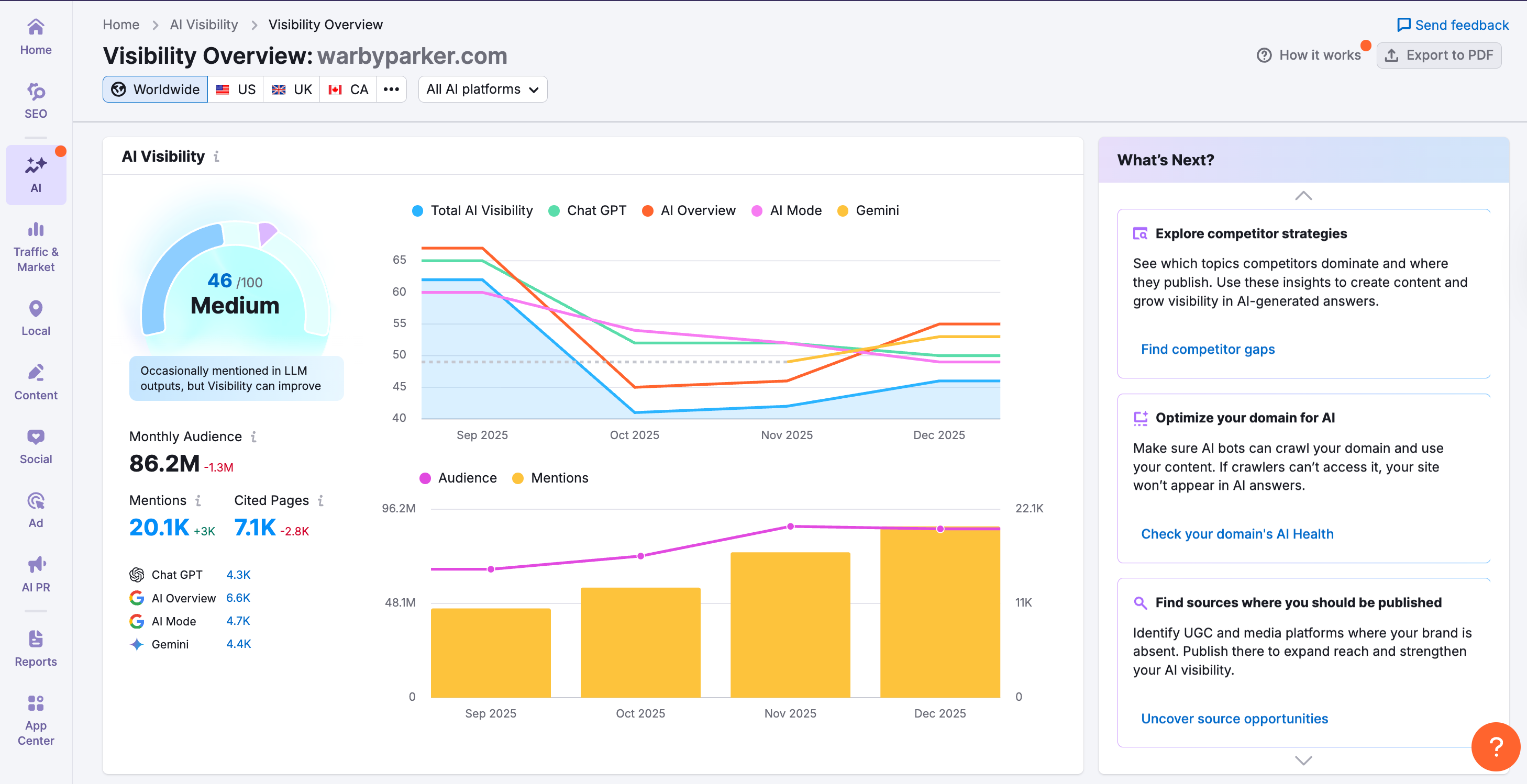
Semrush is a broader search marketing platform that combines keyword research, competitor analysis, rank tracking, backlinks, technical SEO, content optimization, and AI visibility. It is most relevant for teams that want content creation to sit inside a larger SEO and search-performance stack rather than rely on a primarily content-led platform.
Why choose Semrush over Writesonic?
Semrush is worth considering when SEO research and sitewide optimization matter as much as AI content creation. Its SEO plans cover keyword research, competitor analysis, Position Tracking, Site Audit, and backlinks, while Semrush One adds AI visibility tracking, prompt monitoring, AI-ready Site Audit, and brand-performance reporting.
Writesonic also covers content, SEO, and GEO, but Semrush goes deeper into keyword intelligence, backlink analysis, rank tracking, and technical SEO. That makes it a stronger fit for teams that want one platform for broader organic search management alongside AI-search visibility.
Key features
- Keyword and competitor research: Supports keyword discovery, competitor analysis, content-gap research, and search-intent planning.
- Technical SEO and rank tracking: Includes Site Audit, Position Tracking, backlink tools, and sitewide SEO monitoring.
- Content Toolkit: Provides topic ideas, SEO briefs, AI article generation, brand voice, content optimization, and WordPress publishing.
- AI Visibility: Tracks prompts, mentions, citations, competitors, sentiment, and brand performance across supported AI search platforms.
- Semrush One: Combines traditional SEO with AI visibility, including daily prompt tracking and AI-ready site auditing.
Pricing
- SEO: $139/month monthly or $117.33/month billed annually
- Semrush One Starter: $199/month monthly or $165.17/month billed annually
- Semrush One Pro+: $299/month monthly or $248.17/month billed annually
- Semrush One Advanced: $549/month monthly or $455.67/month billed annually
- Content Toolkit: $60/month billed annually
Where Semrush stands out
- Goes deeper into keyword research, backlinks, rank tracking, competitor intelligence, and technical SEO than content-first platforms.
- Semrush One connects traditional SEO data with AI visibility tracking, making it useful for teams managing both Google search and AI-driven discovery in the same stack.
Considering Semrush for a broader SEO stack? Read our Semrush review for a deeper look at its SEO, competitive research, technical auditing, and AI visibility capabilities.
6. Copy.ai - Best for GTM workflow automation
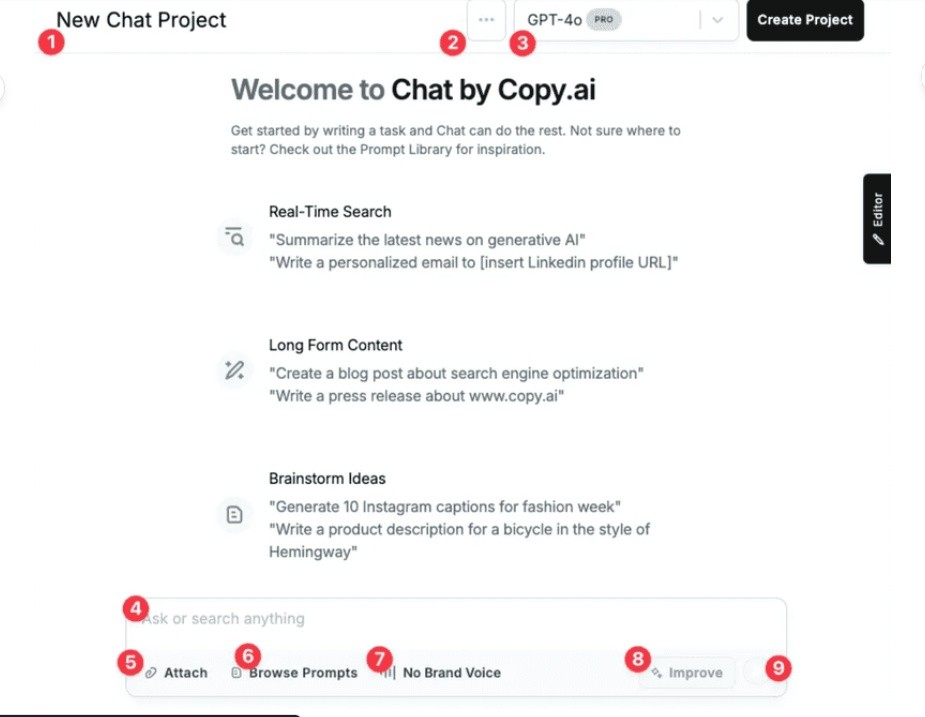
Copy.ai is a GTM AI platform built around automating repeatable sales and marketing processes rather than primarily optimizing content for search. Its Workflows can combine research, content generation, web data, and integrations into reusable multi-step processes, making it relevant for teams that want AI to support broader go-to-market execution across departments.
Why choose Copy.ai over Writesonic?
When comparing Copy AI vs Writesonic, Copy.ai makes more sense when your priority is automating repeatable GTM processes across marketing, sales, and operations. Its workflow builder lets teams chain actions, reuse business logic, and trigger processes automatically, while Brand Voice and Infobase help maintain consistent messaging and company context.
Writesonic also offers agentic workflows and enterprise automation, but its platform is more tightly centered on SEO, GEO, AI visibility, and content execution. Copy.ai is therefore a stronger fit when the workflow you want to automate extends well beyond search content into broader GTM operations.
Key features
- GTM Workflows: Chains research, generation, web data, and other actions into reusable automated processes.
- Brand Voice: Learns or manually defines brand styles so generated content stays consistent across marketing channels and audiences.
- Infobase: Works with Brand Voice to bring company-specific information and context into generated outputs.
- Multi-model Chat: The Chat plan includes access to OpenAI, Anthropic, and Gemini models with unlimited words and projects.
- Enterprise integrations and automation: Enterprise includes API access, bulk workflow runs, 20+ technology integrations, and unlimited customizable workflows.
Pricing
- Chat: $29/month monthly or $24/month billed annually
- Growth: $1,000/month, billed annually
- Expansion: $2,000/month, billed annually
- Scale: $3,000/month, billed annually
- Enterprise: Custom pricing
Where Copy.ai stands out
- Focuses on reusable GTM automation across marketing, sales, and operations rather than limiting workflows to content creation or search optimization.
- Offers high-seat workflow plans, with Growth supporting 75 seats, Expansion 150, and Scale 200, making it relevant for larger cross-functional teams deploying AI processes at scale.
If GTM automation is your priority, compare the best Copy.ai alternatives for AI writing, marketing workflows, SEO, pricing, and team fit.
7. ChatGPT - Best for flexible research, writing, and general-purpose AI assistance
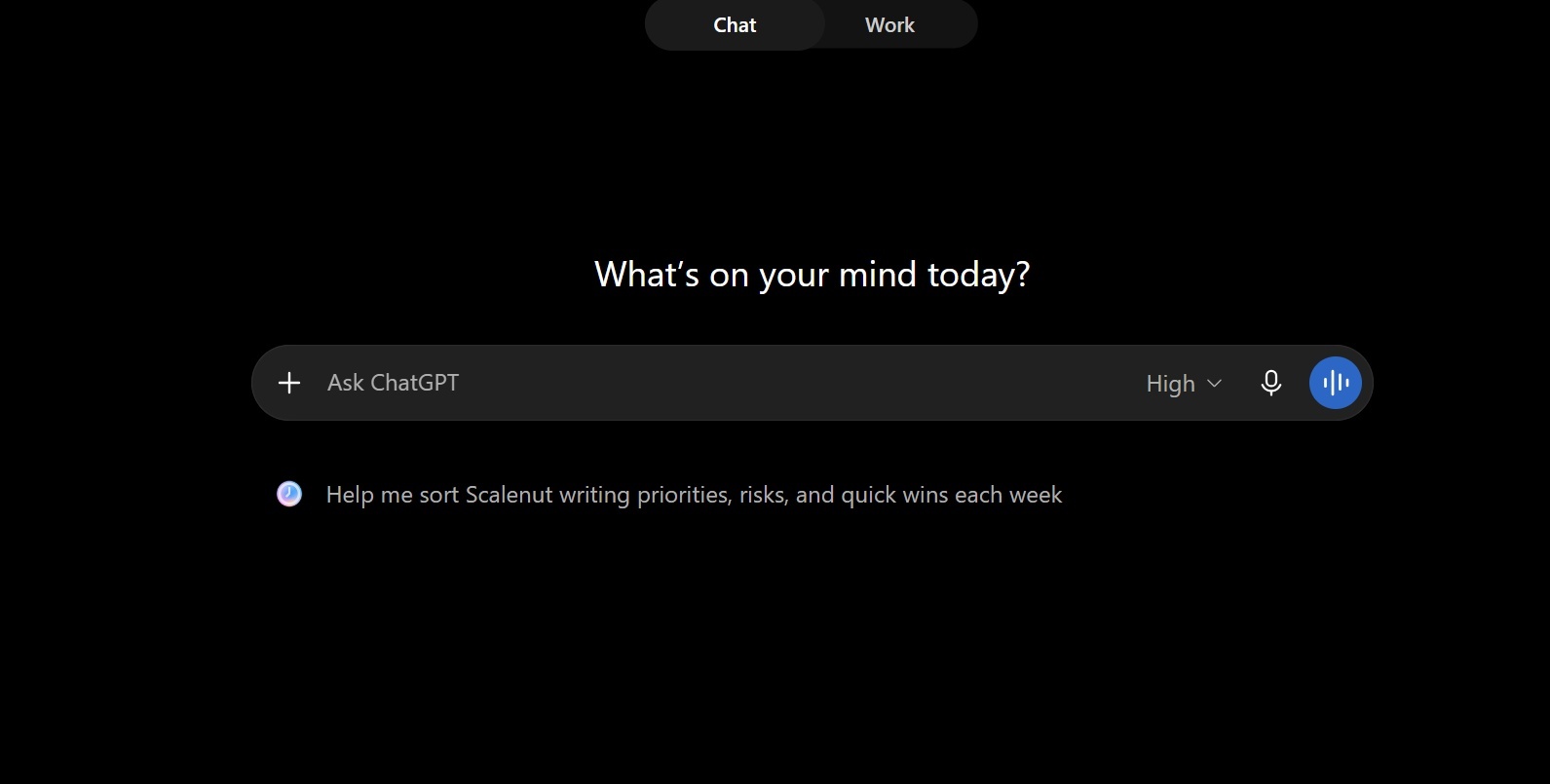
ChatGPT is a general-purpose AI assistant for research, writing, analysis, brainstorming, file work, and multimodal tasks. Rather than providing a predefined SEO content workflow, it gives teams a flexible workspace where they can research topics, develop briefs, draft and edit content, analyze files, create custom GPTs, and work with connected apps.
Why choose ChatGPT over Writesonic?
When comparing Writesonic vs ChatGPT, ChatGPT is the better fit when flexibility matters more than a structured SEO and GEO workflow. Deep Research can research across the public web, uploaded files, and connected apps, while Projects keep chats, files, and instructions together for recurring work. Paid users can also create custom GPTs tailored to specific tasks or internal processes.
Writesonic provides dedicated AI article creation, site audits, SEO workflows, prompt tracking, and AI visibility features. ChatGPT does not package these into the same purpose-built SEO/GEO workflow, so it makes more sense for teams prioritizing adaptable research, ideation, writing, and analysis.
Key features
- Deep Research: Researches and synthesizes information from the web, uploaded files, and connected apps into cited reports.
- Projects: Keeps related chats, files, and instructions together for ongoing writing, research, and planning work.
- Custom GPTs: Lets paid users build tailored versions of ChatGPT using specific instructions, knowledge, and capabilities.
- File and data analysis: Supports document uploads, analysis, and data-focused workflows, with limits varying by plan.
- Apps: Can connect with supported external tools and data sources for search, research, context retrieval, and selected actions.
Pricing
- Free: $0
- Plus: $20/month, billed monthly
- Pro: $100/month or $200/month, billed monthly
- Business: $25/user/month monthly or $20/user/month billed annually
- Enterprise: Custom pricing
Where ChatGPT stands out
- Offers a flexible environment for research, writing, analysis, files, images, and custom workflows rather than requiring teams to follow a predefined content-production process.
- Projects, custom GPTs, Deep Research, and connected apps make it adaptable to a much wider range of marketing and business tasks beyond SEO content creation.
Using AI across more than content creation? Explore the best AI tools for marketing agencies for research, strategy, SEO, automation, reporting, and client workflows.
8. Rytr - Best for budget-friendly AI writing
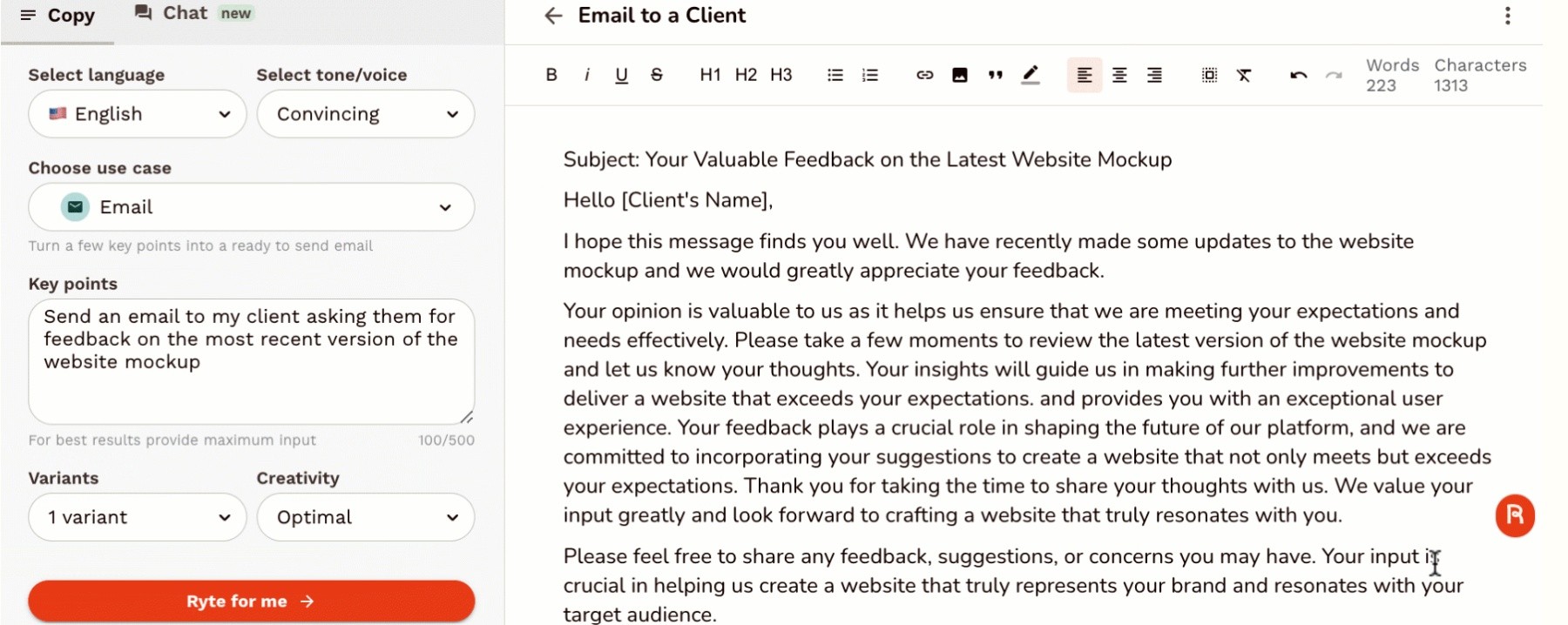
Rytr is a focused AI writing assistant for generating and editing copy across 40+ use cases, including emails, social posts, SEO metadata, paragraphs, and long-form content. It also supports tone matching, plagiarism checks, a Chrome extension, and multilingual writing, making it most relevant for individuals and small teams that want a simpler writing tool at a lower price point.
Why choose Rytr over Writesonic?
When comparing Writesonic vs Rytr, Rytr makes more sense if your main requirement is affordable AI-assisted writing rather than a broader SEO and GEO platform. Its paid plans include unlimited content generation, while Premium adds multiple tone matches, broader language support, higher input limits, and 100 plagiarism checks per month.
Writesonic goes much further into SEO, site auditing, AI visibility, and GEO execution. Rytr is the better fit when you want a lightweight writing environment without paying for those broader capabilities.
Key features
- 40+ writing use cases: Covers marketing copy, emails, social content, SEO metadata, paragraph generation, and long-form writing.
- My Voice: Learns writing samples and applies personalized tones for individuals, brands, or clients.
- AI editing tools: Includes continuation, autocomplete, rewording, expansion, shortening, and grammar improvement.
- Plagiarism checker: Uses Copyscape-powered checks, with monthly allowances depending on the plan.
- Chrome extension: Lets users generate and edit content across supported web-based writing environments.
Pricing
- Free: $0/month
- Unlimited: $9/month monthly or $7.50/month billed annually
- Premium: $29/month monthly or $24.16/month billed annually
Where Rytr stands out
- Offers unlimited AI generation on its paid plans at a much lower entry price than most full SEO and GEO platforms.
- Keeps the workflow focused on writing, editing, tone matching, and plagiarism checking, which can be a better fit for users who do not need advanced SEO or AI visibility features.
Comparing lightweight AI writers? See the best AI tools for content creation for writing, SEO, brand workflows, and long-form production.
9. Advanced Web Ranking - Best for rank tracking and AI search visibility
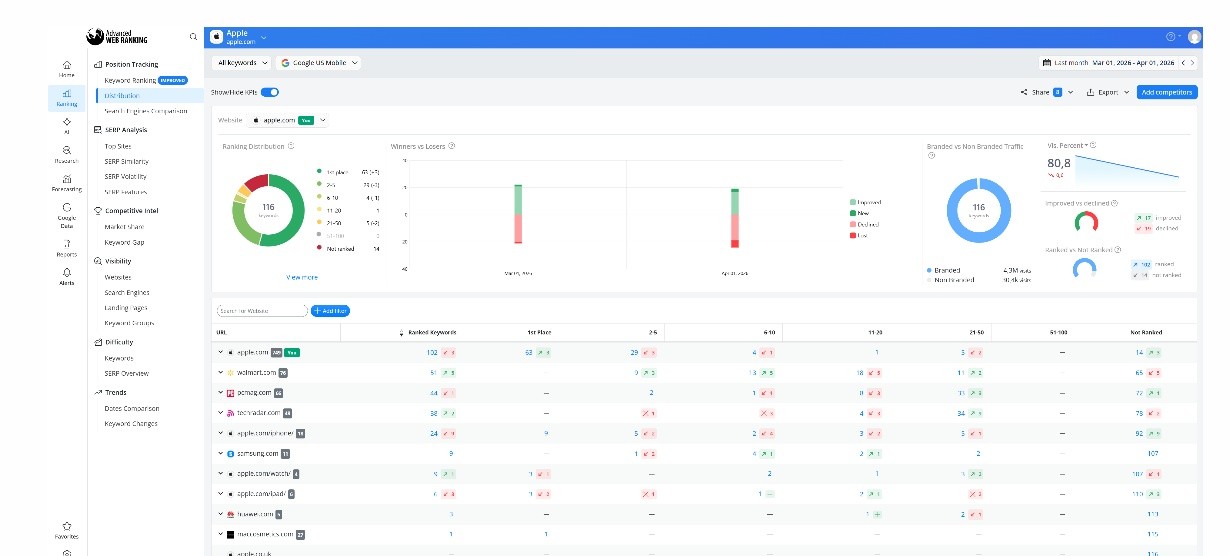
Advanced Web Ranking (AWR) is a specialized search visibility platform for tracking organic rankings, competitors, SERP features, and AI search performance. It supports 4,000+ search engines, customizable update frequencies, unlimited projects and users, and AI visibility reporting, making it particularly relevant for agencies and SEO teams managing large keyword sets.
Why choose Advanced Web Ranking over Writesonic?
When comparing Advanced Web Ranking vs Writesonic, AWR makes more sense when granular rank tracking and search-performance reporting are the priority. It tracks rankings across locations, devices, and search engines, supports competitor and market-share analysis, and provides forecasting and client reporting.
AWR also monitors AI visibility, mentions, citations, and competitor presence across AI search experiences. Writesonic is much stronger on AI content creation and GEO execution, while AWR is designed for teams that primarily need detailed search and AI visibility measurement.
Key features
- Rank Tracker: Tracks rankings across 4,000+ search engines with local, mobile, desktop, scheduled, and on-demand updates.
- AI Search Visibility: Monitors brand visibility, mentions, citations, average rank, and competitor performance across supported AI search experiences.
- Competitor Analysis: Tracks up to 50 competitors per project and provides market share, visibility, SERP, and keyword-gap insights.
- SEO Forecasting: Forecasts potential search performance based on target rankings and keyword groups, with limits depending on the plan.
- SEO Reporting: Includes unlimited reports, customizable dashboards, shareable reports, and integrations such as Looker Studio on eligible plans.
Pricing
- Pro: $139/month monthly or $125.10/month equivalent with annual billing
- Agency: $279/month monthly or $251.10/month equivalent with annual billing
- Enterprise: $699/month monthly or $629.10/month equivalent with annual billing
- Custom Enterprise: From $700/month
Annual plans receive a 10% discount.
Where Advanced Web Ranking stands out
- Provides highly configurable rank tracking across large keyword sets, locations, devices, and search engines, with unlimited projects and users included across paid plans.
- Connects traditional rank tracking with AI-search measurement, including brand mentions, citations, competitor visibility, and AI keyword performance, without positioning itself as an AI content-generation platform.
If measurement matters more than content generation, compare the best AI rank tracker tools for mentions, citations, competitors, share of voice, and AI visibility.
Which Writesonic alternative should you choose?
The right Writesonic alternative depends on the workflow you want to strengthen. Some options specialize in content production or optimization, while others go deeper into SEO research, brand governance, automation, or AI-search measurement.
Here are the strongest choices by use case:
- Scalenut: Choose it for end-to-end SEO and GEO execution, including keyword planning, content creation and optimization, internal linking, on-page improvements, and AI visibility recommendations.
- Frase: Choose it when SERP research, content briefs, opportunity discovery, SEO/GEO optimization, and refreshing declining pages are central to your workflow.
- Surfer SEO: Choose it when page-level content optimization, topical planning, audits, and AI visibility are more important than broader marketing automation.
- Jasper: Choose it for brand-governed marketing content, especially when consistent voice, audience context, company knowledge, and enterprise workflows matter.
- Semrush: Choose it when you need deeper keyword research, technical SEO, competitor intelligence, rank tracking, and AI visibility within a broader search stack.
- Copy.ai: Choose it for reusable GTM automation across marketing and sales, supported by brand context and company knowledge.
- ChatGPT: Choose it for flexible research, drafting, analysis, custom GPTs, and ongoing project-based work without a predefined SEO workflow.
- Rytr: Choose it for straightforward, budget-friendly AI writing, editing, tone matching, and plagiarism checking.
- Advanced Web Ranking: Choose it for granular rank tracking, competitor analysis, SERP reporting, and AI-search visibility measurement rather than content generation.
The best choice is the platform that solves your highest-priority workflow without adding capabilities, cost, or complexity your team does not need.
Still narrowing your search stack? Compare the best SEO tools for 2026 by research, technical SEO, content optimization, tracking, and AI visibility.
Conclusion
The right Writesonic alternative depends on what you need to improve, not which AI tool has the longest feature list. Shortlist two or three options, then compare output quality, learning curve, pricing, integrations, and coverage across the AI engines that matter to your team. Use a free trial or free plan where available to validate the workflow with real content before switching.
If your priority is combining SEO content execution with generative engine optimization, Scalenut brings content planning, creation, optimization, AI visibility, and GEO workflows into one platform. Scalenut currently offers a 7-day trial across its paid plans, making it easier to evaluate the fit before committing.
Book a free strategy call with Scalenut.
Frequently Asked Questions
What is the best Writesonic alternative in 2026?
Scalenut is a strong overall alternative for teams that want SEO and GEO execution in one platform, while Frase suits research-heavy workflows, Surfer SEO emphasizes content optimization, and Semrush is better when broader SEO research and technical capabilities matter most.
What is the best free alternative to Writesonic?
ChatGPT and Rytr both offer free plans. These options can cover writing, research, brainstorming, and editing, but they do not replicate Writesonic’s full combination of AI content production, site audits, SEO workflows, GEO execution, and AI visibility tracking.
Is Writesonic worth it in 2026?
Writesonic can be worth it if your team actively uses AI articles, site audits, AI visibility tracking, and GEO workflows together. Its value depends on content volume, prompt limits, projects, users, and whether you need capabilities reserved for higher plans.
Writesonic vs ChatGPT: Which is better?
ChatGPT is better for flexible research, drafting, analysis, files, Projects, and custom GPTs. Writesonic is better suited when you want a purpose-built SEO and GEO workflow with AI article creation, site audits, prompt tracking, and AI visibility features.
Writesonic vs Jasper: Which is better for enterprise marketing teams?
For enterprise marketing teams, Jasper is stronger when brand governance, reusable company knowledge, audiences, style rules, and marketing workflows are priorities. Writesonic is better suited when SEO, GEO, AI visibility tracking, site auditing, and content execution matter more.
Copy.ai vs Writesonic: Which should you choose?
Copy.ai is better when your priority is automating repeatable GTM workflows across marketing and sales. Writesonic is stronger for SEO content, site audits, GEO execution, and AI visibility. Choose based on whether broader automation or search-focused execution matters more.
Writesonic vs Rytr: Which offers better value?
Rytr offers better value when you mainly need affordable AI writing, editing, tone matching, and plagiarism checks. Writesonic costs more but provides broader SEO, GEO, site auditing, AI visibility, and workflow capabilities, making it better suited to search-focused operations.
Writesonic vs Surfer SEO: Which is better for SEO content?
Surfer SEO is the stronger choice when page-level content optimization, audits, internal linking, and topical planning are central to your workflow. Writesonic is broader, combining AI article production with site auditing, GEO execution, AI visibility tracking, and agentic workflows.
Writesonic vs Semrush: Which is better for SEO?
Semrush is better for teams that need deeper keyword research, backlinks, rank tracking, competitor intelligence, and technical SEO. Writesonic is more content and GEO focused, with AI article creation, site audits, AI visibility tracking, and agentic workflows.
Advanced Web Ranking vs Writesonic: What is the difference?
Advanced Web Ranking is better for granular rank tracking, SERP reporting, competitor monitoring, forecasting, and AI search measurement. Writesonic is the stronger choice for content creation, SEO audits, GEO execution, and workflows designed to improve visibility rather than primarily measure it.


.svg)


.webp)