

Frase can research, write, optimize, publish and monitor content, but that does not make it the right fit for every workflow. Some teams need more granular scoring. Others need stronger sitewide planning, more detailed briefs, lower-cost optimization or a closer link between AI visibility insights and execution.
This guide compares 7 Frase io alternatives by the specific part of the workflow they improve. You will see where Scalenut, Surfer SEO, Clearscope, MarketMuse, NeuronWriter, Content Harmony and Writesonic are stronger than Frase, what each option gives up, and how current pricing and limits affect the final choice.
Quick summary: Which Frase alternative is best?
- Scalenut: Provides a more affordable route to end-to-end SEO and GEO execution, particularly for teams publishing and optimizing content at higher volumes.
- Surfer SEO: Offers more granular, real-time content scoring for teams that want prescriptive on-page optimization guidance.
- Clearscope: Includes unlimited users and projects on every plan, making editorial collaboration easier to scale without additional seat costs.
- MarketMuse: Provides a more specialized strategy layer through site inventory, Topic Authority and Personalized Difficulty metrics.
- NeuronWriter: Delivers SERP analysis, content scoring and basic AI monitoring at a significantly lower entry price.
- Content Harmony: Produces deeper, more customizable briefs when search-intent research and writer handoffs are the priority.
- Writesonic: Extends execution beyond content into citation building and technical AI-search improvements through its Action Center.
Overall, switching makes sense only when one of these advantages solves a clear limitation in your current workflow.
Why consider an alternative to Frase in 2026?
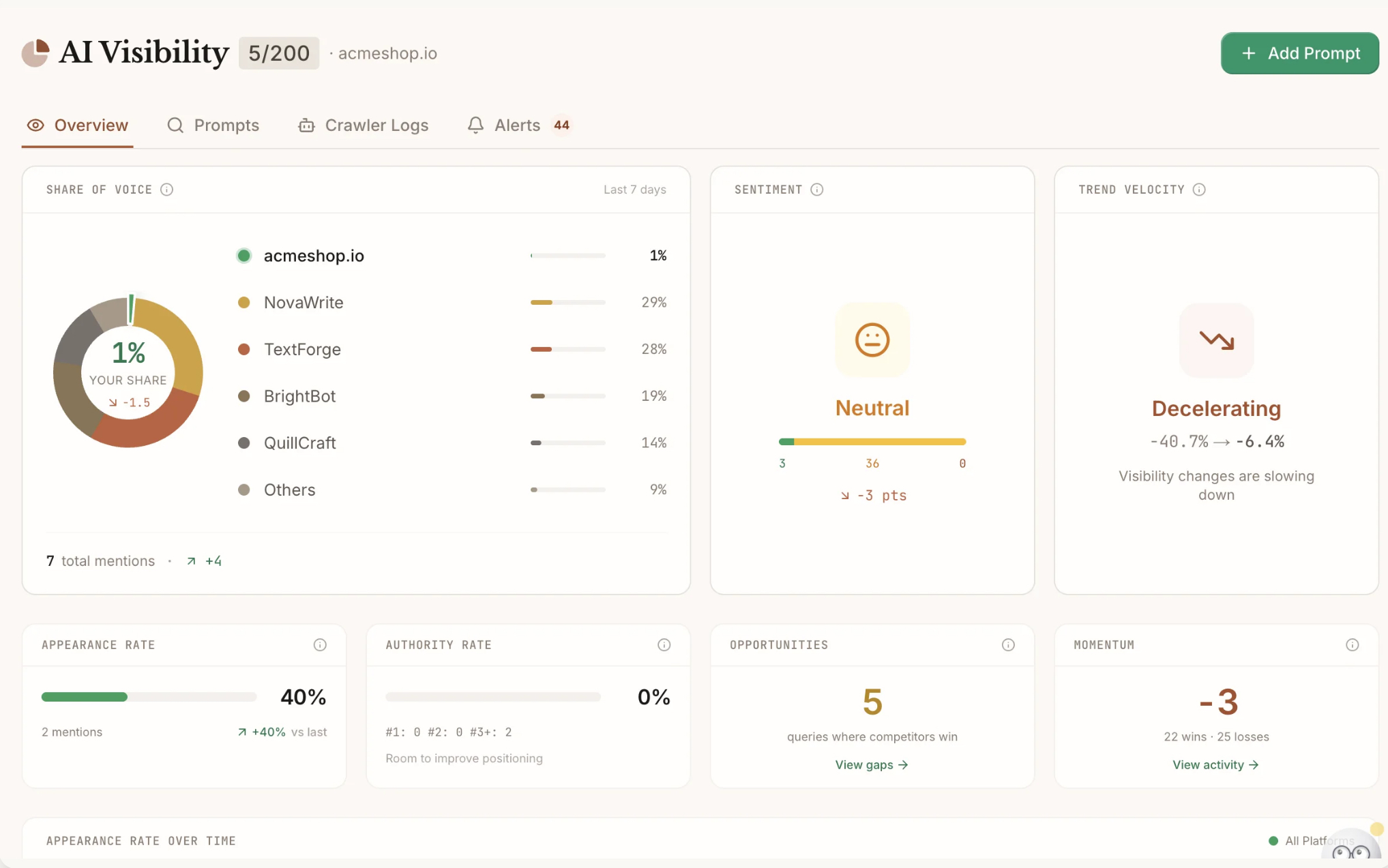
Frase helps teams research SERPs, build briefs, optimize content and accelerate production. However, the expanding range of Frase features does not make it the right fit for every workflow. Generic AI suggestions, editing requirements, platform complexity and rising costs at higher volumes can push teams to explore other options.
Here are the most practical reasons to compare Frase alternatives:
- Paying for capabilities that go unused: Teams that only need briefs or content scoring may not benefit from paying for writing, auditing, monitoring and publishing capabilities. A specialized alternative to Frase can provide the required functionality through a simpler and potentially more affordable plan.
- Wanting more precise optimization guidance: AI-generated suggestions can still require manual editing when they become repetitive or generic. Teams prioritizing detailed SERP analysis, granular on-page recommendations or editorial-grade scoring may prefer tools such as Surfer SEO, Clearscope or Page Optimizer Pro.
- Connecting SEO and GEO execution: Growing teams may need content audits, prompt tracking, internal linking, optimization and publishing within the same usable plan. Since Frase’s coverage and limits vary by tier, the deciding factor is whether the complete workflow remains practical at the required scale.
- Planning across an entire content library: Optimizing individual documents is not enough when hundreds of pages compete for topical authority. Larger teams may need deeper content inventory analysis, cluster-level gap identification and opportunity prioritization to decide what to create, update or consolidate first.
- Keeping costs predictable as production grows: When reviewing Frase AI pricing, calculate the cost using the articles, audit pages, prompts, seats and domains the team actually needs. The advertised starting price may be less relevant if regular production requires a higher plan or paid capacity.
Switching makes sense when another platform removes a clear workflow, control or cost constraint, not simply because it offers a longer feature list.
Want to see whether these concerns match broader customer feedback? Read our Frase review based on insights from 300+ users.
How did we evaluate the best Frase alternatives?
We compared current Frase features with each platform’s documented capabilities, usage limits and pricing. Here are the criteria we used:
- Research and briefs: Depth of SERP analysis, search-intent insights and writer-ready briefs.
- Content creation: Draft quality, brand controls and monthly production limits.
- Optimization: SEO and GEO scoring plus the usefulness of recommendations.
- AI visibility: Supported platforms, prompts, citations and competitor monitoring.
- Content maintenance: Audits, content-decay detection and refresh workflows.
- Execution: Internal linking, CMS publishing and integration coverage.
- Team fit: Included users, projects, permissions and collaboration tools.
- Pricing: Cost of the first genuinely usable plan, not only the advertised entry price.
We verified all features and prices on the vendors’ official websites before publication.
What are the 7 best Frase alternatives in 2026?
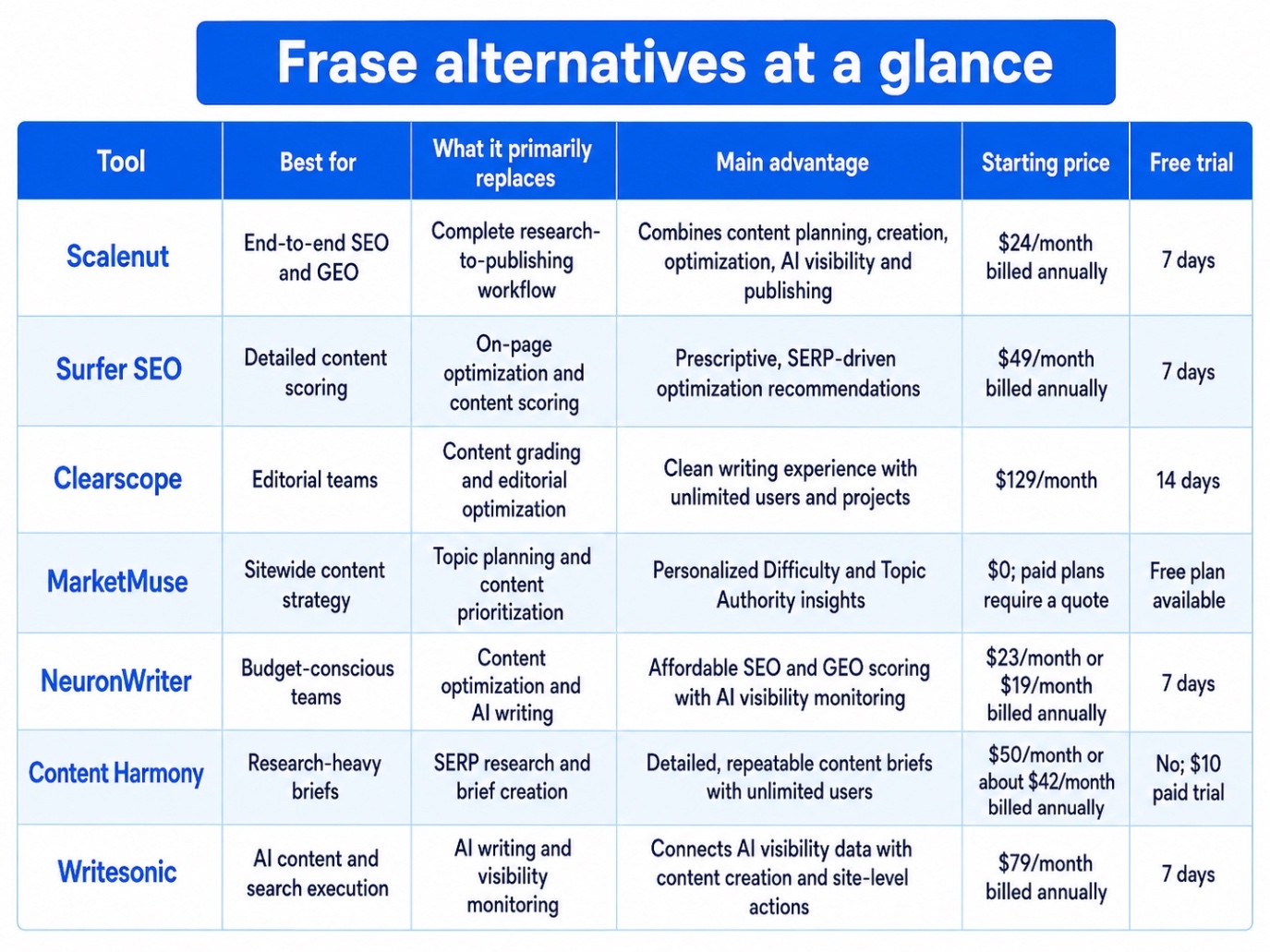
The 7 best Frase alternatives are Scalenut, Surfer SEO, Clearscope, MarketMuse, NeuronWriter, Content Harmony and Writesonic. Each platform replaces a different part of Frase’s workflow, from content scoring and briefs to sitewide strategy, AI writing and GEO execution.
Here is how each tool compares with Frase across capabilities, limitations, pricing and ideal use cases.
1. Scalenut: Best for end-to-end SEO and GEO execution
Best for
Content and SEO teams that want AI visibility insights connected to planning, creation, optimization, internal linking and publishing.
G2 rating
4.7 out of 5 from 316 reviews.
Key capabilities
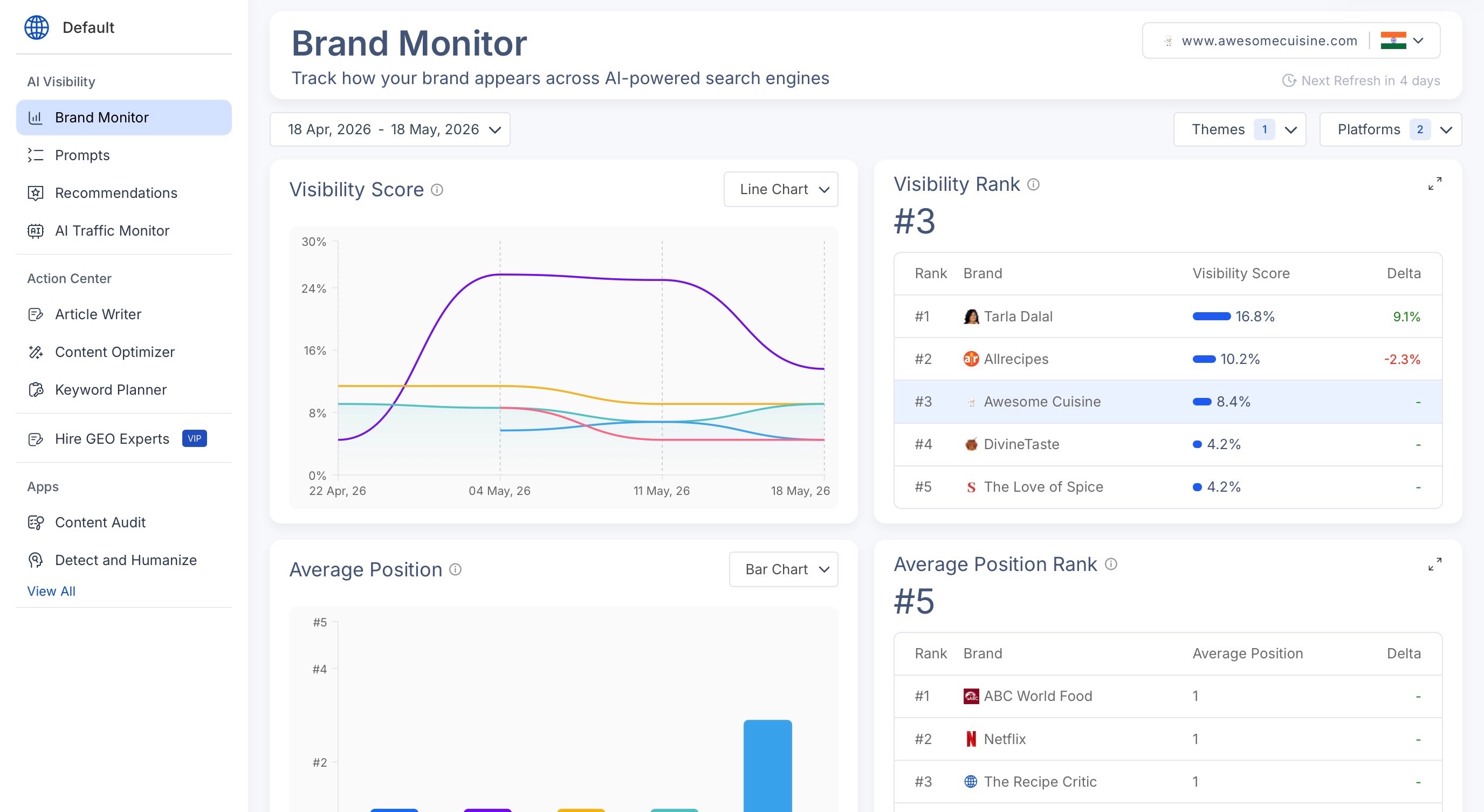
- AI visibility: Tracks Visibility Score, Share of Voice, Average Position and competitor performance. Prompt-level reports show citations, mentions, sentiment, source domains, complete responses and query fan-outs.
- Content planning and creation: Keyword Planner builds topic clusters, while Cruise Mode creates SERP-informed drafts using customizable outlines, reference content and brand voice.
- Optimization and auditing: Content Optimizer, Auto Optimizer and On-Page Pro identify missing topics, key terms, structural gaps and on-page improvements. Content Audit prioritizes pages that need refreshing.
- Execution: Higher plans add internal linking, Traffic Analyzer and direct publishing to WordPress and Shopify. Social UpReach and the Backlinks Marketplace extend the workflow into Reddit monitoring and link acquisition.
How it compares with Frase
Both platforms support research, AI writing, content optimization, audits, AI visibility and publishing. Scalenut offers more detailed prompt and source analysis through metrics such as Average Position, Visibility Heatmap, citations versus mentions, sentiment and query fan-outs. It also combines these insights with keyword clustering and higher content-production limits.
Frase provides more tracked prompts and broader AI-engine coverage on its higher tiers. It also publishes to WordPress, Webflow, Sanity and Wix, whereas Scalenut’s native auto-publishing supports WordPress and Shopify.
Why choose it over Frase?
Scalenut is the best alternative to Frase for teams that want to move directly from a visibility or content gap into planning, creation, optimization and publishing. Its annual plans are also more affordable for teams producing and refreshing content regularly.
Where it falls short
Generated drafts still require fact-checking, original expertise and editorial refinement. AI visibility refreshes weekly by default, although daily refresh is available as an upgrade. Starter and Plus track ChatGPT and Google AI Overviews, while Perplexity requires Professional. AI Traffic Monitor also depends on Cloudflare integration.
Pricing
- Starter: $59/month or $24/month billed annually
- Plus: $89/month or $36/month billed annually
- Professional: $199/month or $80/month billed annually
- VIP Service: Custom pricing
- Free trial: 7 days
Want a direct workflow comparison? See where Scalenut delivers stronger GEO value and where Frase provides deeper automation.
2. Surfer SEO: Best for detailed content scoring and on-page optimization
Best for
SEO teams and writers who want prescriptive, SERP-based guidance when creating or refreshing content.
G2 rating
4.8 out of 5 from more than 500 reviews.
Key capabilities
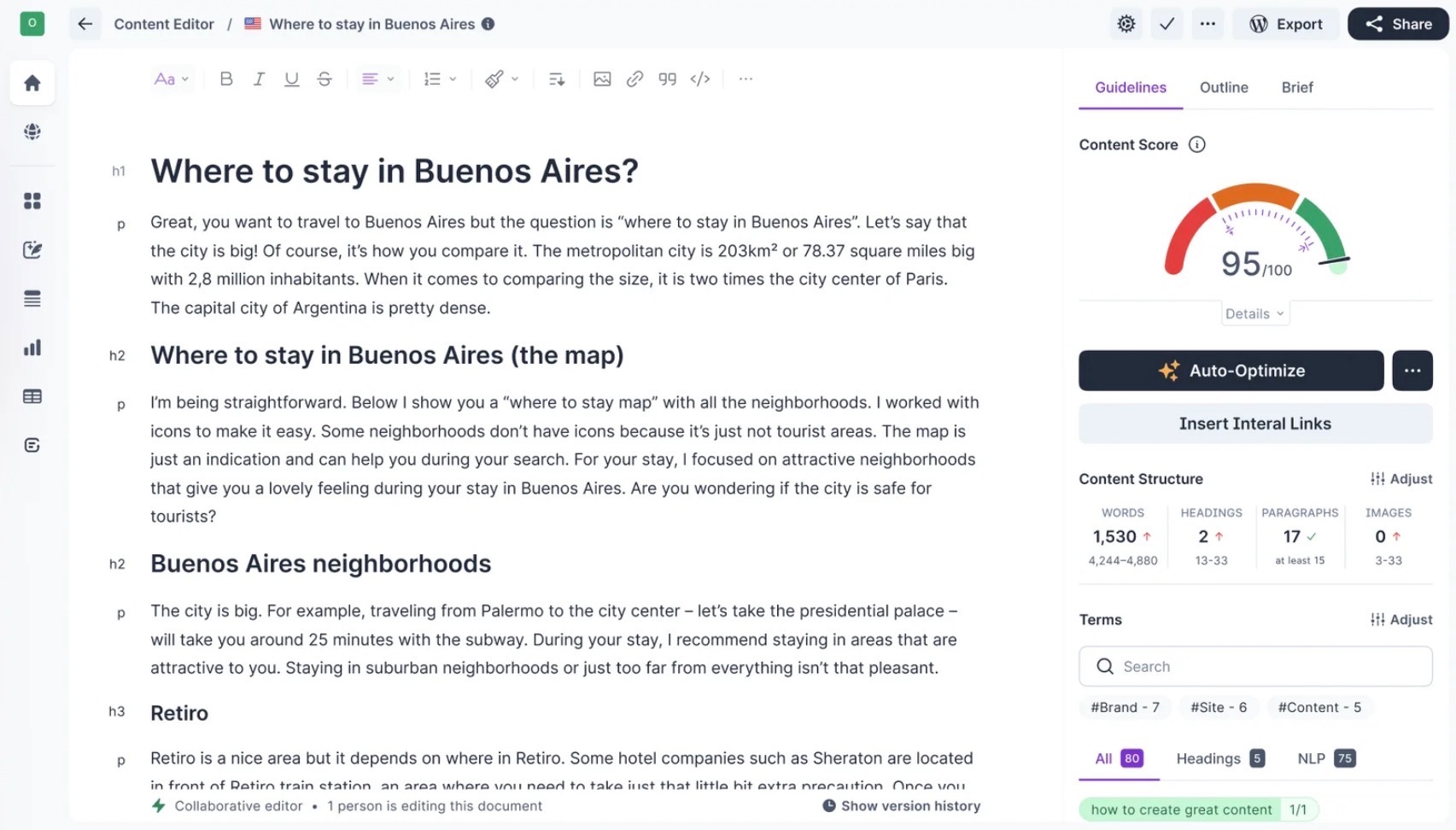
- Content Editor: Produces a live Content Score and recommends terms, headings, questions, length and structure based on competing pages. AI Search Guidelines add citation-focused recommendations.
- One-click optimization: Auto-Optimize expands topical coverage, while internal-linking tools identify relevant links using site and Google Search Console data.
- Sitewide planning: Sites combines Topical Map, Content Audit and reporting to identify content gaps, ranking drops, cannibalization risks and promising refresh opportunities.
- AI visibility: AI Tracker measures Visibility Score, Share of Voice, mention gaps, sentiment, competitors and cited sources across supported AI engines.
How it compares with Frase
The Frase vs Surfer SEO decision comes down largely to optimization depth versus workflow automation. Surfer provides more prescriptive page-level guidance through its Content Editor, SERP Analyzer, Content Score and one-click optimization tools. It is particularly strong when writers already have a draft and need measurable recommendations.
Frase focuses more heavily on moving from research and opportunity detection to drafting, approval, publishing and content-decay fixes. It also provides larger prompt allowances and publishes directly to WordPress, Webflow, Sanity and Wix.
Why choose it over Frase?
Choose Surfer when detailed content scoring is the main priority. Its live editor, topical recommendations and GSC-connected audit workflow provide tighter control over how each page is optimized. It also helps teams standardize optimization across multiple writers without depending entirely on AI-generated drafts.
Where it falls short
Surfer becomes expensive when multiple workspaces, daily AI tracking, internal linking or unlimited documents are required. Discovery has no prompt tracking, while Standard tracks only 25 ChatGPT prompts with weekly refreshes. Frase offers a more automated research-to-publishing workflow at a lower entry price.
Pricing
- Discovery: $59/month or $49/month billed annually
- Standard: $119/month or $99/month billed annually
- Pro: $219/month or $182/month billed annually
- Peace of Mind: $359/month or $299/month billed annually
- Enterprise: From $999/month
- AI Search Analytics: $158/month billed annually
- Free trial: 7 days
Compare their optimization depth, AI visibility and broader workflows in our Scalenut vs Surfer SEO breakdown.
3. Clearscope: Best for editorial teams and content grading
Best for
Editorial teams that want a consistent, writer-friendly way to optimize content across multiple contributors.
G2 rating
4.9 out of 5 from 92 reviews.
Key capabilities
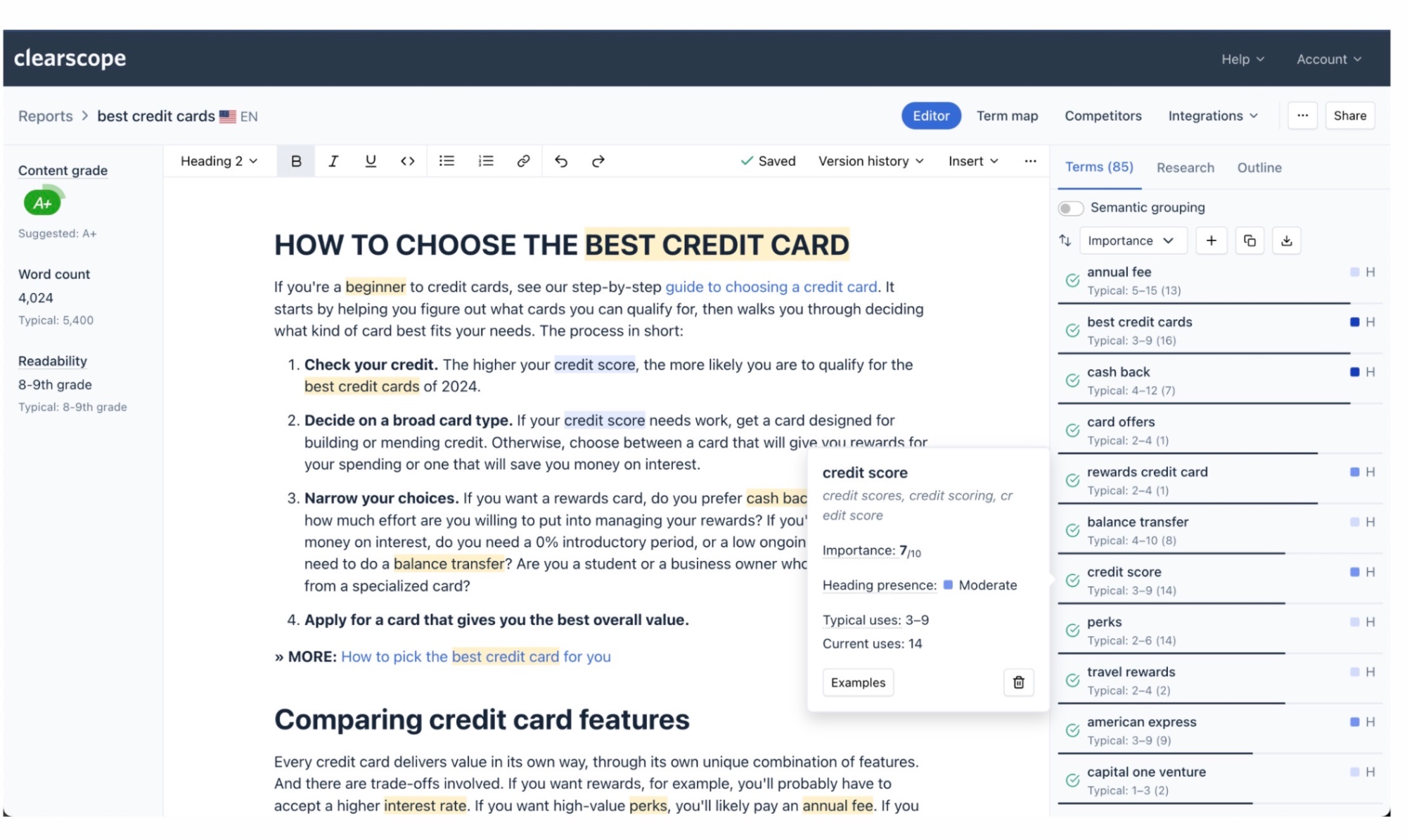
- Content optimization: Clearscope grades drafts in real time and recommends relevant terms, questions, citations and readability improvements. Writers can work in Clearscope or use its Google Docs, Microsoft Word and WordPress integrations.
- Research and drafting: Topic Explorations surface search volume, related queries, Google Autocomplete questions and competitor opportunities, while its AI drafting tools help teams build a starting draft.
- Content monitoring: Content Inventory combines Google Search Console and Google Analytics data with alerts for content decay, broken links and striking-distance opportunities. It also provides internal-link recommendations.
- AI visibility: Prompt tracking shows brand mentions, citations, share of voice and query fan-out data across ChatGPT and Gemini.
How it compares with Frase
For teams weighing Frase vs Clearscope, the main difference is editorial precision versus workflow automation. Clearscope offers a clean optimization experience, detailed content grading and unlimited users and projects on every plan. Frase places more emphasis on moving content from research and drafting through CMS publishing, AI visibility monitoring and automated refreshes within one platform.
Why choose it over Frase?
Clearscope is a strong fit when experienced writers need clear optimization guidance without a crowded interface. Unlimited users also make it easier to involve editors, freelancers and subject-matter experts without paying for more seats. Its integrations let contributors optimize content inside tools they already use.
Where it falls short
Clearscope’s $129 entry price is high for solo users and smaller teams, particularly because Essentials includes 20 drafts and 50 monitored pages per month. Business raises the page and prompt allowances but still includes 20 monthly drafts. Its public AI tracking currently covers ChatGPT and Gemini, while Frase supports additional engines on higher plans. Frase also offers broader direct publishing and agent-led production, making it better suited to teams prioritizing content volume and automation.
Pricing
- Essentials: $129/month (monthly subscription)
- Business: $399/month (monthly subscription)
- Enterprise: Custom pricing
- Free trial: 14 days
See whether its editorial experience and unlimited-user model justify the premium price in our complete Clearscope review.
4. MarketMuse: Best for sitewide content strategy and topical authority
Best for
Content strategists, publishers and agencies that need to prioritize opportunities across a large content library instead of optimizing pages one at a time.
G2 rating
4.6 out of 5 from 216 reviews.
Key capabilities
- Content inventory: MarketMuse analyzes published pages and topics across a site, then applies metrics such as Topic Authority, Personalized Difficulty, Page Authority and Competitive Advantage. These insights help teams decide whether to create, update or consolidate content.
- Topic and competitor research: Topic Navigator, Keywords, SERP X-Ray and SERP Heatmap reveal related concepts, ranking competitors and gaps in their coverage.
- Strategy and briefs: The platform creates cluster analyses, content plans and structured briefs. Its Strategy plan supports 9 brief formats, including articles, comparisons, guides, FAQs, listicles and product reviews.
- Content optimization: The Optimize application scores topical coverage against a target score and recommends related concepts to address. MarketMuse also provides internal-link suggestions and generative AI assistance with human input.
How it compares with Frase
When comparing MarketMuse vs Frase, MarketMuse goes deeper at the domain and topic-cluster level. It evaluates a site’s existing authority and uses that context to prioritize the most achievable opportunities. Frase is more execution-focused, moving from SERP research and drafting to optimization, CMS publishing, AI visibility tracking and content-refresh workflows.
Why choose it over Frase?
MarketMuse is more useful when the central question is not simply how to optimize an article, but what the team should create or update next. Its site-specific difficulty and authority metrics can support editorial prioritization across hundreds or thousands of pages. The platform is particularly valuable for established websites with enough content and performance history to make sitewide analysis meaningful.
Where it falls short
MarketMuse can feel overwhelming initially because of the depth of its data, a concern also reflected in G2 feedback. Its Free plan excludes site inventory, tracked topics and content briefs, while paid plans cap briefs and strategy documents. MarketMuse also states that it does not replace a CMS or directly manage published content. That leaves more manual handoffs than Frase’s research-to-publishing workflow. Fixed prices and billing periods for its paid plans are no longer displayed on the official pricing page.
Pricing
- Free: $0
- Optimize: Custom quote
- Research: Custom quote
- Strategy: Custom quote
- Free trial: Available; duration not stated
Explore its strategic depth, learning curve and practical limitations in our MarketMuse review for modern content teams.
5. NeuronWriter: Best budget-friendly SEO and AI visibility alternative
Best for
Freelancers, small businesses and agencies that want SERP-based optimization, AI writing and basic AI visibility monitoring at a lower price.
G2 rating
4.4 out of 5 from 31 reviews.
Key capabilities
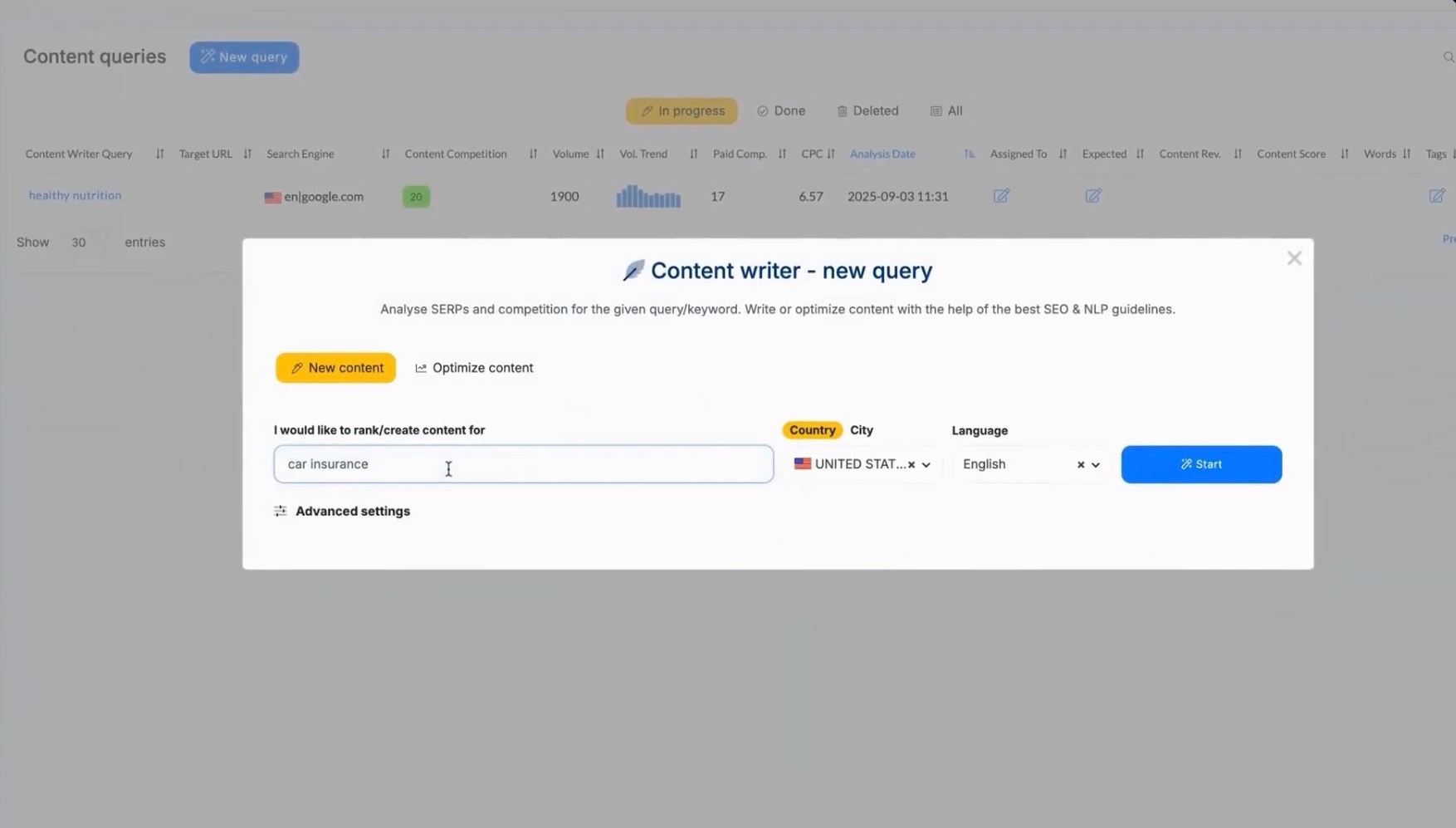
- SEO and GEO optimization: The content editor analyzes ranking competitors, recommends semantic terms and scores drafts as they are edited. Its separate AI Score evaluates topic coverage, structure and clarity for AI-readable content.
- AI content creation: Content Designer generates articles, while templates support introductions, landing pages and product descriptions. Gold and higher plans also let teams connect their own OpenAI or Anthropic keys.
- AI visibility: Every plan includes a small allowance of monitored questions. The visibility workspace tracks brand mentions, domain citations, share of voice, sentiment and competitors across platforms such as ChatGPT, Perplexity and Google’s AI search experiences.
- Workflow tools: Content planning, internal-link suggestions and read-only sharing are included broadly. Gold adds unlimited team collaboration, plagiarism checks, WordPress, Shopify and Google Search Console integrations, API access and MCP connectivity for external AI agents.
How it compares with Frase
As an alternative to Frase, NeuronWriter now covers more than low-cost NLP scoring. Both platforms support SEO and GEO optimization, AI-assisted writing, visibility monitoring and agent-connected workflows. NeuronWriter has the lower entry price and offers bring-your-own-model keys from Gold. Frase provides a more integrated research-to-publishing loop, broader CMS support and Content Guard for detecting and fixing declining pages.
Why choose it over Frase?
NeuronWriter makes sense when budget matters more than workflow automation. Bronze supports 25 content analyses for $23 per month, while Gold adds 75 analyses, 45,000 AI credits and unlimited collaborators for $69 per month. That cost structure is attractive for freelancers or small agencies producing optimized content across several projects.
Where it falls short
The lower plans omit Content Designer, editable team collaboration, plagiarism checks, API access and key integrations. AI visibility allowances are also limited to 5 monitored questions on Bronze and 20 on Diamond before an add-on is considered. Teams wanting automated audits, refreshes and publishing across several CMS platforms will find Frase more complete.
Pricing
- Bronze: $23/month or $19/month billed annually
- Silver: $45/month or $37/month billed annually
- Gold: $69/month or $57/month billed annually
- Platinum: $93/month or $77/month billed annually
- Diamond: $117/month or $97/month billed annually
- Free trial: 7 days
Comparing affordable options? See where NeuronWriter fits among the strongest AEO tools available for under $100 per month.
6. Content Harmony: Best for research-heavy content briefs
Best for
Agencies and editorial teams that need detailed, repeatable briefs for writer handoffs.
G2 rating
4.8 out of 5 from 22 reviews.
Key capabilities
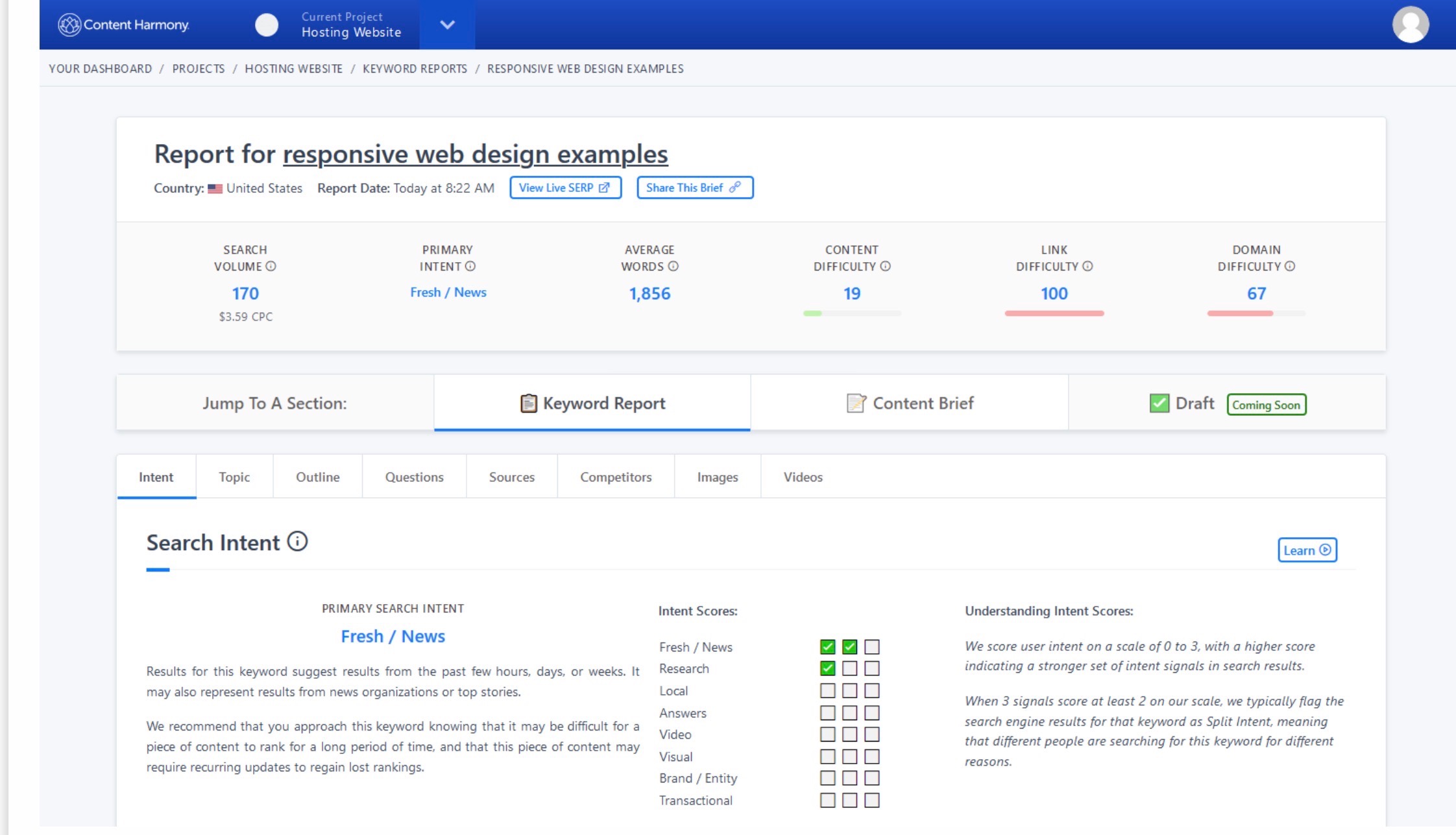
- Keyword reports: Reports combine search intent, topic analysis, competitor outlines, questions, authoritative sources, competitor metrics and visual findings. Question research draws from Google People Also Ask, Reddit, Quora and Stack Exchange.
- Custom content briefs: Strategists can select useful findings, add instructions and build briefs with reusable templates. Public links and clipboard exports simplify sharing through Google Docs, Microsoft Word or Notion.
- Content optimization: The Content Grader checks drafts or existing URLs against the same topic model used for research, highlighting missing subtopics without relying on keyword-density targets.
- Team workflow: Every plan includes unlimited users, unlimited projects, rollover credits and training. Integrations include Google Docs, Microsoft Word, Notion, Moz and DataForSEO, with webhooks and API access also available.
How it compares with Frase
Content Harmony is narrower and more research-led than Frase. It gives strategists greater control over what enters a brief, including sources, competitor structures, visuals, questions and internal-link opportunities. Frase automates more after research, including drafting, SEO and GEO scoring, CMS publishing, AI visibility monitoring and content refreshes.
Why choose it over Frase?
Among Frase competitors, Content Harmony is a stronger choice when the brief is the main deliverable. Agencies can standardize research and instructions without paying for every contributor, while public brief and grader links simplify collaboration. It works particularly well when writers draft elsewhere and strategists want to retain editorial control.
Where it falls short
Content Harmony does not offer Frase’s end-to-end creation and publishing environment. Its core workflow ends with briefing and content grading, leaving writing, publishing and post-publication monitoring to other tools. G2 feedback also indicates that its optimization capabilities trail specialist optimizers. Costs rise quickly at volume, and the entry plan covers only 5 workflows monthly.
Pricing
- Standard 5: $50/month or about $42/month billed annually
- Standard 12: $99/month or about $89/month billed annually
- Standard 25: $199/month or about $179/month billed annually
- Standard 50: $299/month or about $269/month billed annually
- Standard 100: $599/month or about $539/month billed annually
- Standard 150: $799/month or about $719/month billed annually
- Enterprise: From $1,000/month
- Trial: $10 one-time
- Free trial: No
Building a brief-first workflow? Use these 5 content brief templates and examples to standardize writer handoffs and reduce revisions.
Building a brief-first workflow? Use these 5 content brief templates and examples to standardize writer handoffs and reduce revisions.
7. Writesonic: Best for AI content creation and AI search execution
Best for
Marketing teams that want AI visibility data, long-form content production and site-level SEO actions in one platform.
G2 rating
4.7 out of 5 from 2,124 reviews.
Key capabilities
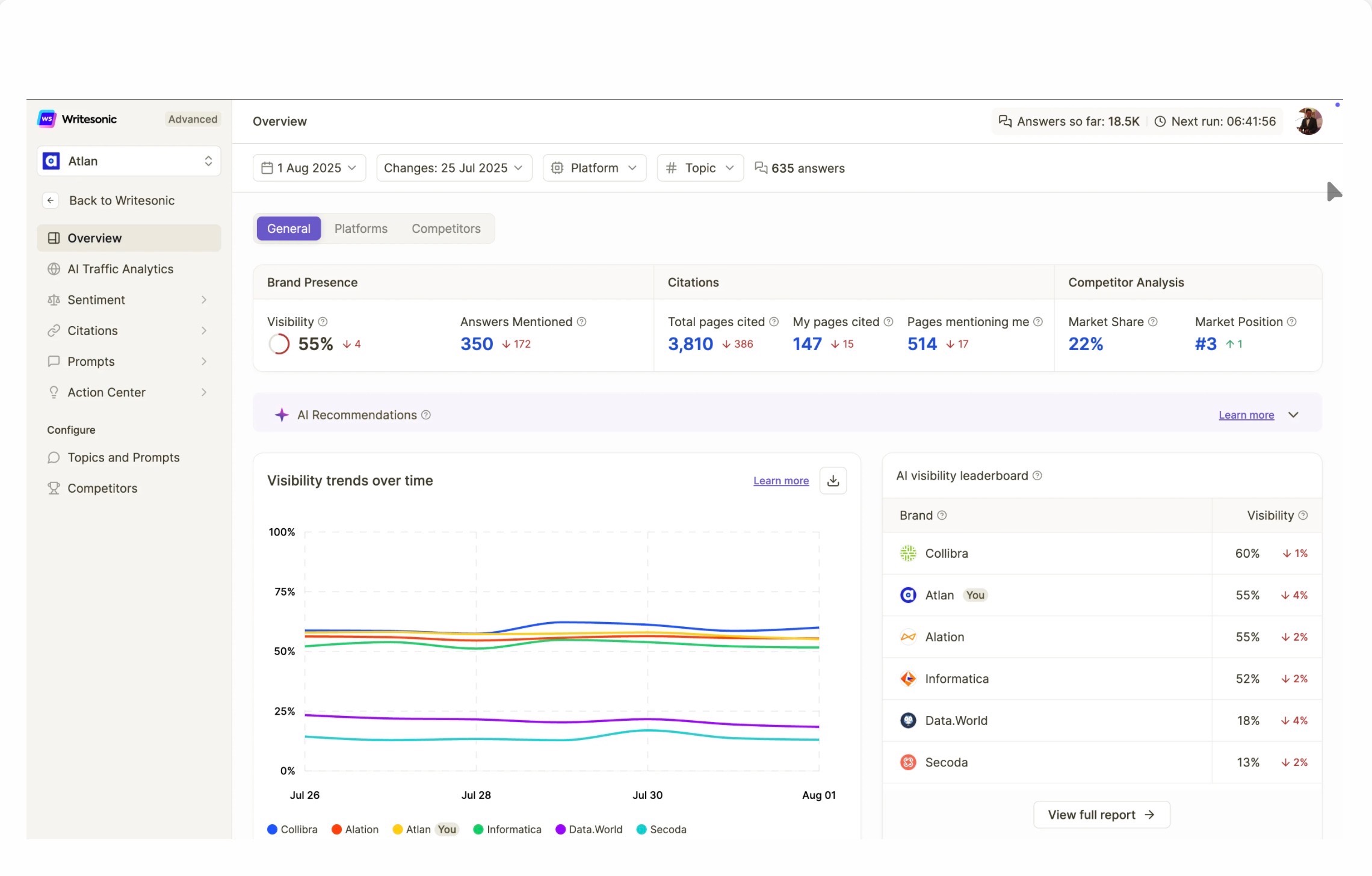
- AI visibility monitoring: Starter, Basic and Growth track ChatGPT, Gemini and Google AI Overviews. Teams can monitor prompts, daily answers, brand visibility, citations, competitors and ads, while Growth adds sentiment analysis.
- AI Article Writer: Its agentic pipeline combines SERP and competitor analysis, keyword data, AI prompt research, brand knowledge and verified citations. It also creates internal links, images, FAQs and schema before exporting to WordPress, Sanity, Contentful, Webflow or Ghost.
- Audits and agentic workflows: Every paid plan includes AI articles and site audits. Basic and Growth add more agent runs, articles, audit capacity and users.
- Enterprise execution: Enterprise expands coverage to 10 AI platforms, including Perplexity, Claude, Grok, DeepSeek and Copilot. It also unlocks the full Action Center, custom markets and languages, advanced controls and complete agentic workflows.
How it compares with Frase
Writesonic and Frase both cover content research, AI writing, SEO and GEO optimization, CMS publishing, site audits and AI visibility. Writesonic places more emphasis on daily AI-answer monitoring, citation opportunities and enterprise execution across 10 platforms. Frase starts at a lower price and offers a tighter content-maintenance loop through Content Guard, which detects declining pages, proposes updates and republishes approved changes.
Why choose it over Frase?
Writesonic is one of the best Frase alternatives for teams treating AI search as a measurable acquisition channel. Its visibility data connects directly to article creation, site fixes and citation-focused actions. The Article Writer is also useful when teams want researched long-form drafts with citations, internal links, media and schema prepared in the same workflow.
Where it falls short
The advertised $79 Starter price requires annual billing and includes only 1 user, 1 project, 15 articles and 50 tracked prompts. Starter, Basic and Growth monitor only 3 AI platforms, despite the broader 10-platform coverage promoted at the enterprise level. Full Action Center access is also reserved for Enterprise, while Growth receives a limited monthly trial. Smaller teams may therefore pay for capabilities they cannot fully use.
Pricing
- Starter: $79/month billed annually
- Basic: $199/month billed annually
- Growth: $399/month billed annually
- Enterprise: Custom pricing
- Free trial: 7 days
See how its AI visibility, article production and plan limitations work together in our complete Writesonic review.
Which Frase alternative should you choose?
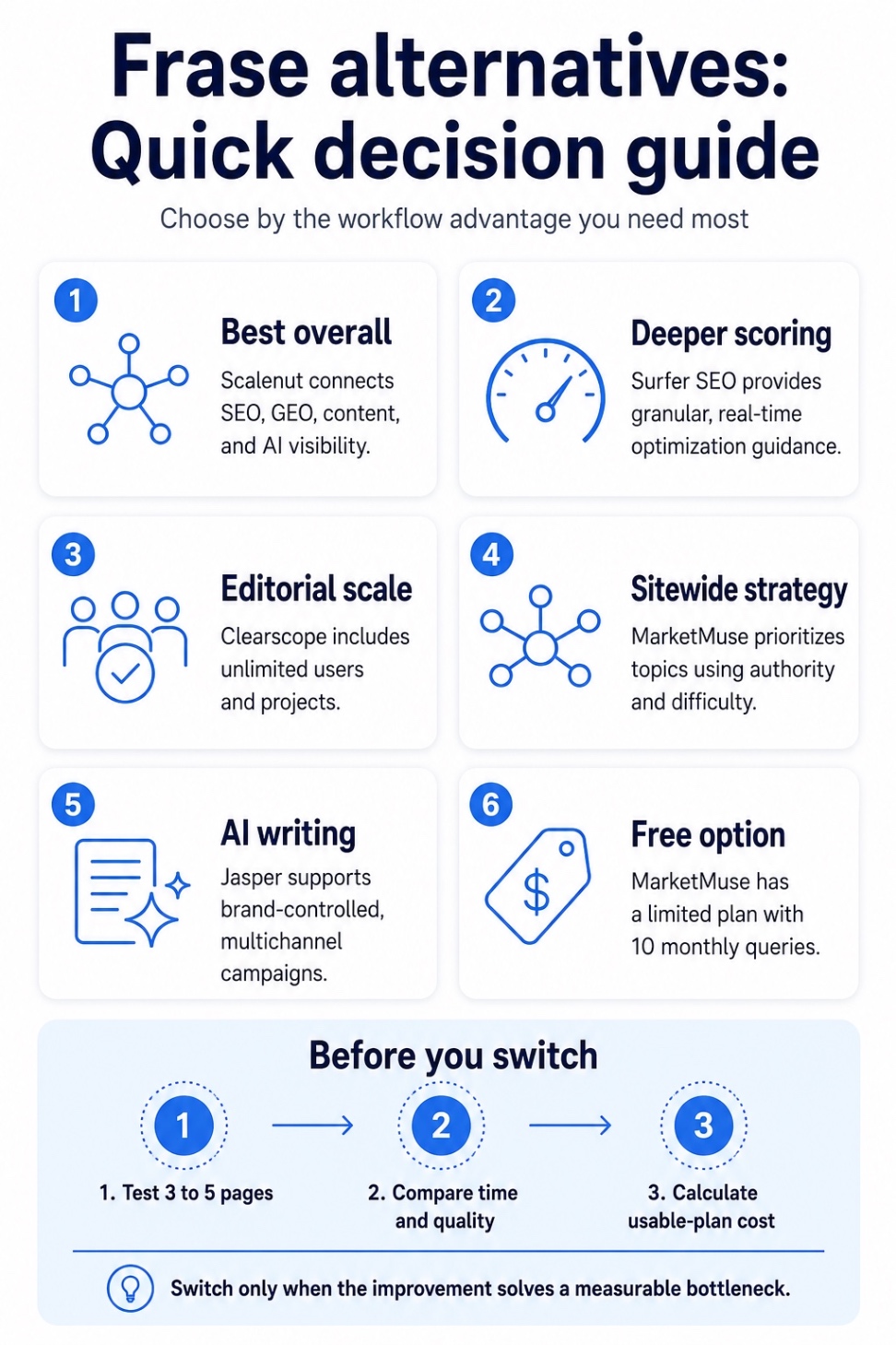
Choosing among Frase io alternatives depends on the specific limitation you need to solve, whether that is pricing, optimization depth, strategic planning or AI-search execution.
Here are the strongest options for each priority:
- For end-to-end SEO and GEO: Scalenut: Choose Scalenut to manage planning, content creation, optimization, publishing and AI visibility within one platform. It is the best fit when simplifying a fragmented SEO and GEO workflow is the priority.
- For detailed content scoring: Surfer SEO: Choose Surfer SEO when writers need prescriptive, real-time guidance for topic coverage, structure and on-page relevance. Its scoring system is the deciding factor for teams with strict optimization benchmarks.
- For editorial quality control: Clearscope: Choose Clearscope when usability and consistent editorial standards matter most. Its straightforward content grades and familiar writing integrations make it easier to align in-house writers, editors and freelancers.
- For sitewide strategy: MarketMuse: Choose MarketMuse when the challenge is deciding which topics and pages deserve investment. Its domain-specific authority and difficulty metrics support portfolio-level prioritization instead of isolated keyword optimization.
- For lower-cost optimization: NeuronWriter: Choose NeuronWriter when budget is limited but SERP analysis, content scoring and AI-assisted writing are still required. Its lower entry price is the main advantage, provided the limits of lower plans suit your publishing volume.
- For research-heavy briefs: Content Harmony: Choose Content Harmony when strategists need to turn SERP research into consistent, writer-ready briefs. It is particularly valuable when research and brief preparation create the biggest production bottleneck.
- For AI content and visibility: Writesonic: Among Frase competitors, Writesonic suits teams that want AI content production and AI-search execution in the same platform. The deciding factor is whether visibility gaps need to translate into prioritized content, citation and technical actions.
The right choice is the tool that solves your most expensive workflow problem without adding features, limits or costs your team does not need.
Still narrowing your shortlist? Use this framework for choosing a generative AI optimization tool to score each option against your actual workflow.
Conclusion
The right Frase alternative should solve the most expensive gap in your workflow, not simply offer more advanced features. Test the same 3–5 pages or keywords in Frase and your top 2 alternatives, then compare editing time, output quality, search results, and how Frase AI pricing stacks up against each tool’s pricing plans. This gives content marketers and SEO professionals a practical basis for deciding whether a specialist content optimization tool or an end-to-end platform is the better choice.
Next, involve your content team before committing. Small teams may value simpler workflows and predictable limits, while SEO experts may need deeper scoring, audits and AI visibility. Assess how each platform supports content generation, fits your content creation process, and connects with your content marketing stack and existing content tools. If Scalenut matches your SEO and GEO goals, book a free strategy call with Scalenut.
Frequently asked questions
What is the best alternative to Frase in 2026?
Scalenut is the strongest overall option for teams wanting planning, content creation, optimization, publishing and AI visibility in one workflow. Surfer SEO is stronger for granular scoring, while MarketMuse and Content Harmony are better suited to strategy and research-heavy briefs.
Is there a free alternative to Frase?
MarketMuse offers a permanent free plan with 10 monthly queries, but it excludes site inventory, tracked topics and content briefs. Scalenut, Frase, Surfer SEO, Clearscope, NeuronWriter and Writesonic provide trials rather than permanently free full-featured plans.
Is Scalenut better than Frase?
Scalenut is better when teams want lower current annual pricing, keyword clustering, GEO content workflows and AI visibility connected to execution. Frase may be preferable when FraseCMS, Content Guard and autonomous publishing across its supported CMS platforms are central requirements.
Frase vs Surfer SEO: which is better for content optimization?
Surfer SEO is stronger for granular, real-time optimization through its Content Score and analysis of more than 500 ranking signals. Frase covers a broader workflow that includes research, drafting, site audits, CMS publishing, AI visibility and content-decay monitoring.
Frase vs Clearscope: which is better for editorial teams?
Clearscope is stronger for editorial adoption because every plan includes unlimited users and projects, along with straightforward real-time grading. Frase is more suitable when the team also needs AI drafting, publishing, site audits, content-decay monitoring and broader workflow automation.
MarketMuse vs Frase: which is better for content strategy?
MarketMuse is stronger for sitewide planning through content inventory, Topic Authority and Personalized Difficulty. Frase is the better fit for teams prioritizing research-to-publish execution, AI-assisted drafting, CMS publishing, AI visibility tracking and automated recovery for declining content.
Frase vs Jarvis: which is better for AI writing?
Jarvis was renamed Jasper in 2022. Jasper is stronger for brand-controlled, multichannel marketing content and campaign workflows, while Frase is designed around SEO and GEO research, optimization, site audits, publishing, AI visibility and post-publication content maintenance.
Is switching from Frase worth it?
Switching is worthwhile when specific Frase features, workflow limits or Frase AI pricing create a measurable bottleneck. Test 3 to 5 representative pages in both platforms and compare research time, editing effort, optimization quality, usable-plan cost and publishing efficiency before migrating.


.svg)


.webp)