

Key Highlights
- MarketMuse is a strong content optimization platform focused on topic depth, competitive analysis, and traditional SEO planning.
- It works best for teams optimizing long-form content and building topical authority over time.
- MarketMuse offers detailed insights but comes with a steeper learning curve and usage-based pricing limits.
- The platform does not actively track or optimize brand visibility inside AI-generated answers.
- As content discovery shifts beyond search engines, this creates a visibility gap for modern teams.
- A more complete solution combines SEO fundamentals with GEO and AI visibility insights.
- Tools that connect insight directly to execution help teams move faster and scale with clarity
As content marketers, we’re publishing more content than ever, yet it’s not always clear what actually drives results. Even when SEO best practices are in place, performance can feel inconsistent and hard to explain.
That’s where tools like MarketMuse come in. MarketMuse is designed to help teams improve content quality through gap analysis, topic coverage, and strategic planning, and it’s often chosen by teams focused on long-form content and building topical authority.
In this review, we’ll take a close look at how MarketMuse performs in real use, where it delivers value, and where its approach starts to feel limited as content discovery continues to evolve.
What Is MarketMuse?
MarketMuse, now acquired by Siteimprove, is an AI-driven platform that helps marketers and content creators elevate their content strategy. It goes beyond basic keyword research, using advanced machine learning to identify content gaps, optimize page coverage, and enhance SEO performance.
With its focus on topic modeling and competitive analysis, MarketMuse helps teams refine their content to improve search rankings and drive organic traffic. While MarketMuse excels at optimizing content for traditional search engines, it primarily addresses SEO in a classic sense: focusing on rankings, keywords, and optimization.
However, as AI-driven platforms like ChatGPT and Perplexity reshape how content is discovered, MarketMuse falls short in helping brands track and improve visibility across these emerging AI environments. To explore what MarketMuse offers and where it might miss the mark, let’s take a closer look at its core features.
What Are The Core Capabilities Of MarketMuse?
MarketMuse offers a comprehensive suite of tools designed to enhance content creation and SEO efforts. By focusing on competitive analysis, content optimization, and strategic planning, it equips teams with the insights and recommendations needed to elevate their digital content.
Let’s take a closer look at the core features that set MarketMuse apart.
1. Competitive Content Analysis
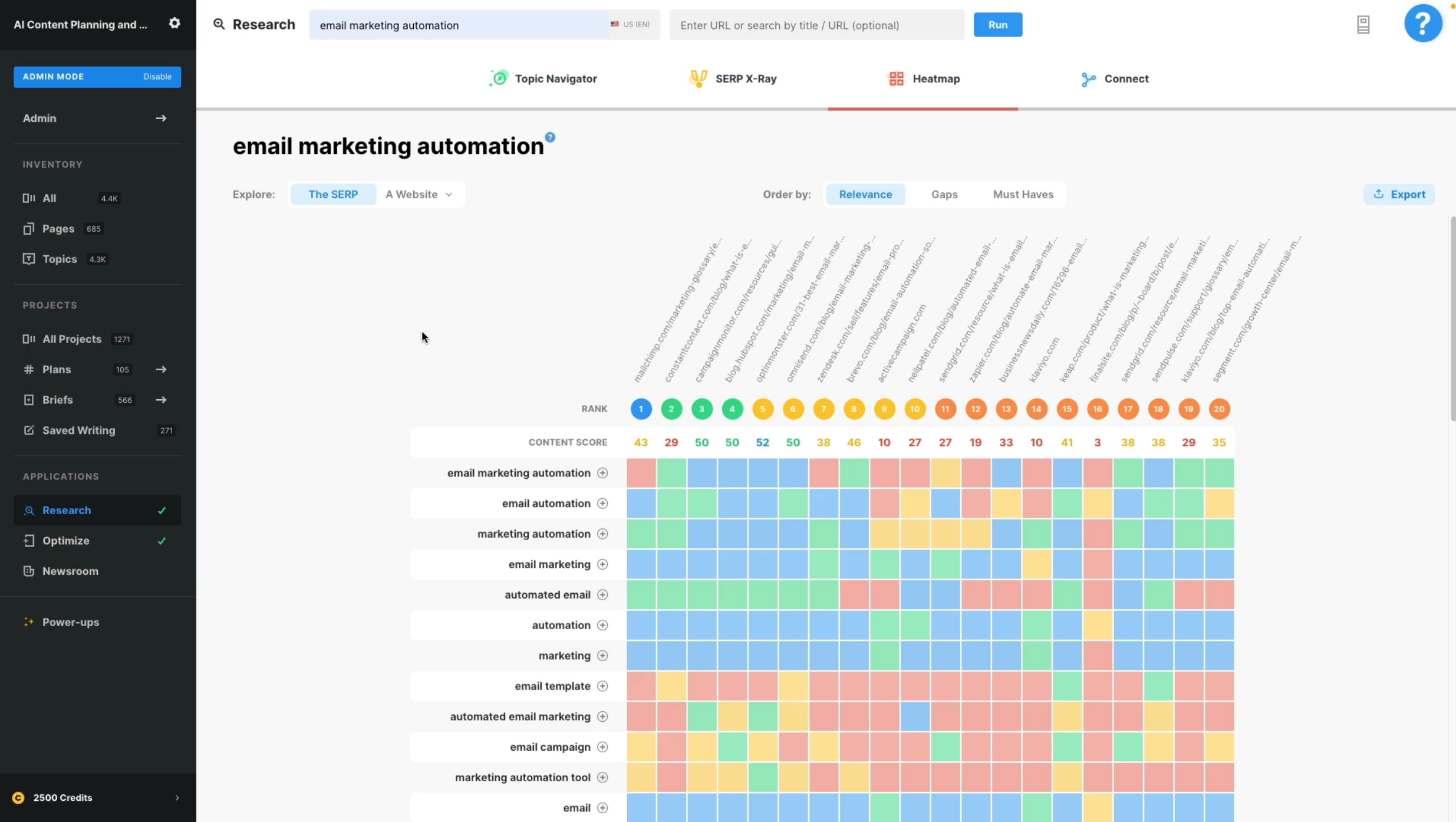
The Competitive Content Analysis tool allows you to evaluate your content against the best-ranking pages for a given keyword or topic. By identifying content gaps and areas where competitors provide deeper insights, MarketMuse helps you refine your content strategy and improve the comprehensiveness of your content. This is essential for staying competitive and ensuring that your content stands out in crowded search results.
2. Content Clusters
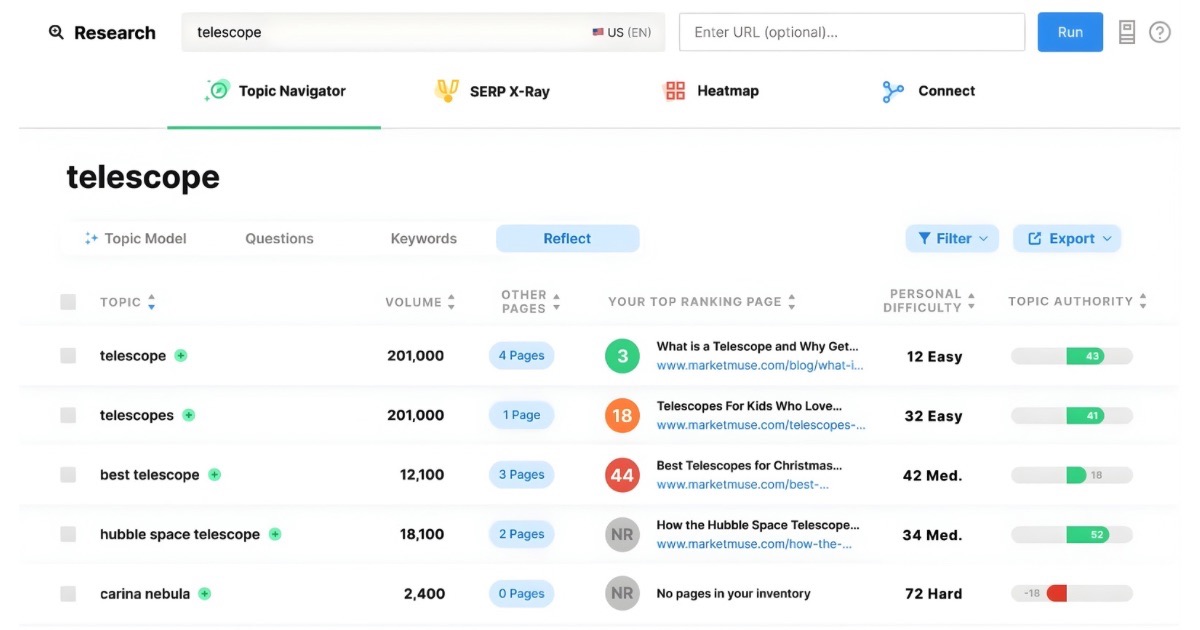
MarketMuse helps users create Content Clusters by grouping related content around central themes, making it easier to develop a cohesive content strategy. By building out topic clusters, you can improve your site’s topical authority and ensure that your content is aligned with what search engines consider a comprehensive approach to a subject. It’s a highly effective way to boost SEO and increase your chances of ranking higher.
3. Content Planning
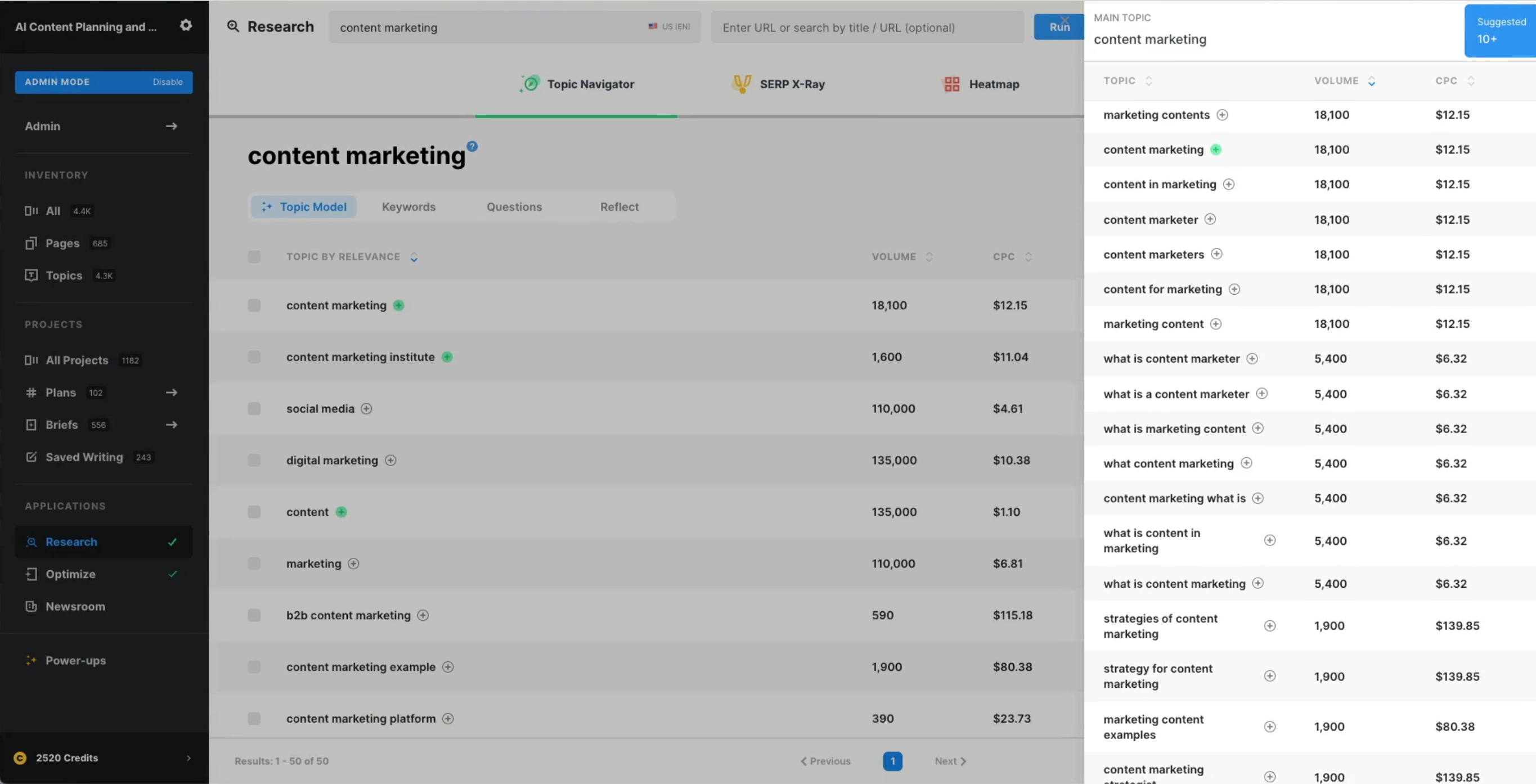
With MarketMuse’s Content Planning tools, you can create a roadmap for your content strategy. The platform evaluates your existing content, competitive landscape, and keyword relevance to suggest the most important topics to target next. Whether you’re looking to create fresh content or optimize existing pages, MarketMuse helps you prioritize efforts that will have the most impact, making your content production process more efficient.
4. Content Brief Generator
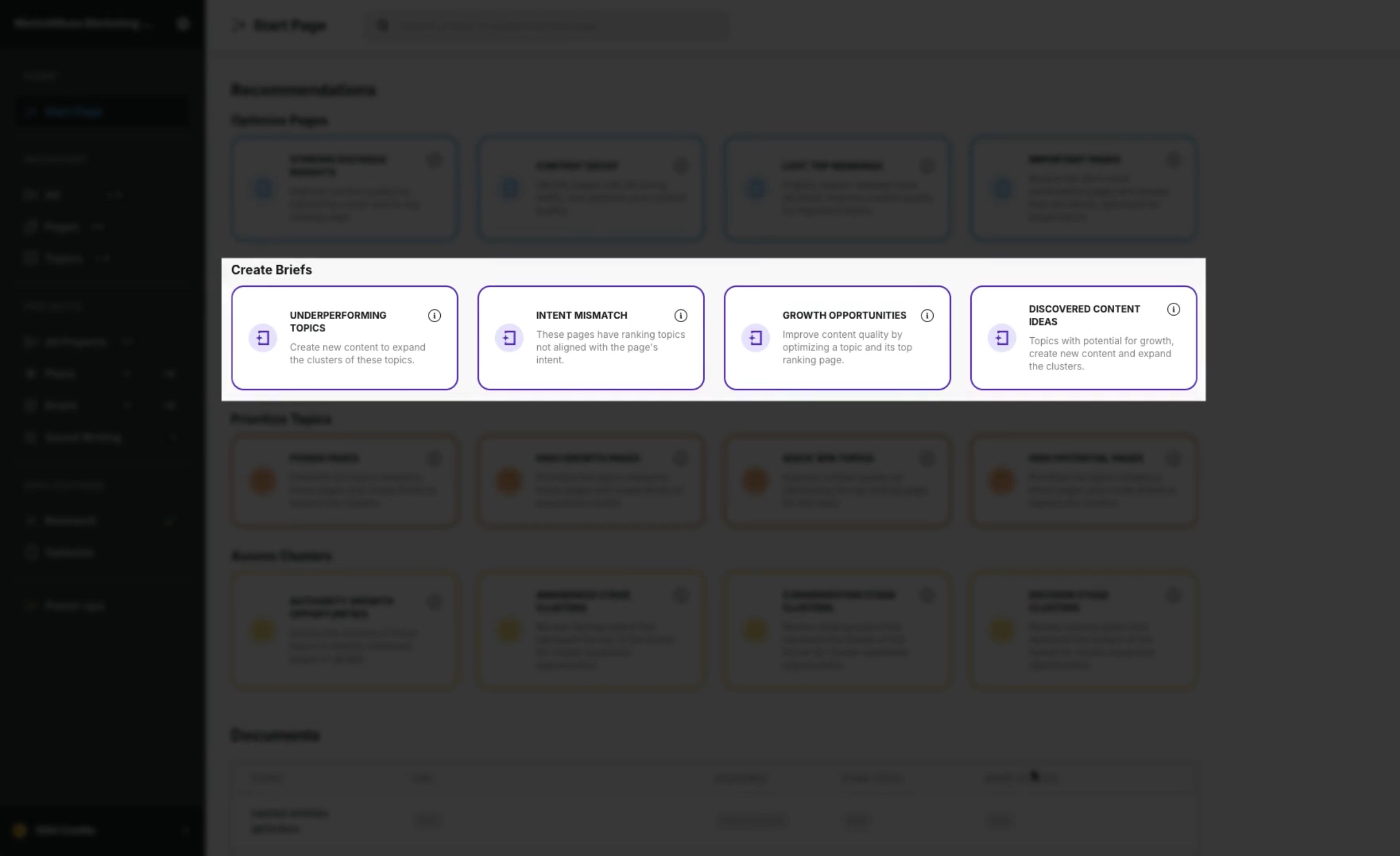
MarketMuse streamlines the content creation process with its Content Brief Generator. This AI-powered tool creates detailed, actionable briefs that guide writers on what to include in their content. These briefs go beyond simple outlines, providing critical recommendations on topic structure, related keywords, and the depth of coverage needed to satisfy user intent. This ensures your content is well-researched, thorough, and optimized from the start, saving time and improving the quality of your writing.
Need faster content without sacrificing quality? Check out our list of the best AI SEO content generators for quick, scalable results.
5. Optimize
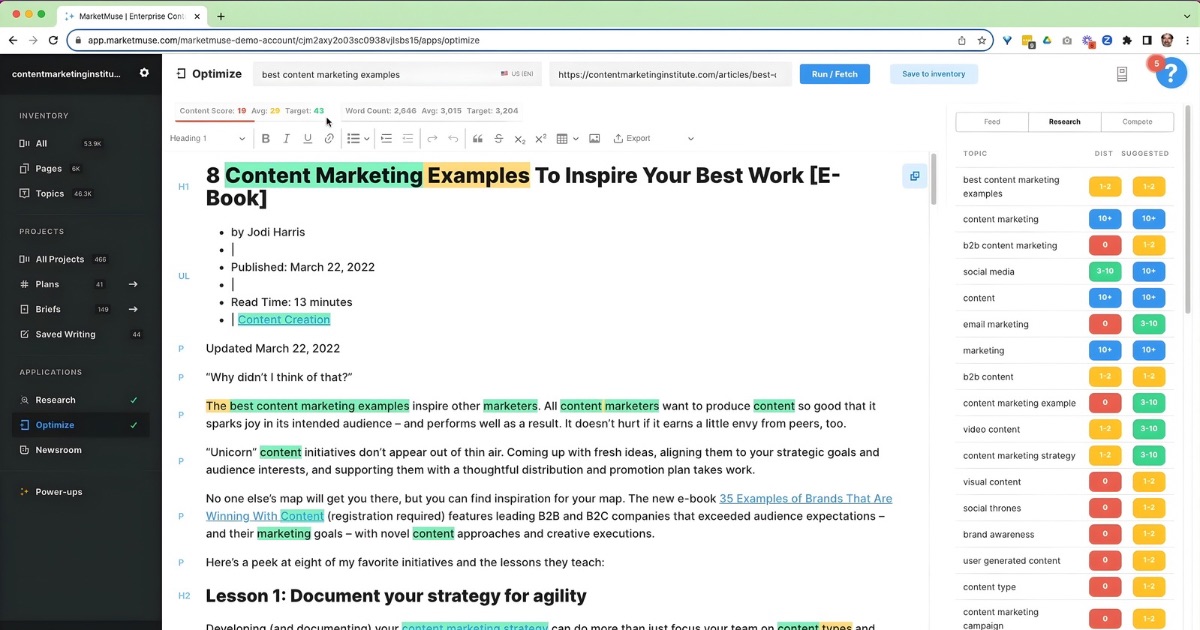
MarketMuse’s Optimize feature is a game-changer for refining existing content. It evaluates your content’s performance against top-ranking pages, offering targeted recommendations to enhance its SEO effectiveness. Whether it’s improving keyword usage, expanding on undercovered topics, or optimizing internal linking, MarketMuse provides a comprehensive checklist of improvements that can boost your content’s ranking potential. The AI-driven insights make it easy to implement changes that matter, without having to guess what will work best.
MarketMuse Review: What Actual Users Say About The Platform?
Across user reviews, MarketMuse is most often praised for the depth and quality of its content insights. Many users appreciate how the platform surfaces actionable recommendations that go beyond basic keyword suggestions, especially when it comes to topic coverage and content optimization. For experienced SEO professionals, this depth is seen as a major strength. That said, a recurring theme in user feedback is that MarketMuse can feel a bit complex.
“The platform can feel a bit overwhelming at first because of how feature-rich it is and the depth of data it provides. It takes some time to get used to the dashboards and interpret all the analytics,” says Mark D., Business Consultant.
The platform’s extensive feature set and dense interface create a steeper learning curve, particularly for smaller teams or solo marketers. Several users also point out pricing concerns, noting that the cost can feel high relative to how much of the platform they actively use.
How Do MarketMuse Pricing Plans Work? Do They Offer A Free Plan?
MarketMuse offers multiple pricing tiers based on usage limits, tracked topics, and access to strategic features. Understanding how these plans scale helps clarify who the platform is best suited for and where its limitations begin to show.
Free Plan: What It Includes?
- Limited applications
- 1 user
- 10 queries per month
Who Is It Best For?
- Individuals with a low content volume
Optimize Plan: What It Includes?
- 100 tracked topics
- 5 content briefs per month
- 1 strategy document per month
Who Is It Best For?
- Individuals publishing content regularly
Research Plan: What It Includes?
- 1,000 tracked topics
- 10 content briefs per month
- 3 strategy documents per month
Who Is It Best For?
- Teams looking to accelerate content output
Strategy Plan: What It Includes?
- 10,000 tracked topics
- 20 content briefs per month
- 5 strategy documents per month
Who Is It Best For?
- Large teams and agencies scaling content planning
MarketMuse’s pricing works well for teams focused on content depth and planning, but costs and usage caps can become restrictive as content operations grow.
Who Are The Ideal Users For MarketMuse?
Who Is MarketMuse Best For?
- Enterprise content teams managing large websites and content inventories.
- SEO strategists and consultants who value deep topic modeling and competitive insights.
- Editorial teams focused on long-form, authoritative content.
- Organizations with established SEO processes and time to onboard a complex tool.
- Teams optimizing existing content at scale, not just creating new pages.
Who Is MarketMuse Not For?
- Solo creators or small teams looking for fast execution.
- Marketers focused on AI visibility or GEO outcomes.
- Teams that want content creation, optimization, and promotion tightly integrated.
- Users with limited time for onboarding and setup.
- Budget-conscious teams that need flexible usage without strict limits.
What Are The Pros And Cons Of MarketMuse?
MarketMuse stands out for its depth and analytical strength, but that same depth can also introduce friction depending on how teams work.
What Makes MarketMuse Different From Other AI SEO Tools?
- Strong topic modeling that helps create comprehensive, authoritative content.
- Detailed competitive content analysis that goes beyond surface-level keywords.
- Helpful content briefs that guide writers on structure and coverage.
- Effective for optimizing existing, long-form content at scale.
- Well-suited for teams focused on building topical authority over time.
Where Does MarketMuse Fall Short?
- No native AI visibility tracking to show how a brand appears inside tools like ChatGPT, Gemini, or Perplexity.
- Does not support GEO-focused optimization or prompt-level analysis for AI-generated answers.
- Lacks visibility metrics such as share of voice, brand mention tracking, or AI response positioning.
- No AI traffic monitoring to understand how LLMs interact with site content.
- Primarily built for traditional SEO, with limited alignment to modern AEO and AI-driven discovery patterns.
- Steep learning curve, especially for smaller teams or solo marketers.
- Interface can feel dense and overwhelming when quick execution is needed.
- Pricing tiers are usage-based, and content brief or tracked topic limits can become restrictive as content needs scale.
- Focused more on planning and analysis than end-to-end execution workflows.
Want to get ahead of AI-driven search? Read how beginners can master GEO SEO strategies in 2026 for a practical, beginner-friendly roadmap.
Why Is Scalenut A Better MarketMuse Alternative?
MarketMuse is designed primarily around improving content depth for traditional search engines. Scalenut builds on that foundation by supporting both SEO performance and AI-driven visibility. It helps teams optimize content for search rankings while also tracking how brands appear inside AI-generated answers across platforms like ChatGPT, Gemini, and Perplexity.
More importantly, Scalenut connects strategy to execution in one place. Along with SEO research and content optimization, it offers AI-assisted writing, content audits, internal linking, backlink opportunities, and AI traffic monitoring. For teams that want measurable results across search engines and AI discovery channels, Scalenut delivers a more complete and execution-focused alternative.
Get a 7-Day Scalenut Free Trial!
What Are The Core GEO And SEO Features Of Scalenut?
Scalenut combines AI visibility intelligence with practical SEO workflows, making it a complete GEO and SEO platform rather than a single-purpose tool.
How Does Scalenut Support GEO And AI Visibility?
Scalenut’s GEO capabilities focus on how brands appear, perform, and compete inside AI-generated answers across platforms like ChatGPT, Gemini, and Perplexity.
AI Brand Visibility And Monitoring
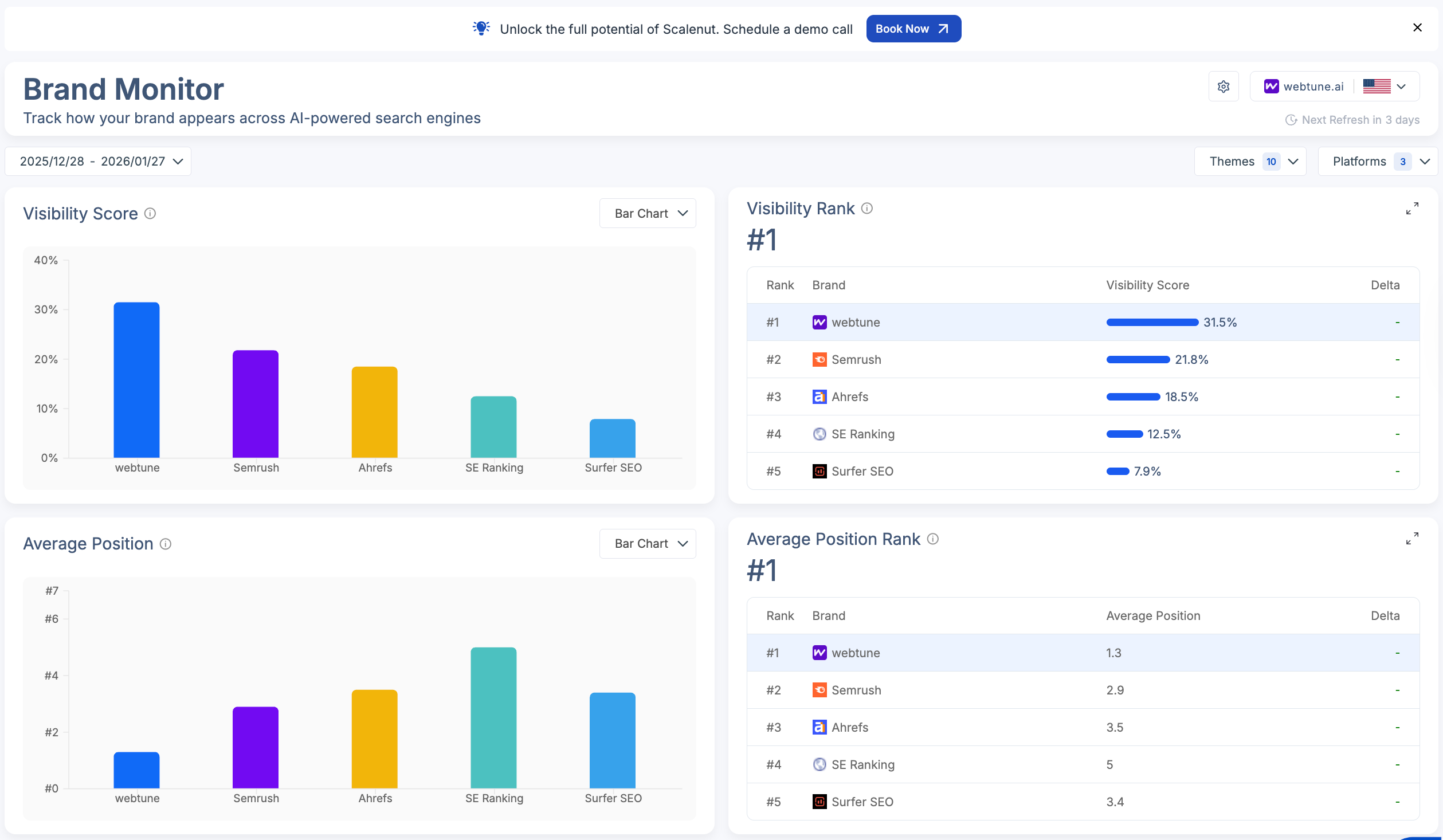
This feature helps teams understand how your brand appears across AI-generated answers and how that visibility compares to competitors in real time.
- Visibility Score showing how often your brand is mentioned compared to competitors.
- Average Position indicating how prominently your brand appears in AI-generated answers.
- Share of Voice measuring how much AI response space your brand captures.
- Visibility Heatmap highlighting performance differences across AI platforms.
- Brand Visibility Rank summarizing overall AI visibility across key topics and prompts.
Prompt-Level Insights And AI Search Intelligence
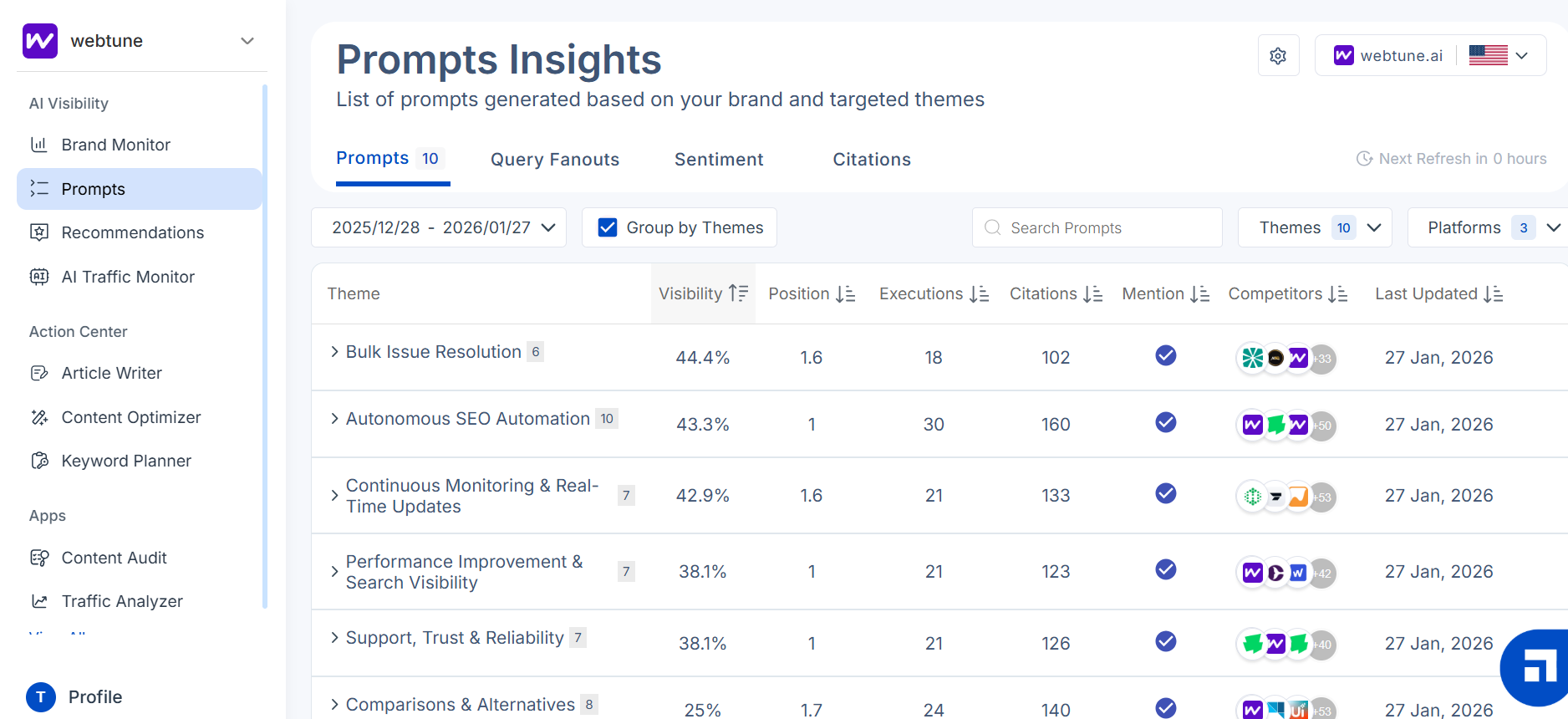
This feature helps teams understand how AI systems interpret, expand, and present their brand within real user prompts.
- Prompt tracking to see where your brand is mentioned and how it ranks in AI responses.
- Citation tracking to identify sources supporting AI-generated answers.
- Competitor visibility insights showing which brands appear alongside yours.
- Query fanouts revealing how a single question expands into related AI-generated queries.
- Sentiment analysis classifying brand mentions as positive, neutral, or negative.
Actionable GEO Recommendations
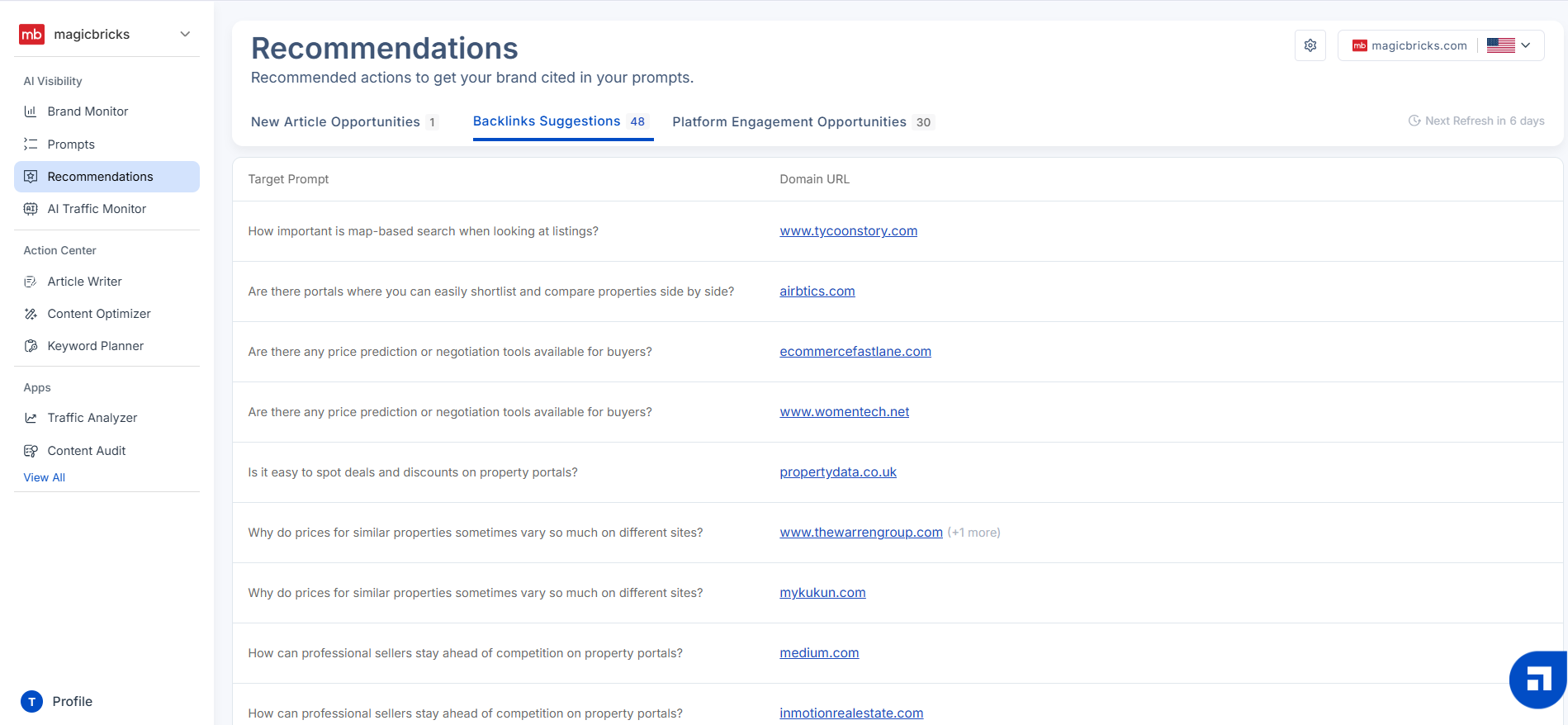
This feature turns AI visibility insights into practical steps that improve discoverability and authority.
- New article ideas based on high-intent, AI-driven user questions.
- Backlink suggestions to strengthen authority and AI visibility.
- Platform engagement opportunities highlighting relevant Reddit discussions and forums.
- Clear execution paths that connect insights directly to actions.
AI Traffic Monitoring And LLM Interaction Tracking
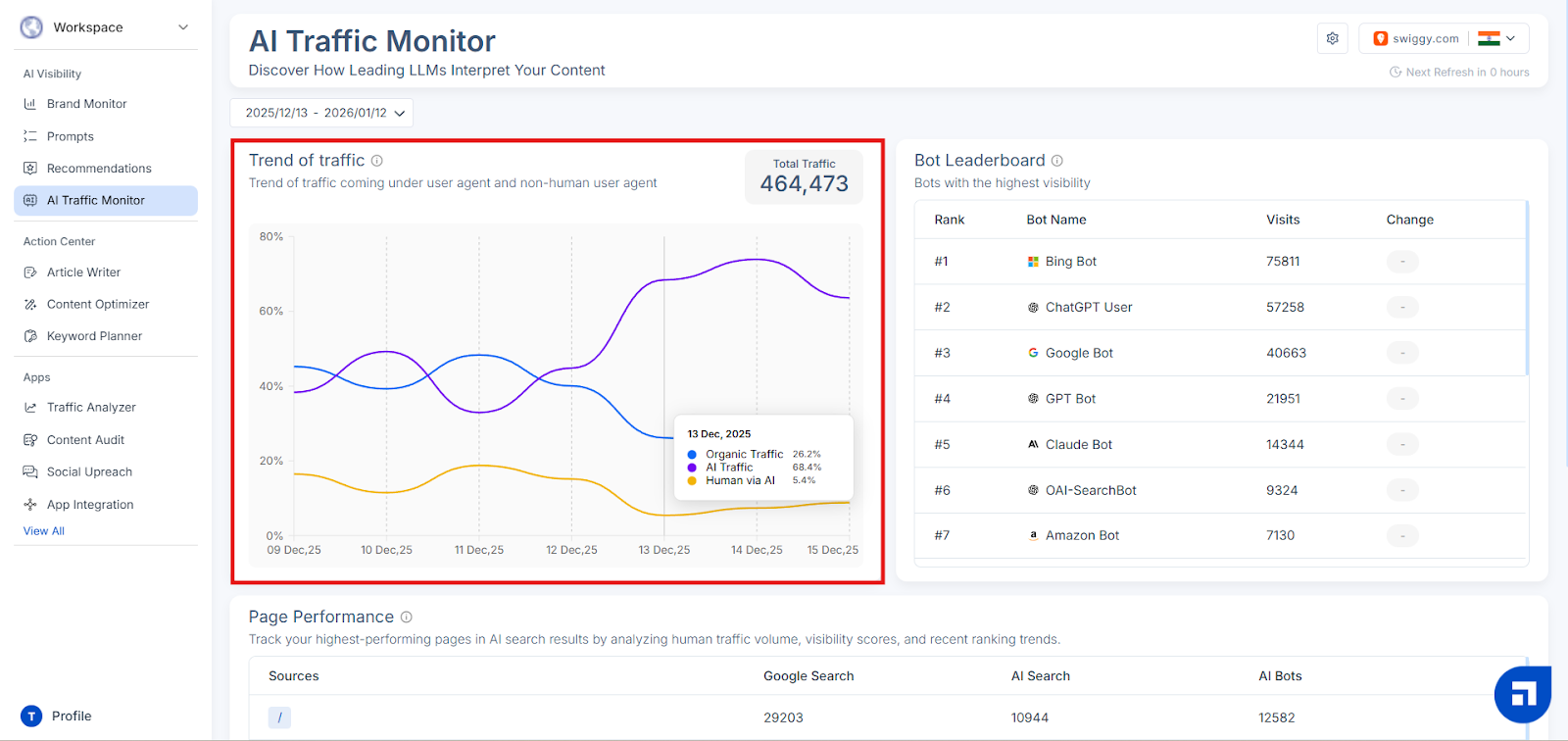
This feature helps teams measure how AI systems interact with their content and identify emerging traffic patterns.
- AI bot tracking for visits from tools like ChatGPT and Gemini.
- Cloudflare integration for enhanced AI traffic visibility.
- Top sources identifying which AI agents access your site most often.
- Top pages showing which content AI models reference frequently.
- AI visit trends tracking changes in AI-driven traffic over time.
Want a deeper look at how this works in practice? Read our Scalenut review to see how its GEO and SEO tools can boost brand visibility.
How Does Scalenut Support SEO And Content Execution?
Alongside GEO, Scalenut provides a full SEO and content execution toolkit designed to help teams plan, create, optimize, and scale content efficiently.
Content Creation And Optimization
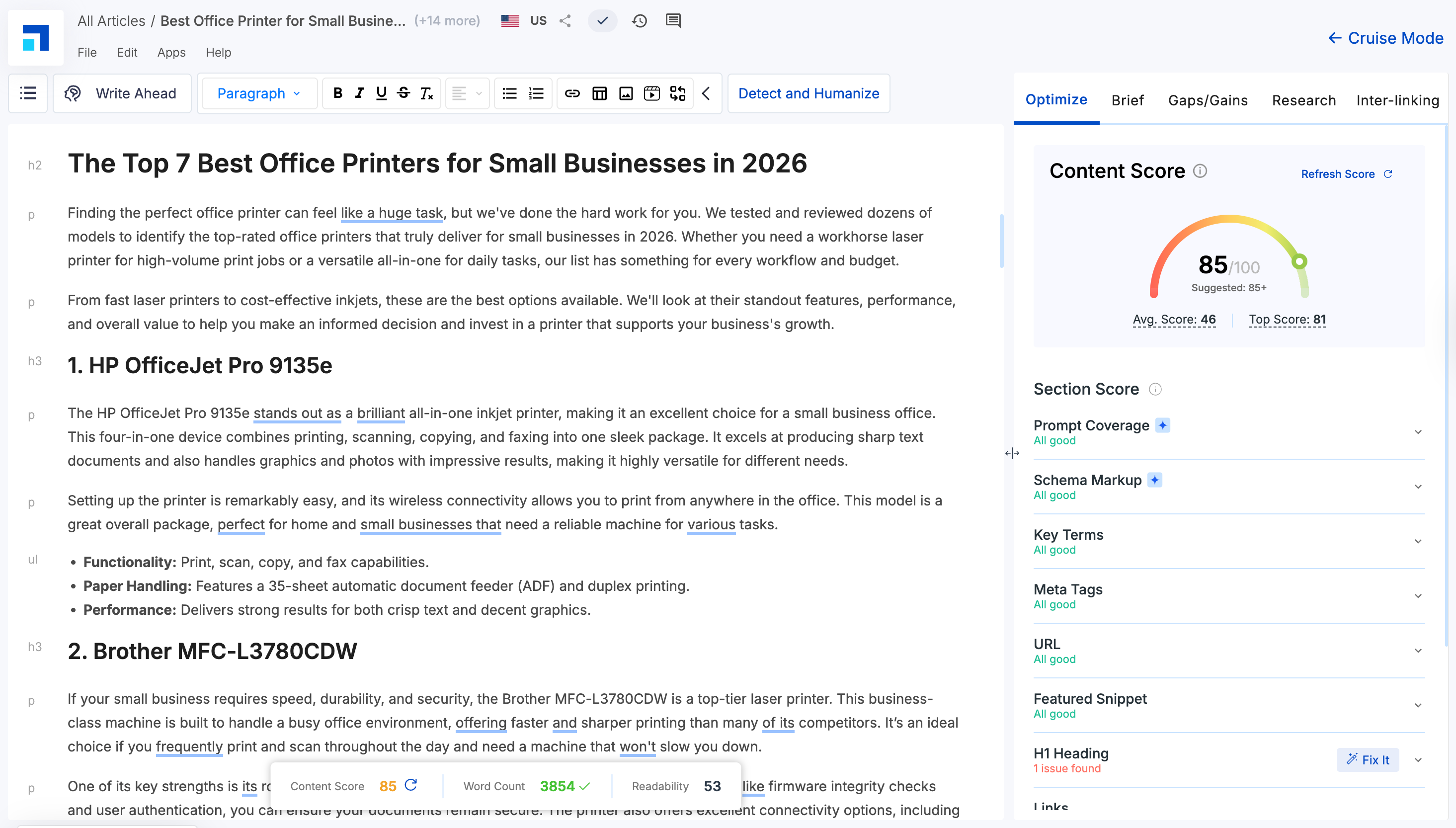
- Cruise Mode for AI-assisted outlines and drafts using SERP and GEO insights.
- Content Optimizer highlighting improvements for stronger performance.
- AI Humanizer refining AI-written content to sound more natural.
- Content scoring evaluating intent alignment, topic depth, structure, and keyword usage.
SEO Research And Planning
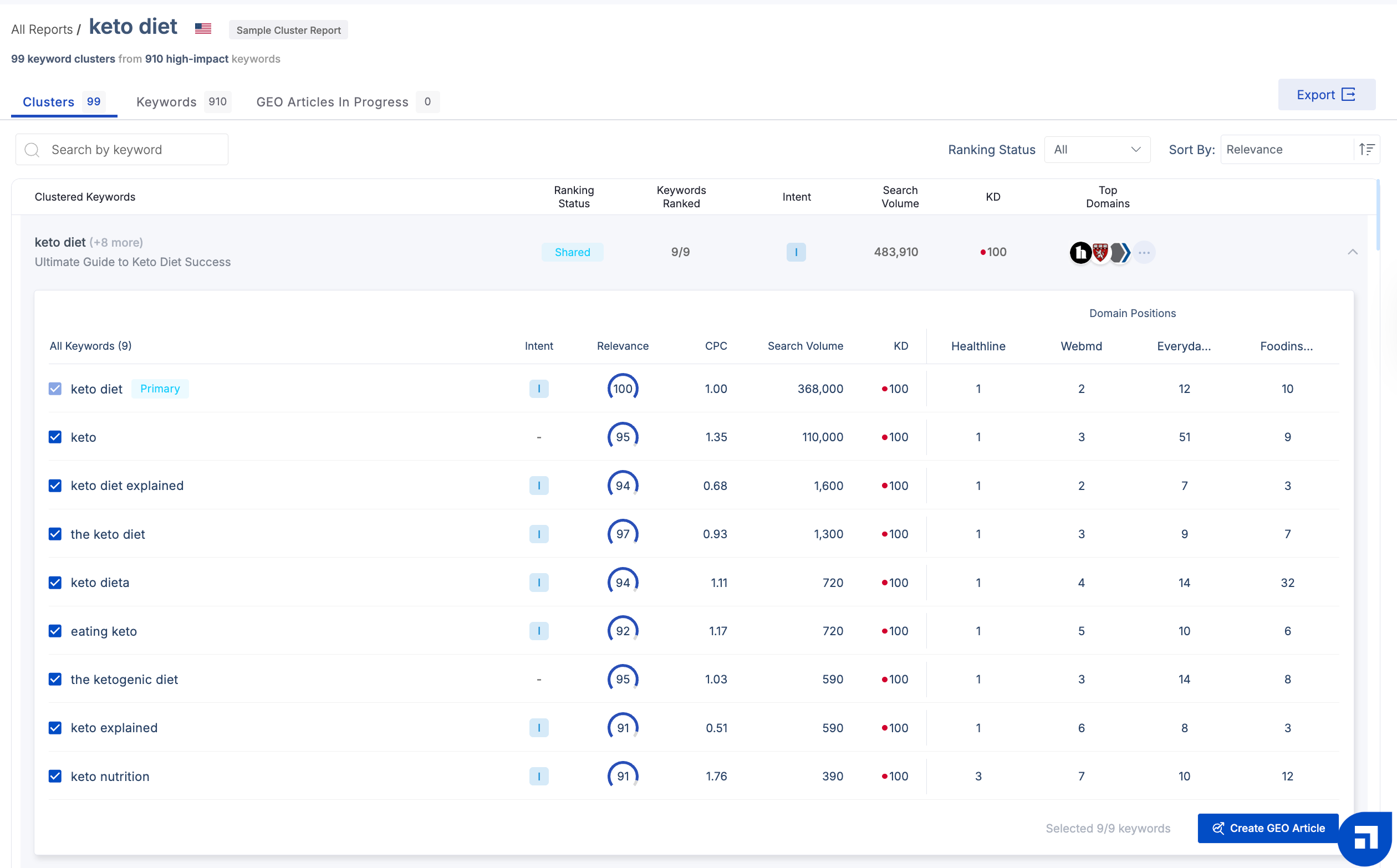
- Keyword Planner clustering keywords by search intent.
- Competitor coverage analysis showing how rivals approach the same topics.
- Traffic Analyzer identifying top-performing pages and quick-win opportunities.
- Content Audit flagging pages that need updates or optimization.
Technical SEO And Linking
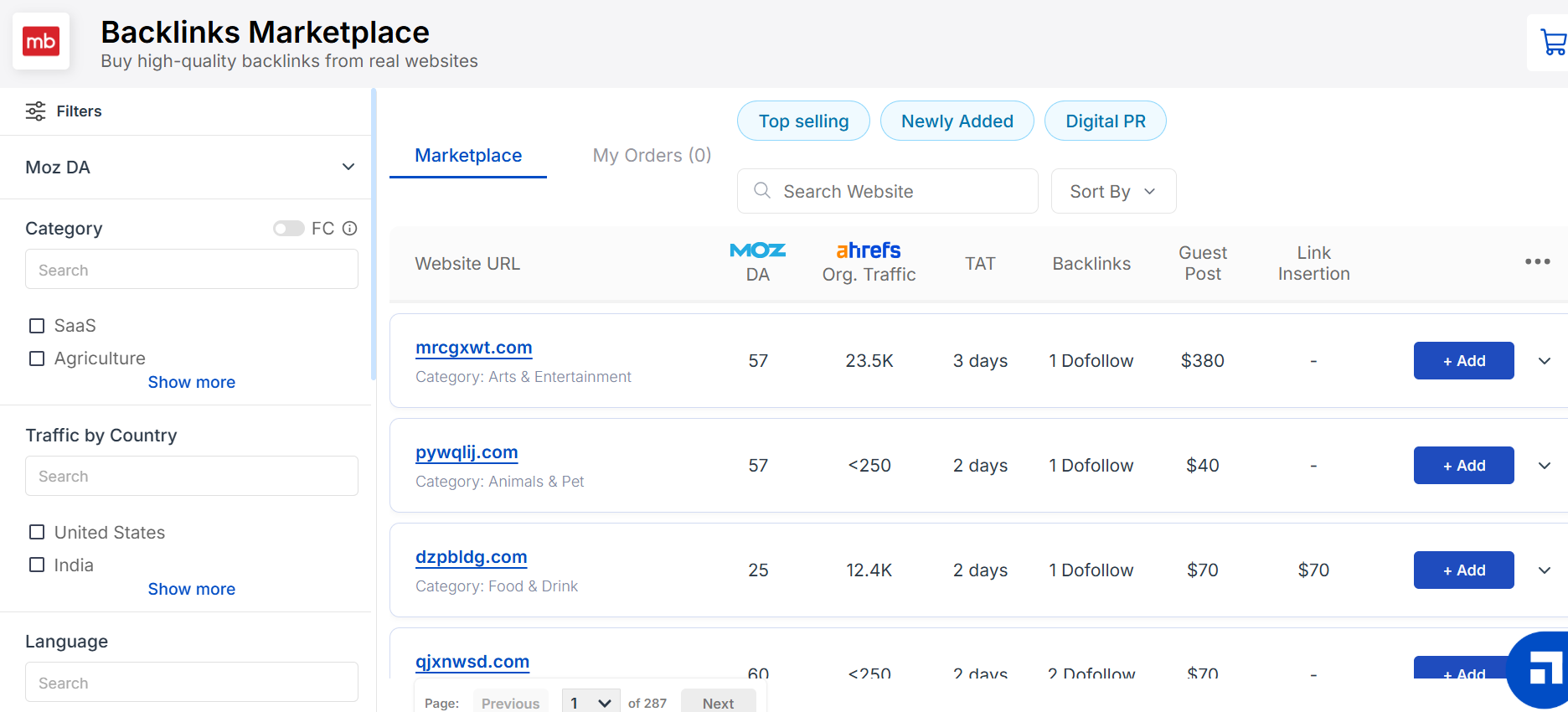
- Link Manager for organizing and strengthening internal linking.
- On-Page Pro evaluating meta titles and descriptions against top-ranking pages.
- Backlinks Marketplace for discovering and purchasing high-quality backlinks.
Why I Would Choose Scalenut Over MarketMuse?
”What I like best about Scalenut is how it combines AI writing with built-in SEO tools. The Cruise Mode makes it really easy to go from keyword research to a full article in one smooth process. It saves me time and helps me create content that actually ranks.”, says Jerry F, Director, Small Business
MarketMuse remains a strong choice for teams focused on deep content research and traditional SEO planning. However, content discovery is no longer limited to search engine rankings alone. Brands now need to understand how they appear inside AI-generated answers and how those systems influence visibility, trust, and traffic.
This is where Scalenut stands out for me. With built-in GEO insights, AI visibility tracking, and execution-ready SEO workflows, it connects strategy directly to action. For teams looking to drive measurable results across both search engines and AI-driven discovery without added complexity, Scalenut feels like the more practical and future-ready choice.
Ready To See Scalenut In Action? Book your demo and explore how to scale content with SEO + GEO precision!
Frequently Asked Questions
How to use MarketMuse?
MarketMuse is typically used to research a topic, generate a brief, and optimize a draft against what already performs well in search engine results. Start by entering a target keyword, review recommended topics and external links, then refine your blog post in the content editor to improve content score.
What are the best alternatives to MarketMuse for content optimization?
The best MarketMuse alternatives include Scalenut, Surfer SEO, Frase, Clearscope, and Semrush. These content optimization tools vary by workflow, research depth, and pricing. The right fit depends on whether the priority is content performance, SERP analysis, or fast production support for marketing teams and content strategists.
Accuranker vs MarketMuse vs Surfer SEO: Which is better?
Accuranker is strongest for rank tracking and keyword monitoring, while MarketMuse focuses on strategic content planning and competitor analysis. Surfer SEO tends to be more execution-friendly for content writing and on-page recommendations. For producing better content efficiently, many prefer Surfer’s workflow over MarketMuse’s complexity.
Ahrefs vs MarketMuse vs Frase: Which is best for AI visibility?
None of these tools is primarily built for AI visibility in the way dedicated GEO platforms are. Ahrefs is best for backlink and keyword data, MarketMuse is a research tool for topical authority, and Frase supports faster outlining and drafting with a writing assistant. AI visibility typically requires separate tracking.
How does Clearscope compare to MarketMuse for SEO content planning?
Clearscope is often simpler for writers and focuses on straightforward optimization guidance, while MarketMuse is deeper for planning and competitor content analysis. The MarketMuse vs Clearscope comparison usually comes down to workflow preference: Clearscope for faster optimization and MarketMuse for strategic depth and advanced features.
Which tools like MarketMuse offer AI-driven content optimization?
Several platforms offer AI-driven content optimization features, including Scalenut, Surfer SEO, Frase, and Clearscope. These tools help plan new content, improve topic coverage, and align drafts with search engine optimization goals. Some also add content writing support and content harmony style workflows for publishing speed.
What are the main features to look for in MarketMuse competitors?
Key features include strong SERP analysis, keyword difficulty indicators, reliable competitor analysis, and clear content optimization features. Look for practical briefs, content optimization tools that guide structure, and a smooth user experience for content editor workflows. A strong site audit layer can also improve prioritization and updates.
Which MarketMuse alternatives are best for content and SEO agencies?
For agencies scaling content marketing, common alternatives include Scalenut, Surfer SEO, Semrush, Ahrefs, Frase, and Clearscope. These platforms support research, production, and reporting for marketing teams, often with stronger collaboration and faster execution than MarketMuse, plus flexible workflows for consistent content performance.
Advanced Web Ranking vs MarketMuse: Which is the best tool for SEO?
Advanced Web Ranking is best for rank tracking, reporting, and monitoring visibility across search engine results, while MarketMuse is stronger for content planning and competitor content analysis. For agencies that want content optimization features plus AI-driven workflows, Scalenut stands out.
How do MarketMuse alternatives handle content scoring and recommendations?
Most alternatives use a content score tied to SERP analysis, topic coverage, and target keyword usage, then provide recommendations to close gaps. Some also add writing and structure guidance. Scalenut extends this by combining SEO scoring with GEO-focused visibility insights and action steps.
Is there a single tool that replaces MarketMuse completely?
It depends on what MarketMuse is being used for. Some teams need deep planning and topical modeling, while others need execution and visibility tracking. Scalenut is often the closest single-platform replacement because it covers content planning, optimization, audits, linking, and AI visibility.
What are the pros and cons of using MarketMuse alternatives?
MarketMuse alternatives often offer faster workflows, simpler interfaces, and more flexible pricing. The tradeoff is that some provide lighter topic depth or fewer strategic planning features. Tools like Scalenut stand out by combining streamlined execution with SEO optimization and added AI visibility insights.


.svg)


.webp)